

One of NASA’s most high-profile projects has been to track historical average global temperature. In January 2016, the agency released data that showed 2015 had been the hottest year on record. “Today’s announcement not only underscores how critical NASA’s Earth observation program is, it is a key data point that should make policy makers stand up and take notice — now is the time to act on climate,” said NASA Administrator Charles Bolden in a statement at the time. Since then, NASA’s monthly updates on temperature delivered a steady dose of dread as month after month was declared the hottest recorded.
Now Donald Trump’s first NASA transition team pick is Christopher Shank, a Hill staffer who has said he is unconvinced of a reality that is accepted by the vast majority of climate scientists: that humans are the primary driver of climate change. Shank previously worked for Rep. Lamar Smith, a Republican congressman who played a key role in dragging out debates on the basic nature of climate change at a time when the science is settled and action is urgent.
Shank has criticized the type of scientific data NASA regularly releases. As part of a panel in September 2015 at Arizona State University’s Consortium for Science, Policy, and Outcomes, he said, “The rhetoric that’s coming out, the hottest year in history, actually is not backed up by the science — or that the droughts, the fires, the hurricanes, etc., are caused by climate change, but it’s just weather.”
He shrugged off the severity of the climate crisis, criticizing “the rhetoric about, let’s call this climate pollution, which is CO2, which I’m emitting here today.” And he mockingly asked: “is this really about some neo-Malthusian discussion about population control that we’re talking about here?” That was a reference to Thomas Malthus, the late 18th century thinker who predicted a resource crisis if population growth continued unchecked. “What are we trying to solve here?” he asked.
Shank’s appointment dovetails with threats from Trump’s advisors to scrap NASA’s research on climate change. In an October op-ed for Space News, Trump campaign advisors Robert Walker and Peter Navarro stated, “NASA should be focused primarily on deep space activities rather than Earth-centric work that is better handled by other agencies.”
Walker told The Guardian last week, “I believe that climate research is necessary, but it has been heavily politicized, which has undermined a lot of the work that researchers have been doing. Mr Trump’s decisions will be based upon solid science, not politicized science.”
David Titley, director of the Center for Solutions to Weather and Climate Risk at Penn State, wrote in response, “We can measure the Earth as an entire system only from space.”
NASA works with the National Oceanic and Atmospheric Administration (NOAA) to measure climate changes. NASA’s role includes developing observational technologies.
“If they really shut down the satellites, we’d be driving in the dark, in the fog, with no headlights, on a mountain road,” Titley said in an interview. Analyzing the satellite data reveals inconvenient truths, he said. “What they will find is the vast scientific consensus is correct. The earth is warming. We know why it’s warming. And it will continue to warm as we add greenhouse gases into the system.”
“Even in the post-truth world, shouting and screaming in all caps at 3 in the morning is not going to change the physics,” he said.
Shank’s longtime boss Smith, the Republican head of the House Science, Space, and Technology committee, led an effort to slash NASA’s earth science budget this year and in 2011 requested an investigation into the “politicization of NASA.”
Smith is obsessed with combatting what he has called “climate religion.” Among other things, Smith has accused scientists with NOAA of altering peer-reviewed data that challenged a key argument of climate deniers, the notion that the global temperature rises have stalled.
Shank was Smith’s deputy chief of staff from 2011 to 2013, before becoming a senior staffer for the House science committee, which Smith has led since 2012. Before the House, Shank worked at NASA between 2005 and 2009, serving in various roles, including as chief of strategic communications. He did not respond to a request for comment.
At the September 2015 panel, Shank went on to question humans’ role in climate change, repeatedly recommending that attendees read the work of Judith Curry, Roger Pielke Jr., and Roger Pielke Sr. “I find them to be the best source of commentary on climate issues and what to do about it,” he said. At one point he repeated Curry’s blog URL twice, for emphasis.
Pielke Jr., a professor at the University of Colorado, has testified before Smith’s committee arguing, “There exists exceedingly little scientific support for claims found in the media and political debate that hurricanes, tornadoes, floods and drought have increased in frequency or intensity on climate timescales either in the United States or globally.”
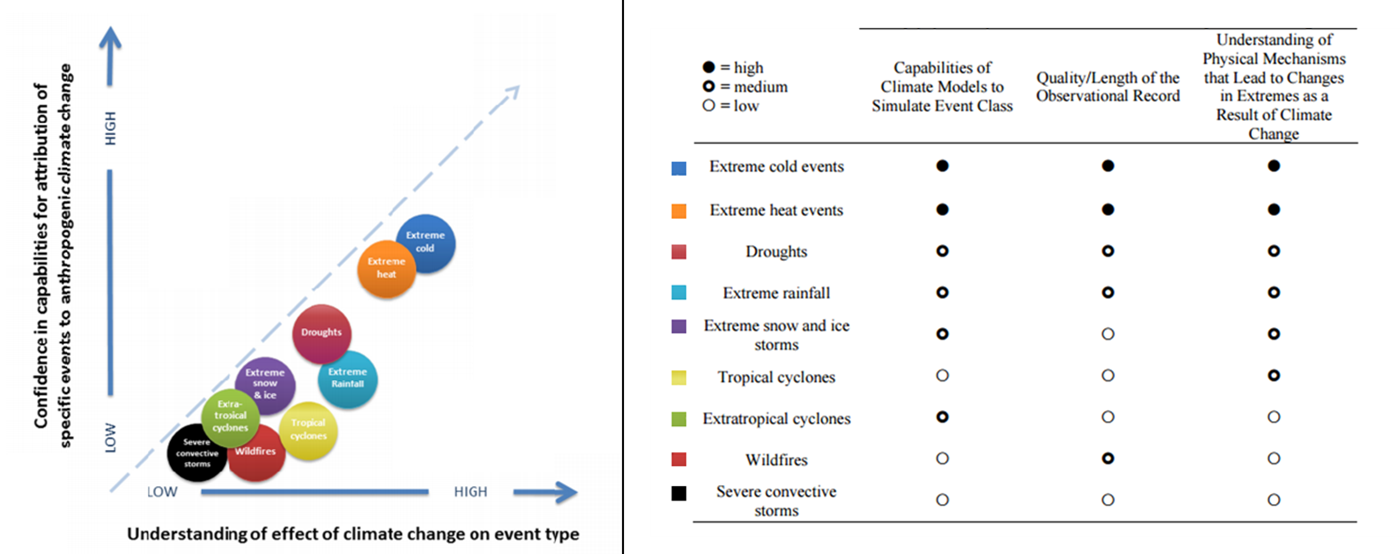
Titley chaired a committee of the National Academies of Sciences, Engineering and Medicine that issued a report last March on the science of attributing weather events to climate. The study indicated scientists now have a strong understanding of how climate impacts extreme heat and cold events and a moderate understanding of how it impacts drought and heavy rain. “When I listen to people like Pielke talk about how we can’t show tornadoes have increased, it doesn’t negate fact that seas are rising, temperatures are rising, the magnitude and severity of droughts are increasing, as well as impacting our food and our water systems,” Titley said.
The other scientist Shank mentioned, Curry, is a professor at Georgia Institute of Technology’s School of Earth and Atmospheric Sciences, and is notorious for her view that humans may not be the primary driver of climate change. In a recent blog post, she zeroed in on NASA’s Goddard Institute for Space Studies as the agency’s hub of what she called “politicized climate science.”
Curry noted that NASA has given her more research funding than any other agency. She advocated for continuing support for NASA earth science projects, but added, “This is a welcome opportunity to redirect NASA Earth Science research towards other topics that are not directly related to or motivated by human caused climate change.”
Update: December 2, 2016
This story has been updated to clarify that Shank was talking about Roger Pielke Junior and Senior.
Top photo: The view of sea ice floats near the coast of West Antarctica from a window of a NASA Operation IceBridge airplane. Researchers have used the IceBridge data to observe that the West Antarctic Ice Sheet may be in a state of irreversible decline directly contributing to rising sea levels.
IT’S EVEN WORSE THAN WE THOUGHT.
What we’re seeing right now from Donald Trump is a full-on authoritarian takeover of the U.S. government.
This is not hyperbole.
Court orders are being ignored. MAGA loyalists have been put in charge of the military and federal law enforcement agencies. The Department of Government Efficiency has stripped Congress of its power of the purse. News outlets that challenge Trump have been banished or put under investigation.
Yet far too many are still covering Trump’s assault on democracy like politics as usual, with flattering headlines describing Trump as “unconventional,” “testing the boundaries,” and “aggressively flexing power.”
The Intercept has long covered authoritarian governments, billionaire oligarchs, and backsliding democracies around the world. We understand the challenge we face in Trump and the vital importance of press freedom in defending democracy.
We’re independent of corporate interests. Will you help us?
IT’S BEEN A DEVASTATING year for journalism — the worst in modern U.S. history.
We have a president with utter contempt for truth aggressively using the government’s full powers to dismantle the free press. Corporate news outlets have cowered, becoming accessories in Trump’s project to create a post-truth America. Right-wing billionaires have pounced, buying up media organizations and rebuilding the information environment to their liking.
In this most perilous moment for democracy, The Intercept is fighting back. But to do so effectively, we need to grow.
That’s where you come in. Will you help us expand our reporting capacity in time to hit the ground running in 2026?
We’re independent of corporate interests. Will you help us?

I’M BEN MUESSIG, The Intercept’s editor-in-chief. It’s been a devastating year for journalism — the worst in modern U.S. history.
We have a president with utter contempt for truth aggressively using the government’s full powers to dismantle the free press. Corporate news outlets have cowered, becoming accessories in Trump’s project to create a post-truth America. Right-wing billionaires have pounced, buying up media organizations and rebuilding the information environment to their liking.
In this most perilous moment for democracy, The Intercept is fighting back. But to do so effectively, we need to grow.
That’s where you come in. Will you help us expand our reporting capacity in time to hit the ground running in 2026?
We’re independent of corporate interests. Will you help us?
Contact the author:

Latest Stories

Midterms 2026
Mike Rogers Spent $100K on Private Jets and Luxury Travel Last Quarter
The Republican running for Senate in Michigan is directing campaign funds toward chartered flights, a Miami car service, and BMW repairs.

The Army Wants to Sic AI Agents on Its Enemies. What Could Go Wrong?
Documents obtained by The Intercept show the military is trying to deploy autonomous AI agents to hack its adversaries.

President Apocalypse
While Trump campaigns for a Nobel Peace Prize, his war on humanity’s only home continues unabated.