

Russia is coordinating the recruitment of over a hundred Cuban mercenaries for its war effort in Ukraine, according to hacked documents obtained by The Intercept.
Activist hackers known as the “Cyber Resistance” and allied to the Ukrainian government recently infiltrated the personal email account of a Russian officer in the Western Military District who was involved in the recruitment of Cubans. The stolen data offers rare and previously unseen insight into how Russia operates its pipeline of foreign mercenaries into the Ukraine conflict.
Within the cache of hacked documents are approximately 122 passport scans and images of Cuban nationals, all fighting-aged males, along with a series of Spanish-language enlistment contracts in with a section of the Russian Armed Forces headquartered in the city of Tula, where a military school and airborne soldiers are known to be located. The contracts are templates, not fully executed agreements, but they sketch the incentives Russia appears to be offering foreign fighters.
The contracts promise “a one-time cash payment in the amount of 195,000 rubles,” about $2,000, for the Cubans signing on to serve in the zone of the “special military operation” (the Kremlin euphemism for the war in Ukraine) and monthly payments starting at “204,000 rubles per month,” or just over $2,000, depending on rank, along with several spousal and family benefits. So far, these types of official Russian military contracts geared toward foreign nationals have mostly been discussed in regional media reports (such as those targeting ethnic Russian men in former Soviet republics, according to the British Ministry of Defence).
One set of images in the hacked documents shows single passports with a hand holding up entry cards into Russia above them, revealing that a group of at least five Cuban men entered the country through Belarus, a key Kremlin ally, on July 1. A little over a month before that arrival date, a senior Belarussian military official made a public show of pledging to train Cuban troops on its territory.
While the hacked documents do not include signed enlistment contracts for the Cubans, some of the Cubans in the array of passport scans were easily found through Facebook profile searches, and some of them openly posted about relocating to Russia and posed in locations around the Tula region. One of them not only updated his Facebook profile with details that he traveled from Santiago de Cuba to Russia in early July, but also posted a flurry of videos with a new Russian passport and in front of tank columns with the trademark Russian “Z” spray-painted on the sides.
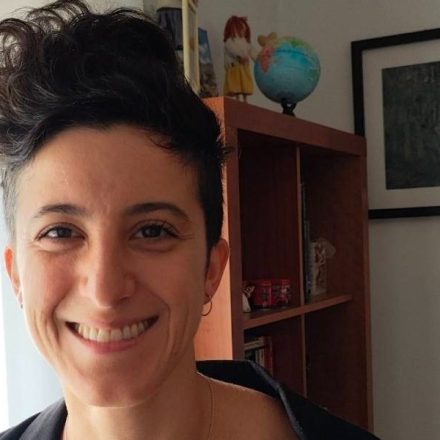
Only weeks ago, that same Cuban man put out a video from the center of Tula in a popular square that was easily geolocated by The Intercept. Similarly, another apparent recruit from Havana posed at an outdoor shopping center in Tula and, in a separate image, with a fresh buzzcut in front of a Pyaterochka market – a popular grocery chain in Russia – just last week.
Three of the Cubans from the hacked cache also appeared in a Facebook story from early September smiling together, with one of them sporting the famous striped telnyashka undershirt worn by Russian airborne soldiers and paratroopers, the types of soldiers stationed in Tula where the Cubans are suspected of being trained. The aunt of another one of the Cuban nationals posted a birthday photo of her nephew (that matched his passport date of birth) and said that he had been “in Russia” and alluded to “fighting in Ukraine.”
Among the many details in the hack of the Russian officer’s inbox are email exchanges with military accounts and the translators who processed the Cuban passports; images of internal meetings with high-ranking uniformed officers; and an Excel spreadsheet with nearly a hundred recruitment contacts across four of the five official military districts of Russia.
For his part, the hacked Russian officer, Maj. Anton Valentinovich Perevozchikov, did not deny his role in recruiting the Cubans. He instead sent an expletive-laced reply to The Intercept denouncing NATO and declaring, “Russia will win.”
According to a senior officer in the Ukrainian Armed Forces with direct knowledge of the hacked materials, “We can see that a group of Cuban citizens are going to participate in some activities related to the Russian military.” He added, “Their efforts remain focused on enticing new recruits voluntarily to prevent a fresh wave of mandatory mobilization.”
According to the same officer, at the outset of the full-scale war in 2022, amid the massive failures in Russia’s initial offensives on Kyiv, the Ukrainian military observed that limited numbers of volunteers “willing to risk their lives under the leadership of ineffective Russian officers” came from abroad. The latest push with Cubans, he added, could be aimed at bolstering the perception that there is international support for Russia, though economics are a factor too.
“It’s possible that Cuban citizens are being enlisted due to cost considerations as they are simply cheaper,” he said. “Apart from salaries, the Russian government is obligated to provide additional compensation in cases of injury or death for its citizens. However, this responsibility doesn’t extend to Cuban citizens. When you come here for financial gain, your death is your headache.”

Russian President Vladimir Putin meets with Cuban Prime Minister Manuel Marrero Cruz at the Kremlin in Moscow on June 14, 2023.
Global Volunteers in Ukraine
Since the beginning of the total invasion of Ukraine in February 2022, there has been persistent talk that the Kremlin was soliciting the help of global volunteers. While Kyiv has made no secret of having its own International Legion, made up of NATO veterans and volunteers from around the world, Russian President Vladimir Putin has remained mostly tight-lipped on his use of foreign fighters.
That didn’t stop early reports swirling of Syrian mercenaries, adept in urban combat from years of sectarian warfare, being enlisted into the Russian war effort, or Pentagon claims of Iranian operatives in Ukraine, and other rumors that soldiers from the Central African Republic (an ally of the Kremlin) were fighting on behalf of Moscow.

But the hacked material, dating from this summer, suggests that Putin and his military apparatus have made real efforts to recruit foreign fighters for a bloody war that is causing mass casualties on both sides. While the Kremlin has often accused the government of Ukrainian President Volodymyr Zelenskyy of hiring foreign mercenaries for its International Legion, the cache illustrates that Russia is also enlisting foreigners from its own allied countries.
On Monday, the Cuban government said it had uncovered a criminal “human trafficking network” that was ferrying some of its citizens to the Russian war effort and denied Cuba’s involvement. “The Ministry of the Interior detected and is working on the neutralization and dismantling of a human trafficking network that operates from Russia to incorporate Cuban citizens based there, and even some from Cuba, into the military forces that participate in military operations in Ukraine,” according to the statement. “Cuba has a firm and clear historical position against mercenarism and plays an active role in the United Nations in repudiating that practice.”
The Cuban government did not respond to multiple requests for comment.
It is unclear whether Havana’s statement on Monday was prompted by the recruitment effort revealed by the hacked documents, or by a report in a Miami newspaper on how Russia had allegedly forced a pair of teenaged Cuban migrants into its military in the Ryazan region, which neighbors Tula.
Emails to the Russian Ministry of Foreign Affairs regarding the apparent channeling of Cuban mercenaries into the war in Ukraine went unanswered.
In September, Russian media reported Cuban immigrants already living in Russia had signed up for the war effort after Putin decreed an easy path to citizenship for foreign nationals who enlisted in the military. But the records from Perevozchikov’s inbox show that this group of men was recruited into Russia this year.
While the war in Ukraine has invigorated NATO and spurred on the addition of two new member states, Finland and Sweden, it has also reawakened other geopolitical alliances. Russia and Cuba were strategic allies during the Cold War, when Cuban leader Fidel Castro sent his troops to fight in the Soviet-backed war in Angola.
The two sides have strengthened their bonds since the broader invasion of Ukraine started a year and a half ago. Cuban leaders have time and again sided with Russia and have not publicly denounced the Kremlin’s actions in Ukraine. Putin, for his part, has refused to rule out deploying troops to the island nation just over 100 miles from the Florida coast.
IT’S EVEN WORSE THAN WE THOUGHT.
What we’re seeing right now from Donald Trump is a full-on authoritarian takeover of the U.S. government.
This is not hyperbole.
Court orders are being ignored. MAGA loyalists have been put in charge of the military and federal law enforcement agencies. The Department of Government Efficiency has stripped Congress of its power of the purse. News outlets that challenge Trump have been banished or put under investigation.
Yet far too many are still covering Trump’s assault on democracy like politics as usual, with flattering headlines describing Trump as “unconventional,” “testing the boundaries,” and “aggressively flexing power.”
The Intercept has long covered authoritarian governments, billionaire oligarchs, and backsliding democracies around the world. We understand the challenge we face in Trump and the vital importance of press freedom in defending democracy.
We’re independent of corporate interests. Will you help us?
IT’S BEEN A DEVASTATING year for journalism — the worst in modern U.S. history.
We have a president with utter contempt for truth aggressively using the government’s full powers to dismantle the free press. Corporate news outlets have cowered, becoming accessories in Trump’s project to create a post-truth America. Right-wing billionaires have pounced, buying up media organizations and rebuilding the information environment to their liking.
In this most perilous moment for democracy, The Intercept is fighting back. But to do so effectively, we need to grow.
That’s where you come in. Will you help us expand our reporting capacity in time to hit the ground running in 2026?
We’re independent of corporate interests. Will you help us?

I’M BEN MUESSIG, The Intercept’s editor-in-chief. It’s been a devastating year for journalism — the worst in modern U.S. history.
We have a president with utter contempt for truth aggressively using the government’s full powers to dismantle the free press. Corporate news outlets have cowered, becoming accessories in Trump’s project to create a post-truth America. Right-wing billionaires have pounced, buying up media organizations and rebuilding the information environment to their liking.
In this most perilous moment for democracy, The Intercept is fighting back. But to do so effectively, we need to grow.
That’s where you come in. Will you help us expand our reporting capacity in time to hit the ground running in 2026?
We’re independent of corporate interests. Will you help us?
Contact the author:
Related


Latest Stories

The Intercept Briefing
The Intercept Live in Conversation With Robert Reich
Watch live as Inequality Media co-founder Robert Reich and The Intercept’s Akela Lacy break down the most pressing issues of the midterm elections.

Midterms 2026
Giant Crypto Super PAC Funnels Big Money to Former Trump Official’s Firm to Support… Democrats?
The Fellowship PAC routed more than half a million dollars in support of Democrats through a firm co-founded by former Trump crypto adviser Bo Hines.

The Intercept Briefing
The Stakes of Brazil’s Presidential Election
“Almost all of the worst ideas in the United States have been intentionally exported to Brazil as a way to make Brazil a worse country that’s more in line with U.S. interests.”