

The Mozilla Foundation, the entity behind the web browser Firefox, is blocking various censorship circumvention add-ons for its browser, including ones specifically to help those in Russia bypass state censorship. The add-ons were blocked at the request of Russia’s federal censorship agency, Roskomnadzor — the Federal Service for Supervision of Communications, Information Technology, and Mass Media — according to a statement by Mozilla to The Intercept.
“Following recent regulatory changes in Russia, we received persistent requests from Roskomnadzor demanding that five add-ons be removed from the Mozilla add-on store,” a Mozilla spokesperson told The Intercept in response to a request for comment. “After careful consideration, we’ve temporarily restricted their availability within Russia. Recognizing the implications of these actions, we are closely evaluating our next steps while keeping in mind our local community.”
“It’s a kind of unpleasant surprise because we thought the values of this corporation were very clear in terms of access to information.”
Stanislav Shakirov, the chief technical officer of Roskomsvoboda, a Russian open internet group, said he hoped it was a rash decision by Mozilla that will be more carefully examined.
“It’s a kind of unpleasant surprise because we thought the values of this corporation were very clear in terms of access to information, and its policy was somewhat different,” Shakirov said. “And due to these values, it should not be so simple to comply with state censors and fulfill the requirements of laws that have little to do with common sense.”



Developers of digital tools designed to get around censorship began noticing recently that their Firefox add-ons were no longer available in Russia.
On June 8, the developer of Censor Tracker, an add-on for bypassing internet censorship restrictions in Russia and other former Soviet countries, made a post on the Mozilla Foundation’s discussion forums saying that their extension was unavailable to users in Russia.
The developer of another add-on, Runet Censorship Bypass, which is specifically designed to bypass Roskomnadzor censorship, posted in the thread that their extension was also blocked. The developer said they did not receive any notification from Mozilla regarding the block.
Two VPN add-ons, Planet VPN and FastProxy — the latter explicitly designed for Russian users to bypass Russian censorship — are also blocked. VPNs, or virtual private networks, are designed to obscure internet users’ locations by routing users’ traffic through servers in other countries.
The Intercept verified that all four add-ons are blocked in Russia. If the webpage for the add-on is accessed from a Russian IP address, the Mozilla add-on page displays a message: “The page you tried to access is not available in your region.” If the add-on is accessed with an IP address outside of Russia, the add-on page loads successfully.
Supervision of Communications
Roskomnadzor is responsible for “control and supervision in telecommunications, information technology, and mass communications,” according to the Russia’s federal censorship agency’s English-language page.
In March, the New York Times reported that Roskomnadzor was increasing its operations to restrict access to censorship circumvention technologies such as VPNs. In 2018, there were multiple user reports that Roskomnadzor had blocked access to the entire Firefox Add-on Store.
According to Mozilla’s Pledge for a Healthy Internet, the Mozilla Foundation is “committed to an internet that includes all the peoples of the earth — where a person’s demographic characteristics do not determine their online access, opportunities, or quality of experience.” Mozilla’s second principle in their manifesto says, “The internet is a global public resource that must remain open and accessible.”
The Mozilla Foundation, which in tandem with its for-profit arm Mozilla Corporation releases Firefox, also operates its own VPN service, Mozilla VPN. However, it is only available in 33 countries, a list that doesn’t include Russia.
The same four censorship circumvention add-ons also appear to be available for other web browsers without being blocked by the browsers’ web stores. Censor Tracker, for instance, remains available for the Google Chrome web browser, and the Chrome Web Store page for the add-on works from Russian IP addresses. The same holds for Runet Censorship Bypass, VPN Planet, and FastProxy.
“In general, it’s hard to recall anyone else who has done something similar lately,” said Shakirov, the Russian open internet advocate. “For the last few months, Roskomnadzor (after the adoption of the law in Russia that prohibits the promotion of tools for bypassing blockings) has been sending such complaints about content to everyone.”
IT’S EVEN WORSE THAN WE THOUGHT.
What we’re seeing right now from Donald Trump is a full-on authoritarian takeover of the U.S. government.
This is not hyperbole.
Court orders are being ignored. MAGA loyalists have been put in charge of the military and federal law enforcement agencies. The Department of Government Efficiency has stripped Congress of its power of the purse. News outlets that challenge Trump have been banished or put under investigation.
Yet far too many are still covering Trump’s assault on democracy like politics as usual, with flattering headlines describing Trump as “unconventional,” “testing the boundaries,” and “aggressively flexing power.”
The Intercept has long covered authoritarian governments, billionaire oligarchs, and backsliding democracies around the world. We understand the challenge we face in Trump and the vital importance of press freedom in defending democracy.
We’re independent of corporate interests. Will you help us?
IT’S BEEN A DEVASTATING year for journalism — the worst in modern U.S. history.
We have a president with utter contempt for truth aggressively using the government’s full powers to dismantle the free press. Corporate news outlets have cowered, becoming accessories in Trump’s project to create a post-truth America. Right-wing billionaires have pounced, buying up media organizations and rebuilding the information environment to their liking.
In this most perilous moment for democracy, The Intercept is fighting back. But to do so effectively, we need to grow.
That’s where you come in. Will you help us expand our reporting capacity in time to hit the ground running in 2026?
We’re independent of corporate interests. Will you help us?

I’M BEN MUESSIG, The Intercept’s editor-in-chief. It’s been a devastating year for journalism — the worst in modern U.S. history.
We have a president with utter contempt for truth aggressively using the government’s full powers to dismantle the free press. Corporate news outlets have cowered, becoming accessories in Trump’s project to create a post-truth America. Right-wing billionaires have pounced, buying up media organizations and rebuilding the information environment to their liking.
In this most perilous moment for democracy, The Intercept is fighting back. But to do so effectively, we need to grow.
That’s where you come in. Will you help us expand our reporting capacity in time to hit the ground running in 2026?
We’re independent of corporate interests. Will you help us?
Contact the author:
Related

This Undisclosed WhatsApp Vulnerability Lets Governments See Who You Message

Tech Companies and Governments Are Censoring the Journalist Collective DDoSecrets

Facebook Tells Moderators to Allow Graphic Images of Russian Airstrikes but Censors Israeli Attacks

Russia Is Losing a War Against Hackers Stealing Huge Amounts of Data
Latest Stories
Midterms 2026
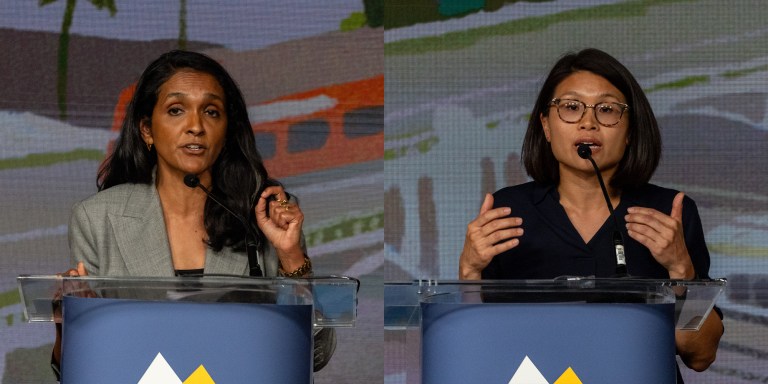
The Los Angeles Left Is at War With Itself Over the Mayor’s Race
Rae Huang supporters say Nithya Raman is compromised. Raman’s base calls Huang a spoiler. Looming over it all: reality TV star Spencer Pratt.

Chilling Dissent
ICE Pepper-Sprayed, Beat Detainees for Protesting “Horrific Conditions” In Delaney Hall Jail
Detainees told a visiting member of Congress that the attacks were “retribution for the ongoing hunger strike.”

Voices
After Uvalde, Texas Stuffed Schools Full of Cops. They Brutalized Students.
Texas’s response to school shootings was as predictable as it was doomed to produce only more violence in schools — violence by cops.