
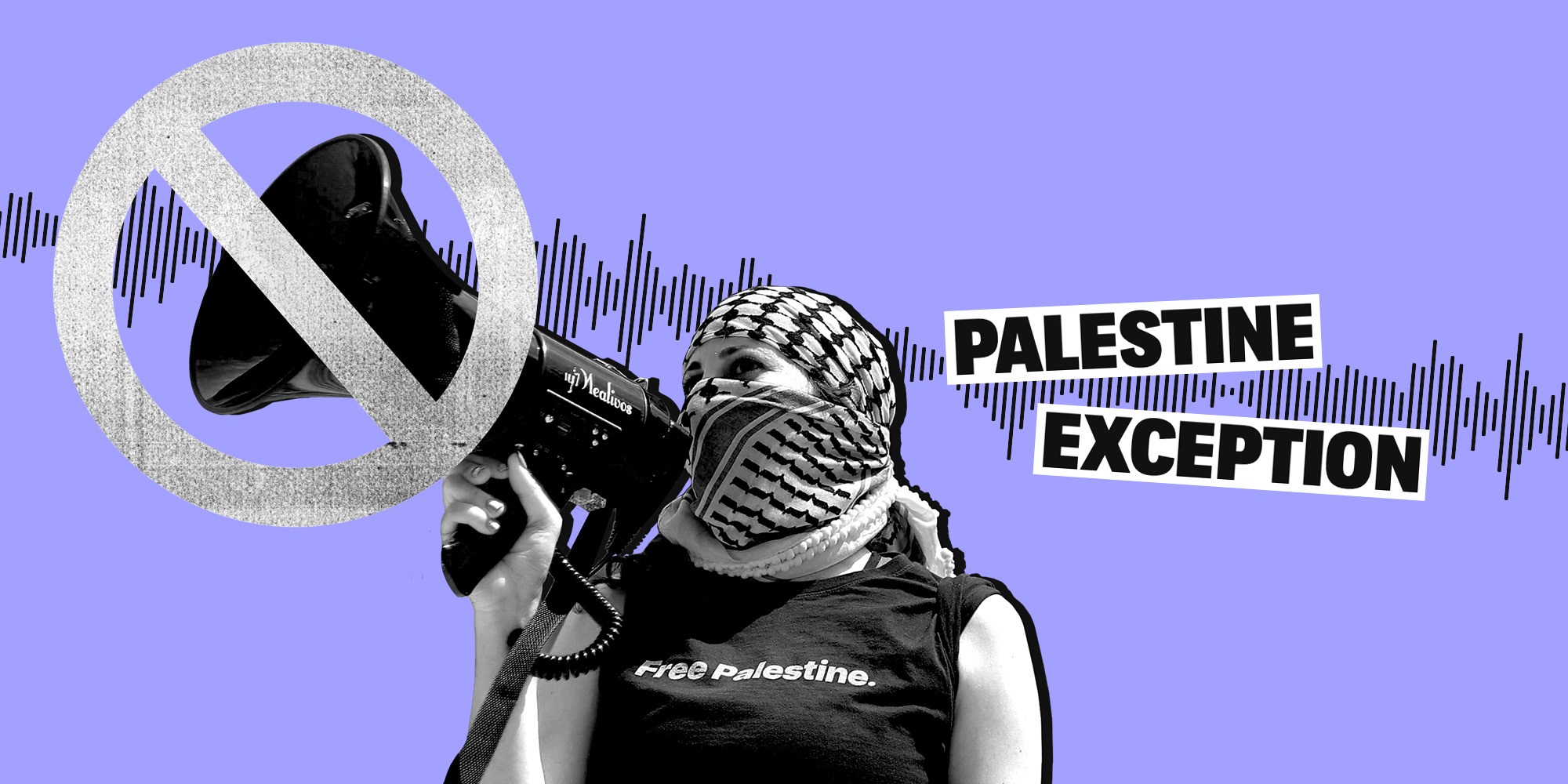
Continued campus protests against the Gaza war have sparked heated debates around free speech, academic freedom, and the role of universities in addressing global issues.
This spring saw an outpouring of students demanding that their institutions divest from Israel. Since then, universities have taken sometimes draconian measures to stop protests before they even begin.
On this week’s episode of The Intercept Briefing, Intercept reporters Akela Lacy and Jonah Valdez, who have been following the protest movements for months, discuss the latest developments and how college administrators are responding.
Lacy followed one such case at Case Western Reserve University in Cleveland, where students were hit with severe charges for vandalism. “The school is trying to make an example of student leaders in the movement for Palestine to chill further speech,” Lacy says. “I want to emphasize the fact that these are felony charges for undergraduate students for a nonviolent offense that is putting paint on a building.”
Students and organizers who spoke with Valdez anticipate even greater hostility for protesters of every kind once Donald Trump takes office again in January. “This is what a lot of organizers were telling me leading up to Election Day was that there’s going to be so many other attacks on the rights of many other people,” he says, “whether it’s reproductive rights, rights of trans people, LGBTQ community at large, rights of immigrants, all on top of the ongoing genocide and occupation of Palestine.”
To hear more about the chilling effects on free speech and protest, listen to this week’s episode of The Intercept Briefing.
IT’S EVEN WORSE THAN WE THOUGHT.
What we’re seeing right now from Donald Trump is a full-on authoritarian takeover of the U.S. government.
This is not hyperbole.
Court orders are being ignored. MAGA loyalists have been put in charge of the military and federal law enforcement agencies. The Department of Government Efficiency has stripped Congress of its power of the purse. News outlets that challenge Trump have been banished or put under investigation.
Yet far too many are still covering Trump’s assault on democracy like politics as usual, with flattering headlines describing Trump as “unconventional,” “testing the boundaries,” and “aggressively flexing power.”
The Intercept has long covered authoritarian governments, billionaire oligarchs, and backsliding democracies around the world. We understand the challenge we face in Trump and the vital importance of press freedom in defending democracy.
We’re independent of corporate interests. Will you help us?
IT’S BEEN A DEVASTATING year for journalism — the worst in modern U.S. history.
We have a president with utter contempt for truth aggressively using the government’s full powers to dismantle the free press. Corporate news outlets have cowered, becoming accessories in Trump’s project to create a post-truth America. Right-wing billionaires have pounced, buying up media organizations and rebuilding the information environment to their liking.
In this most perilous moment for democracy, The Intercept is fighting back. But to do so effectively, we need to grow.
That’s where you come in. Will you help us expand our reporting capacity in time to hit the ground running in 2026?
We’re independent of corporate interests. Will you help us?

I’M BEN MUESSIG, The Intercept’s editor-in-chief. It’s been a devastating year for journalism — the worst in modern U.S. history.
We have a president with utter contempt for truth aggressively using the government’s full powers to dismantle the free press. Corporate news outlets have cowered, becoming accessories in Trump’s project to create a post-truth America. Right-wing billionaires have pounced, buying up media organizations and rebuilding the information environment to their liking.
In this most perilous moment for democracy, The Intercept is fighting back. But to do so effectively, we need to grow.
That’s where you come in. Will you help us expand our reporting capacity in time to hit the ground running in 2026?
We’re independent of corporate interests. Will you help us?
Contact the author:

Latest Stories

Midterms 2026
The Elon Musk Funder Trying to Sway the Race for LA’s Top Lawyer
The leading candidate for LA city attorney has the backing of the local DSA and vows to regulate Big Tech. Tech investors are spending millions against her.

Pentagon Fears Drone Attacks on U.S. and Foreign Bases
Government officials said a series of recent attacks and threats have highlighted the vulnerability of U.S. military bases.

Bankrolling American Empire in the Philippines
The Pentagon and private capital have teamed up to militarize the island nation.