

The youth-led Sunrise Movement is seizing on the U.S.–Israel war in Iran to boost challengers to sitting Democrats, joining a coalition of progressive groups arguing that lawmakers who take money from defense contractors and AIPAC cannot meaningfully oppose the war.
In Denver, Sunrise is endorsing Melat Kiros, an anti-war candidate and attorney who was fired for refusing to take down her post on the genocide in Palestine, the group shared exclusively with The Intercept. Kiros is challenging longtime Rep. Diana DeGette, D-Colo.
“Voters today, they want to see their candidates and their representatives refusing AIPAC money and refusing [military industrial complex] influence,” said Kiros. “They’re seeing how much it has dragged us into these endless wars, and how much it is dragging our taxpayer dollars into funding this violence as well.”
Kiros is among a growing list of insurgent candidates — including William Lawrence in Michigan and Chris Rabb in Pennsylvania, also both Sunrise-endorsed — who are taking Democrats to task on their complicity in the endless wars in the Middle East.

Sunrise’s endorsement is part of a broader strategy shift in which the activist group, founded in 2017 to fight climate change in particular, pivots to fighting authoritarianism more broadly.
“There’s just no winning on climate unless we address how absolutely broken our political system is,” said Aru Shiney-Ajay, executive director of the Sunrise Movement. Focusing on corporate PAC money and the wars it fuels abroad is an essential part of the organization’s broader mission, she added. “The path towards winning climate legislation lies towards having a functional democracy, and that includes having a democracy that doesn’t prioritize endless wars abroad over the very real constraints of people right here.”
“The path towards winning climate legislation lies towards having a functional democracy … that doesn’t prioritize endless wars abroad over the very real constraints of people right here.”
Shiney-Ajay said Sunrise Movement organizers are “really excited” about Kiros, 28, because of her moral clarity. “She is really clear about standing up for working people,” she said. “And she’s very clear about not taking corporate PAC money.”
Historically, foreign policy issues have not been top of mind for Democratic primary voters, said Don Haider-Markel, a political science professor at the University of Kansas. But as the Trump administration wages its unpopular war on Iran, he said, “candidates that are able to mesh together affordability and war, and opposition to support for Israel, I think, are gonna be the ones that might be able to break through.”
This argument requires nuance, as most Democrats — at least publicly — oppose the Trump administration’s war with Iran, often citing affordability as a concern.
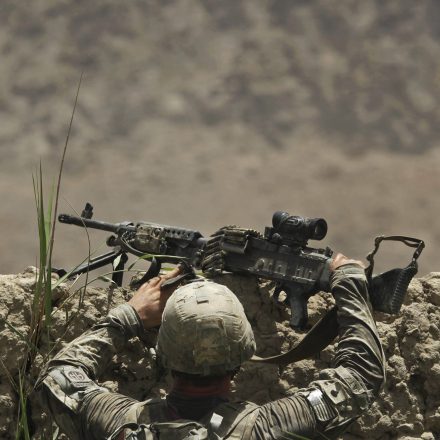
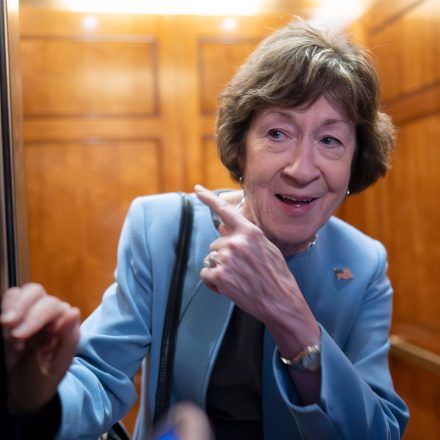

“This war is costing at least $1 billion every day,” said DeGette, Kiros’ opponent, in a public statement about her support for a War Powers resolution to block the administration’s violence. “That is billions of dollars that could go towards affordable health care and housing. I refuse to support this war.”
DeGette’s statement “rings hollow,” Kiros told The Intercept. “Democrats like DeGette had the opportunity to cut the military budget by 10 percent for that very reason — especially during Covid, when we needed that money for health care — and still voted no,” she said.
Kiros blames the “military–industrial complex” and actors like AIPAC for pushing lawmakers to support defense contractor spending and wars that line their pockets.

“There are corporations that are actively profiting from the war,” she said. “And I think it also has to do with the impact and the influence that we have seen from AIPAC and from Israel.”
Kiros has criticized DeGette for receiving over $5 million from corporate PACs. The incumbent’s top contributor is the law and lobbying firm Brownstein Hyatt Farber Schreck, which is founded and chaired by former AIPAC vice president and board member Norman Brownstein, according to OpenSecrets. “At the end of the day, the people who get you into office are the ones you are going to be accountable to,” said Kiros.
Nicole Shea Niebler, a Sunrise Movement organizer in Denver, recently confronted DeGette at a meet and greet for declining to support Block The Bombs, a bill that would limit offensive weapons transfers to Israel. Niebler said voters are right to be worried about candidates who take money from the groups pushing for war with Iran.
“If you’re not willing to say no, what else are you willing to do that is not in the interest of your constituents?” she said.
Niebler sees her organization’s broader shift toward supporting anti-war candidates like Kiros as a moment of “clarity” for the organization, calling the U.S. military “the true number one danger to our environment.”
Sunrise is hoping to reverse its luck in recent races, where two of prominent endorsed anti-war candidates, Durham County Commissioner Nida Allam in North Carolina and activist Kat Abughazaleh in Illinois lost their primaries.
Allam, in particular, centered anti-Iran war messaging in her advertisements. “I will never take a dime from defense contractors or the pro-Israel lobby,” Allam said in an ad days ahead of the election earlier this month. “I have opposed these forever wars my entire career.”
Abughazaleh and Allam both lost by relatively narrow margins, which Shiney-Ajay said she doesn’t see as a broader defeat for their cause.
“We’re up against a really steep battle and … millions and millions of dollars being poured in, and that is causing us to lose several races,” she said. “I do think there’s something happening where the narrative is that AIPAC money is poisonous, that corporate PAC money is poisonous, and that wasn’t true a few years ago.”
“There’s something happening where the narrative is that AIPAC money is poisonous, that corporate PAC money is poisonous, and that wasn’t true a few years ago.”
It’s challenging to parse out how successful the anti-war messaging was, because there were so many other factors in the races, Haider-Markel noted. “These challenger candidates also tend to be significantly younger and significantly more liberal than the incumbents they’re challenging. So all of those wrapped together,” he said. “It’s hard to distinguish which one actually played a role in some of these early defeats.”
In Denver, Kiros said she sees the anti-war and anti-military–industrial complex movement as a perpetual battle, one that will be fought in this election and others to come.
“The anti-war movement is one that has had to have this fight cyclically,” she said. “And so for me, it’s about understanding the military–industrial complex … and how we have allowed the military–industrial complex to influence our foreign policy, and to not just wait until it’s convenient, and it’s popular among the American people to be anti-war as it is right now.”
IT’S EVEN WORSE THAN WE THOUGHT.
What we’re seeing right now from Donald Trump is a full-on authoritarian takeover of the U.S. government.
This is not hyperbole.
Court orders are being ignored. MAGA loyalists have been put in charge of the military and federal law enforcement agencies. The Department of Government Efficiency has stripped Congress of its power of the purse. News outlets that challenge Trump have been banished or put under investigation.
Yet far too many are still covering Trump’s assault on democracy like politics as usual, with flattering headlines describing Trump as “unconventional,” “testing the boundaries,” and “aggressively flexing power.”
The Intercept has long covered authoritarian governments, billionaire oligarchs, and backsliding democracies around the world. We understand the challenge we face in Trump and the vital importance of press freedom in defending democracy.
We’re independent of corporate interests. Will you help us?
IT’S BEEN A DEVASTATING year for journalism — the worst in modern U.S. history.
We have a president with utter contempt for truth aggressively using the government’s full powers to dismantle the free press. Corporate news outlets have cowered, becoming accessories in Trump’s project to create a post-truth America. Right-wing billionaires have pounced, buying up media organizations and rebuilding the information environment to their liking.
In this most perilous moment for democracy, The Intercept is fighting back. But to do so effectively, we need to grow.
That’s where you come in. Will you help us expand our reporting capacity in time to hit the ground running in 2026?
We’re independent of corporate interests. Will you help us?

I’M BEN MUESSIG, The Intercept’s editor-in-chief. It’s been a devastating year for journalism — the worst in modern U.S. history.
We have a president with utter contempt for truth aggressively using the government’s full powers to dismantle the free press. Corporate news outlets have cowered, becoming accessories in Trump’s project to create a post-truth America. Right-wing billionaires have pounced, buying up media organizations and rebuilding the information environment to their liking.
In this most perilous moment for democracy, The Intercept is fighting back. But to do so effectively, we need to grow.
That’s where you come in. Will you help us expand our reporting capacity in time to hit the ground running in 2026?
We’re independent of corporate interests. Will you help us?
Contact the author:

Related

How Does TrackAIPAC Actually Track AIPAC?

Why Dems Keep Saying Trump Has “No Plan” Instead of Calling to End the War With Iran

Lawmakers Pave the Way to Billions in Handouts for Weapons Makers That the Pentagon Itself Opposed

She Lost Her Job for Speaking Out About Gaza. Can It Power Her to Congress?
Latest Stories

ICE Shooting in NYC Inflames Mamdani’s Policing Problem
After ICE shot a young father in Manhattan, New Yorkers asked the mayor to protect them from his police department and federal agents alike.

Where Are the Iran War Protests?
Despite a wildly unpopular war with Iran, a mass protest movement for peace hasn’t materialized — at least in the ways we’ve been taught to recognize.

The Intercept Briefing
Prediction Markets Have a Lock on the Midterms
As Kalshi and Polymarket dodge state regulations, prediction markets are upping the ante on next month’s elections.