
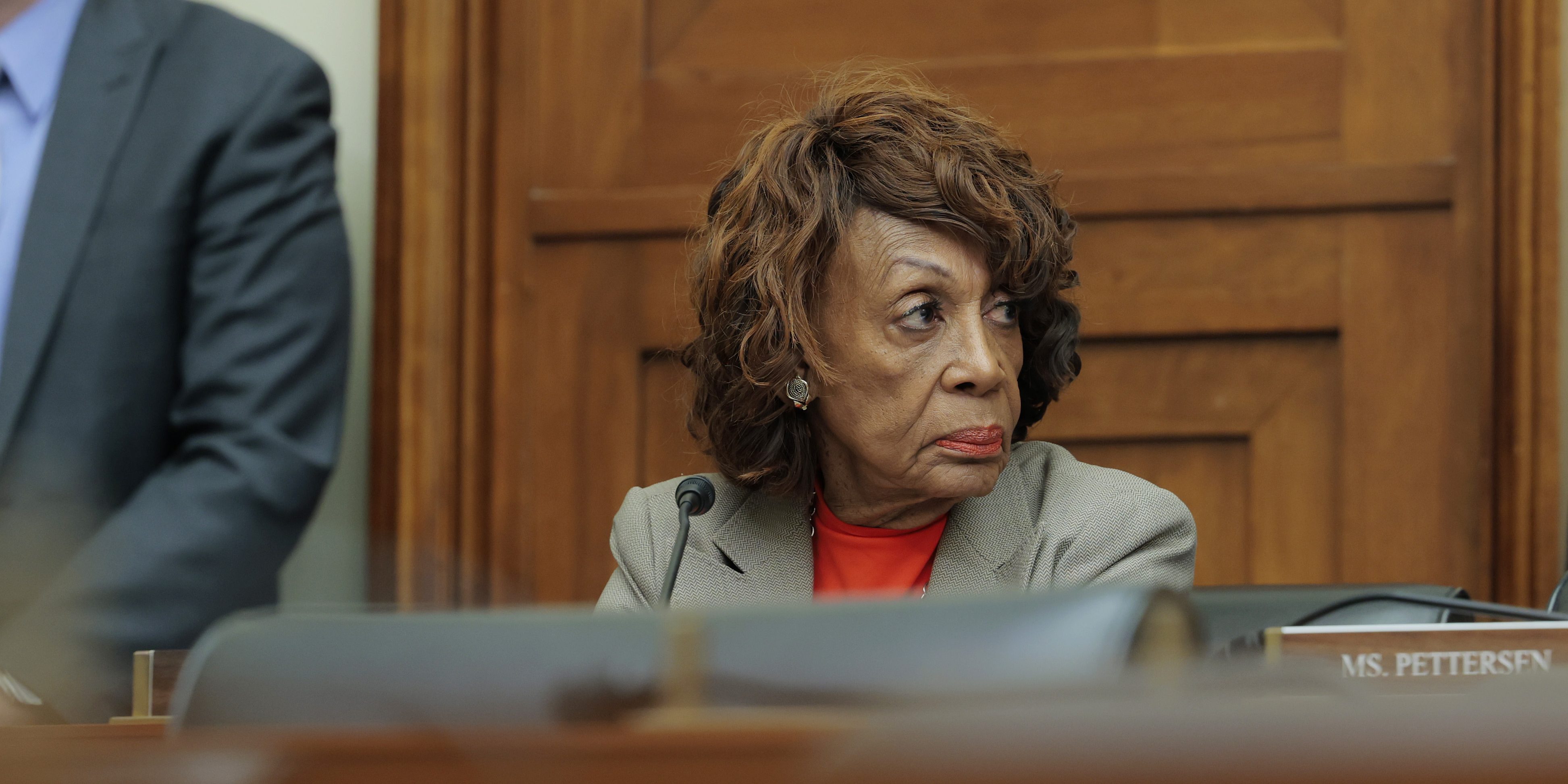
Rep. Maxine Waters, D-Calif., is the scourge of cryptocurrencies on Capitol Hill, burnishing her bona fides by supporting tighter oversight from her perch as ranking member of the House Financial Services Committee. If Democrats win the midterm elections, Waters is poised to become the chair of the influential committee.
Crypto donors are trying to make sure that never happens.
The woman mounting a long-shot challenge to Waters in California’s 43rd Congressional District has drawn more than two-thirds of her donations from the cryptocurrency industry.
Nonprofit executive Myla Rahman, 53, who is running as a younger alternative to the 87-year-old Waters, has taken 69 percent of her campaign contributions from crypto figures.
Rahman’s biggest single donor is Ripple Labs CEO Brad Garlinghouse, a leading voice pushing for looser regulations on crypto who has been active in the debate over pending crypto legislation in Congress.



Garlinghouse’s $6,600 donation last month helped bring Rahman’s total haul to $14,540 since announcing her long-shot campaign in February. The total haul is a pittance compared to what it would take to mount a viable campaign against Waters, a legendary figure who is serving her 18th term in the House. California’s primary election takes place on June 2. (Ripple Labs declined to comment.)
The total haul is a pittance compared to what it would take to mount a viable campaign against Waters, a legendary figure.
Still, any opposition funding could serve as a nuisance to Waters, a relative lightweight when it comes to fundraising compared to other top names in Congress. (Neither Waters’s nor Rahman’s campaigns responded to requests for comment.)
Rahman’s second biggest benefactor was Colin McLaren, the head of government relations at the crypto advocacy nonprofit Solana Policy Institute. He chipped in $3,500.
The crypto industry has ample reason to target Waters. While other Democrats have proven more accommodating, Waters has supported tighter oversight from her powerful position in the House Financial Services Committee, which has jurisdiction over the crypto industry.
With Waters potentially assuming the helm of the committee next year, crypto is racing to win passage of a favorable regulatory framework in the form of a bill called the Clarity Act. Despite widespread support among the Republicans, the industry has faced intense pushback from banks and credit unions who worry that passage of the law could lead to a stampede of deposits out of their institutions and into crypto exchanges.
Ripple, which has an estimated valuation of $50 billion, fought a yearslong legal battle with the Securities and Exchange Commission that centered on the issues under debate in Congress right now.
Waters’s most recent campaign filing on April 15 showed that she had a little over $300,000 on hand. Many recent contributions came from the banks and credit unions squaring off against crypto on Capitol Hill.
Despite her stance on crypto regulation, Waters also received a campaign donation from Ripple Labs co-founder and Democratic megadonor Chris Larsen. He gave $3,300 to Waters on March 6, only a few days after Garlinghouse made his donation to Rahman.
Larsen gave one of the crypto industry’s highest-profile contributions to Kamala Harris’s 2024 presidential campaign.

Rahman’s campaign does not mark crypto’s first quixotic campaign against a prominent congressional industry critic. The crypto industry also funded a Republican challenger in 2024 in an attempt to unseat Democratic Sen. Elizabeth Warren in deep-blue Massachusetts and a since-suspended primary challenge to Democratic California Rep. Brad Sherman.
In Sherman’s race, the crypto industry made clear its intention to leverage a message of generational change against critics of blockchain currencies.
IT’S EVEN WORSE THAN WE THOUGHT.
What we’re seeing right now from Donald Trump is a full-on authoritarian takeover of the U.S. government.
This is not hyperbole.
Court orders are being ignored. MAGA loyalists have been put in charge of the military and federal law enforcement agencies. The Department of Government Efficiency has stripped Congress of its power of the purse. News outlets that challenge Trump have been banished or put under investigation.
Yet far too many are still covering Trump’s assault on democracy like politics as usual, with flattering headlines describing Trump as “unconventional,” “testing the boundaries,” and “aggressively flexing power.”
The Intercept has long covered authoritarian governments, billionaire oligarchs, and backsliding democracies around the world. We understand the challenge we face in Trump and the vital importance of press freedom in defending democracy.
We’re independent of corporate interests. Will you help us?
IT’S BEEN A DEVASTATING year for journalism — the worst in modern U.S. history.
We have a president with utter contempt for truth aggressively using the government’s full powers to dismantle the free press. Corporate news outlets have cowered, becoming accessories in Trump’s project to create a post-truth America. Right-wing billionaires have pounced, buying up media organizations and rebuilding the information environment to their liking.
In this most perilous moment for democracy, The Intercept is fighting back. But to do so effectively, we need to grow.
That’s where you come in. Will you help us expand our reporting capacity in time to hit the ground running in 2026?
We’re independent of corporate interests. Will you help us?

I’M BEN MUESSIG, The Intercept’s editor-in-chief. It’s been a devastating year for journalism — the worst in modern U.S. history.
We have a president with utter contempt for truth aggressively using the government’s full powers to dismantle the free press. Corporate news outlets have cowered, becoming accessories in Trump’s project to create a post-truth America. Right-wing billionaires have pounced, buying up media organizations and rebuilding the information environment to their liking.
In this most perilous moment for democracy, The Intercept is fighting back. But to do so effectively, we need to grow.
That’s where you come in. Will you help us expand our reporting capacity in time to hit the ground running in 2026?
We’re independent of corporate interests. Will you help us?
Contact the author:

Related


Latest Stories

The Intercept Briefing
Prediction Markets Have a Lock on the Midterms
As Kalshi and Polymarket dodge state regulations, prediction markets are upping the ante on next month’s elections.

The War on Immigrants
ICE Agent on Scene of NYC Shooting Was Posing as Construction Worker, Eyewitness Says
A member of Congress at the scene confirmed to The Intercept that there was a child in the victim’s car when ICE agents shot at it.

Pete Hegseth’s Military of the Future: Defined by AI and an Utter Lack of Oversight
In announcing Project Meridian and a new Autonomous Warfare Command, War Secretary Pete Hegseth is inviting conflicts of interest.