
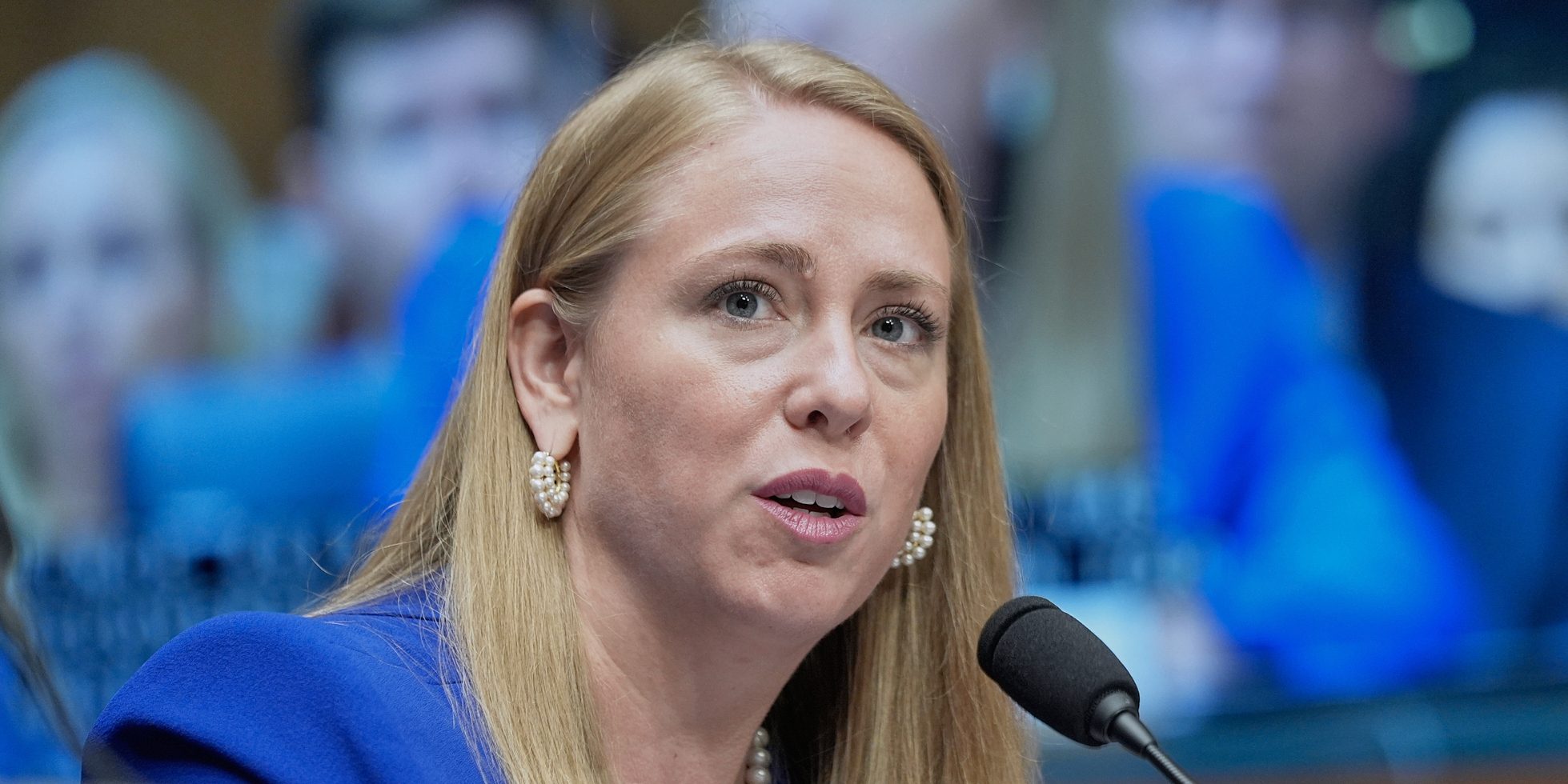
The chair of the Equal Employment Opportunity Commission, the federal agency created by the Civil Rights Act of 1964 to protect American workers from discrimination, moved to delete the agency’s affirmative action rule that was implemented almost 50 years ago.
Chair Andrea Lucas, who was appointed by President Donald Trump, proposed to rescind the “Affirmative Action Appropriate Under Title VII of the Civil Rights Act of 1964” rule on May 27. The rule has proved a barrier to her efforts to bring lawsuits on behalf of white men who say they were discriminated against at work — a barrier the rescission would get rid of.
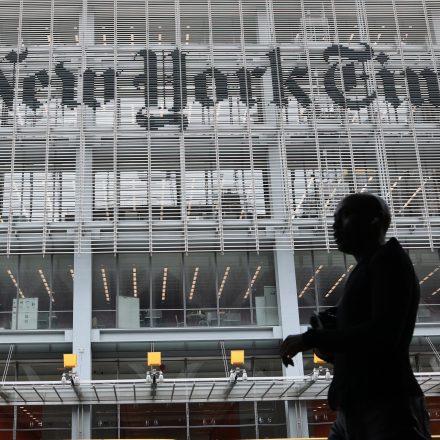
The move, which was previously unreported, comes amid Lucas’s quest to characterize all employer efforts at diversity, equity, and inclusion as illegal race discrimination. The agency has filed lawsuits under her watch on behalf of white men at the New York Times and Coca-Cola, as well as investigations into Nike and Northwestern Mutual.
“This proposed rescission is part of this administration’s continued assault on equality for people of color and for women,” said former EEOC commissioner Jocelyn Samuels, who added that the change reflects Trump’s “solicitude for the fortunes of white men.”
The EEOC did not respond to a request for comment.
Rule to Fight Discrimination
The rule Lucas wants to do away with was crafted shortly after the EEOC was granted litigation authority in 1972.
Racial discrimination had been rampant throughout American workplaces, and some employers wanted to act to correct those long-standing discriminatory practices and racial disparities in an affirmative way.
Responding to the call, the EEOC crafted the rule to allow for very narrow circumstances in which it would be permissible for employers to take race into account in such efforts.
To take advantage of the rule, employers have to do an analysis showing they had shut out women or people of color for a long time — in other words, that there were “prior discriminatory practices.” Only then can a hiring process favor, say, Black candidates for a job position.
The rule also gives employers some cover. Under the Civil Rights Act, employers can’t be held liable for taking action done in good faith to follow an EEOC regulation that was voted on by the commissioners, such as the affirmative action rule.
At least one large employer in the Trump EEOC’s sights has cited the rule. In its motion to dismiss the EEOC’s lawsuit, Coca-Cola referred to the agency’s affirmative action rule as proof that the agency has encouraged the very behavior it is now penalizing.
Samuels, the former EEOC commissioner, said Lucas’s move to get rid of the rule “could be part of an effort to remove a potential defense.”
Upheld at Supreme Court
The Supreme Court has found narrow approaches to affirmative action to be constitutional.
In the 1987 case Johnson v. Transportation Agency and the 1979 case United Steelworkers of America v. Weber, the court allowed employers, in the case of what it called a “manifest imbalance,” to temporarily take sex and race into account as part of plans to increase representation in particular jobs until women or people of color are commensurate with their share of the population.
Those decisions still stand.
“The law is set by the statute and the Supreme Court’s interpretation,” said Charlotte Burrows, a senior affiliated research scholar at New York University’s School of Law and a former EEOC chair. “The EEOC can’t change that.”
That’s true despite the Supreme Court’s decision in Students for Fair Admissions, Inc. v. President and Fellows of Harvard College that struck down affirmative action in college admissions; that decision doesn’t apply to Title VII, which governs employment discrimination.
“The law is set by the statute and the Supreme Court’s interpretation. The EEOC can’t change that.”
That doesn’t mean the administration isn’t trying to change the law.
After Lucas asked the Office of Legal Counsel at the Department of Justice to weigh in, the department released an opinion that says, among other things, that the agency’s affirmative action guidelines “run further into unconstitutional territory.”
Lucas may be trying to blur the lines between affirmative action and DEI policies, but “they are two very distinct things,” Burrows said.
Employers can engage in a variety of perfectly legal approaches to diversity, such as having DEI programs that don’t give women or people of color more advantages but simply open the doors to more people.
“It is a messaging exercise that is part of this administration’s campaign to brand any form of proactive conduct on the part of employers to anticipate, preempt, and address barriers to equal employment opportunity as unlawful, race-based decision-making that disadvantages white men,” Samuels said. “This administration’s pronouncements have had really damaging effects on proactive programs that were designed to identify and address potential barriers before they ripened into discrimination.”
Assault on DEI
Lucas recently scrapped the EEOC’s previous Strategic Enforcement Plan that included as a priority that the agency “support employer efforts to implement lawful and appropriate diversity, equity, inclusion, and accessibility (DEIA) practices.” It was crafted through a lengthy public process and was slated to remain in place through 2028.
Instead, Lucas replaced the plan with a National Enforcement Plan that prioritizes going after DEI policies.
That move came after she had already directed agency officials to compile a list of cases in line with her own personal priorities, including “rooting out unlawful DEI-motivated race and sex discrimination,” and recorded a direct-to-camera video soliciting complaints from white men who feel they’ve been discriminated against at work.
Such cases have been accelerated through the agency’s processes, according to the New York Times, although staff have struggled to find complaints with merit.
IT’S EVEN WORSE THAN WE THOUGHT.
What we’re seeing right now from Donald Trump is a full-on authoritarian takeover of the U.S. government.
This is not hyperbole.
Court orders are being ignored. MAGA loyalists have been put in charge of the military and federal law enforcement agencies. The Department of Government Efficiency has stripped Congress of its power of the purse. News outlets that challenge Trump have been banished or put under investigation.
Yet far too many are still covering Trump’s assault on democracy like politics as usual, with flattering headlines describing Trump as “unconventional,” “testing the boundaries,” and “aggressively flexing power.”
The Intercept has long covered authoritarian governments, billionaire oligarchs, and backsliding democracies around the world. We understand the challenge we face in Trump and the vital importance of press freedom in defending democracy.
We’re independent of corporate interests. Will you help us?
IT’S BEEN A DEVASTATING year for journalism — the worst in modern U.S. history.
We have a president with utter contempt for truth aggressively using the government’s full powers to dismantle the free press. Corporate news outlets have cowered, becoming accessories in Trump’s project to create a post-truth America. Right-wing billionaires have pounced, buying up media organizations and rebuilding the information environment to their liking.
In this most perilous moment for democracy, The Intercept is fighting back. But to do so effectively, we need to grow.
That’s where you come in. Will you help us expand our reporting capacity in time to hit the ground running in 2026?
We’re independent of corporate interests. Will you help us?

I’M BEN MUESSIG, The Intercept’s editor-in-chief. It’s been a devastating year for journalism — the worst in modern U.S. history.
We have a president with utter contempt for truth aggressively using the government’s full powers to dismantle the free press. Corporate news outlets have cowered, becoming accessories in Trump’s project to create a post-truth America. Right-wing billionaires have pounced, buying up media organizations and rebuilding the information environment to their liking.
In this most perilous moment for democracy, The Intercept is fighting back. But to do so effectively, we need to grow.
That’s where you come in. Will you help us expand our reporting capacity in time to hit the ground running in 2026?
We’re independent of corporate interests. Will you help us?
Contact the author:
Related

EEOC Quietly Hired Lawyer Who Crusaded for Cases of Discrimination Against Men — Including His Own

The Right Wing Desperately Wants to Make Charlie Kirk Its MLK

Steve Scalise Knows Exactly What Led to the Bourbon Street Attack: DEI Initiatives

Yale Legacy Admission Brett Kavanaugh Is Now the Swing Vote on Affirmative Action at Universities
Latest Stories

The Army Wants to Sic AI Agents on Its Enemies. What Could Go Wrong?
Documents obtained by The Intercept show the military is trying to deploy autonomous AI agents to hack its adversaries.

President Apocalypse
While Trump campaigns for a Nobel Peace Prize, his war on humanity’s only home continues unabated.

Targeting Iran
Dems Have an Opportunity to Force an End to the Iran War. Will They Take It?
With Democrats campaigning on ending the war, advocates want them to put their money where their mouth is and risk a lame-duck shutdown.