
John Mark Rozendaal was just trying to play music.
On May 29, along with scores of others, Rozendaal responded to calls on social media to gather outside of Delaney Hall, the immigration detention facility in Newark, New Jersey.
The privately run U.S. Immigration and Customs Enforcement facility had, in recent weeks, become the site of daily protests, spurred by a detainee hunger strike against alleged ghastly conditions inside.
When Rozendaal went to Delaney Hall, he took his cello with him.
“I consider music to be a de-escalatory thing to do,” he told The Intercept. “I sat down on the concrete barricade facing north and started to play.”
“The agent said, ‘We’re calling because you were arrested at Delaney Hall.’”
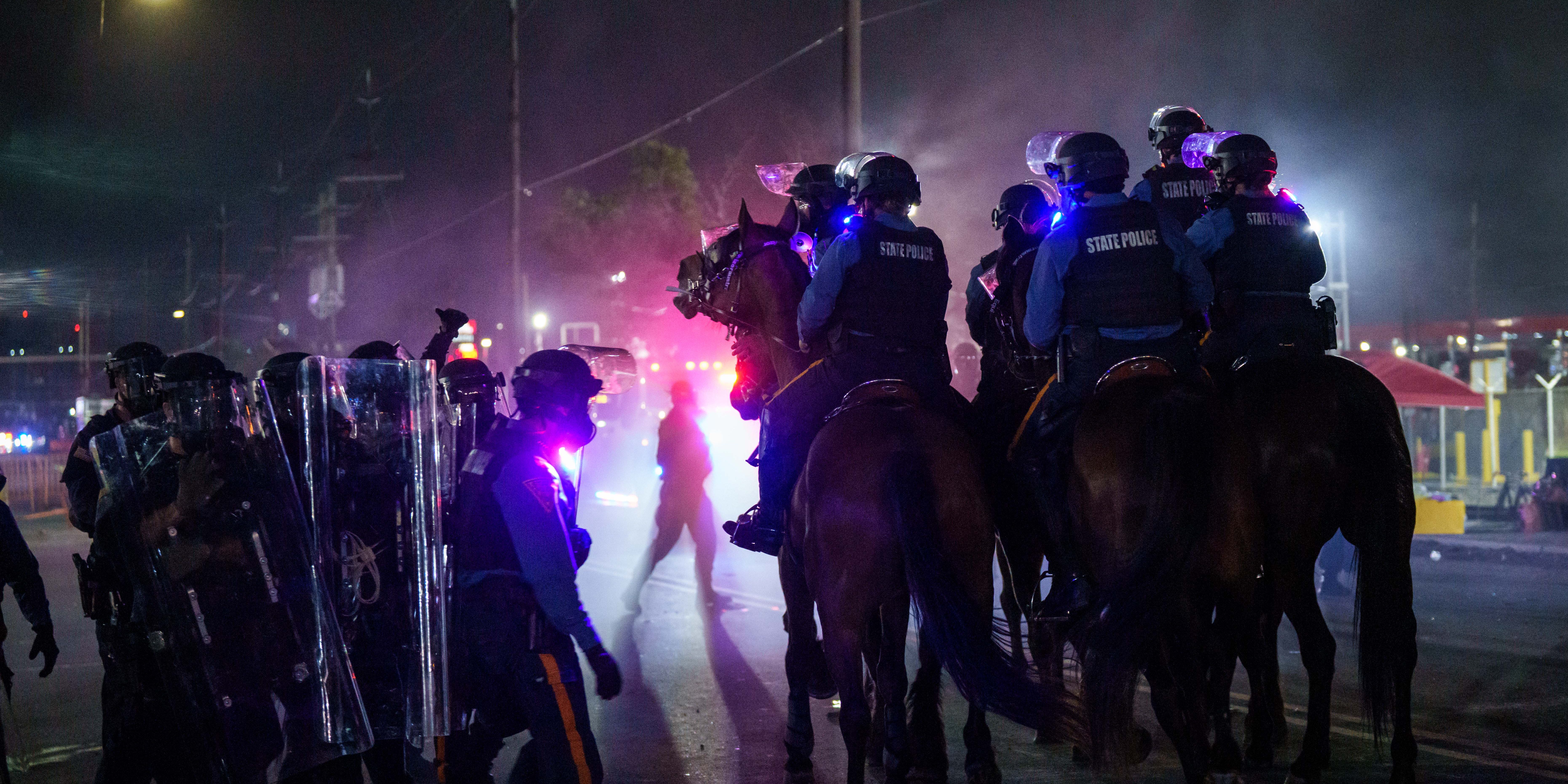
That night, however, the scene outside Delaney Hall quickly took a violent turn. New Jersey State Police and ICE agents issued a dispersal order and began to clear protesters from the area by force — with officers deploying chemical weapons and charging protesters on horseback.
“As I played, I saw this wall of plastic riot shields and cops in tactical gear advancing,” Rozendaal recalled. “There were tear gas canisters flying overhead. I could see horses behind the riot shields, flash-bangs. So it was quite dramatic.”
Moments later, Rozendaal was arrested by the New Jersey State Police and, according to an arrest report viewed by The Intercept, charged with one count of obstructing law enforcement. The charge was minor — but a week later, things took a strange turn when Rozendaal received a call from the FBI.
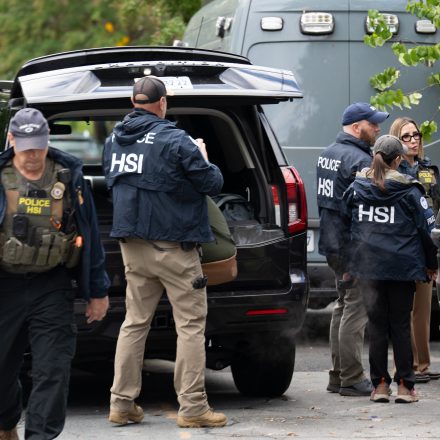
“The agent said, ‘We’re calling because you were arrested at Delaney Hall,’” Rozendaal told The Intercept. (The FBI declined to comment.)
In the following minutes, Rozendaal said the agents asked if he would be willing to provide the FBI with information on protesters that they described as “anybody planning to go to Delaney Hall with not the right intentions.”
“So, I mean, they were asking me to inform,” Rozendaal said.
Mainstay FBI Tactic
Rozendaal is not the only Delaney Hall protester to receive a call from the FBI.
In the weeks since arrests began stacking up at the protests — approximately 90 people have been arrested so far — at least half of those taken into custody have received calls from federal agents looking for information, according to Benjamin Van Meter, a deputy public defender with the Essex County Public Defender’s Office who represents a number of protesters facing charges.
Van Meter lodged a complaint with authorities over the matter, claiming the FBI contact with his clients violated their constitutional rights.
The phone number used to contact Rozendaal, according to call history logs reviewed by The Intercept, is registered to the FBI’s New York field office and is posted online as an anonymous tipline.
Rozendaal said he rejected the offer immediately and, when the agent attempted to question him further, invoked his right to remain silent, ending the conversation.

The FBI has a long track record of trying to turn protesters, political dissidents, and ethnic and religious minorities into informants. The strategy, which is still commonly used today, can serve agents by both collecting information while stoking distrust among members of political movements and religious communities, according to Amol Sinha, executive director of the American Civil Liberties Union’s New Jersey chapter.
“With every major protest movement in United States history, there have been attempts at infiltration.”
“With every major protest movement in United States history, there have been attempts at infiltration and attempts to disrupt them and to sow discord,” Sinha said. “The FBI has repeatedly been on the wrong side of history every time they’ve tried these tactics of infiltration.”
Sinha said it was important for anyone approached by federal agents to remember their right to remain silent and to ask for an attorney to be present for any questioning.
“Unless the FBI produces a warrant, you have the right to refuse entry, ” Sinha said. “You certainly have the right to stay silent and to demand a lawyer. You are not under any obligation to speak to them about anything — especially if they are charging you with a crime.”
“The Rights of Our Clients”
Samuel Becker, another protester facing local charges after an arrest outside Delaney Hall, told The Intercept he too got a visit from federal agents in the days following his arrest.
“The FBI would rather intimidate and punish the people protesting outside of Delaney Hall than investigate the physical, sexual, and psychological violence that ICE agents and their auxiliaries are inflicting on detainees across this country every day,” Becker said.
Van Meter, the public defender, wrote a letter to Robert Frazer, the U.S. attorney for the District of New Jersey, and two high-ranking FBI officials in New York and New Jersey, demanding that the FBI stop their attempts to question his clients without an attorney present. (The Department of Justice did not respond to a request for comment.)
“These attempts at contacting our clients at their homes and by phone violate their right to counsel and we ask that you immediately cease and desist from all attempts to question or interrogate our clients without their counsel present,” Van Meter wrote in the letter, dated June 9. “Any further efforts to question our clients are a continued violation of their constitutional right to counsel and our office remains ready to seek all available relief under both state and federal law.”
In a statement to The Intercept, Karen Paff, a spokesperson for the New Jersey Office of the Public Defender, said Van Meter and his colleagues were simply looking “to ensure that the rights of our clients are respected.”
“When law-enforcement officers seek to question individuals who are represented by counsel about matters within the scope of that representation, it is our responsibility to notify the appropriate agencies that counsel has been assigned and that any such communications must comply with the law,” Paff said. “This is not a new or case-specific practice. It is a routine part of our responsibility to clients in any matter where represented individuals may be approached for questioning.”
For Rozendaal, the intent of the FBI agents who sought him out seemed to go beyond just fishing for information.
“I think the real intent is to divide us, to make us scared to talk to each other, too scared to talk in general, scared to go to Delaney Hall,” Rozendaal said. “It won’t work.”
IT’S EVEN WORSE THAN WE THOUGHT.
What we’re seeing right now from Donald Trump is a full-on authoritarian takeover of the U.S. government.
This is not hyperbole.
Court orders are being ignored. MAGA loyalists have been put in charge of the military and federal law enforcement agencies. The Department of Government Efficiency has stripped Congress of its power of the purse. News outlets that challenge Trump have been banished or put under investigation.
Yet far too many are still covering Trump’s assault on democracy like politics as usual, with flattering headlines describing Trump as “unconventional,” “testing the boundaries,” and “aggressively flexing power.”
The Intercept has long covered authoritarian governments, billionaire oligarchs, and backsliding democracies around the world. We understand the challenge we face in Trump and the vital importance of press freedom in defending democracy.
We’re independent of corporate interests. Will you help us?
IT’S BEEN A DEVASTATING year for journalism — the worst in modern U.S. history.
We have a president with utter contempt for truth aggressively using the government’s full powers to dismantle the free press. Corporate news outlets have cowered, becoming accessories in Trump’s project to create a post-truth America. Right-wing billionaires have pounced, buying up media organizations and rebuilding the information environment to their liking.
In this most perilous moment for democracy, The Intercept is fighting back. But to do so effectively, we need to grow.
That’s where you come in. Will you help us expand our reporting capacity in time to hit the ground running in 2026?
We’re independent of corporate interests. Will you help us?

I’M BEN MUESSIG, The Intercept’s editor-in-chief. It’s been a devastating year for journalism — the worst in modern U.S. history.
We have a president with utter contempt for truth aggressively using the government’s full powers to dismantle the free press. Corporate news outlets have cowered, becoming accessories in Trump’s project to create a post-truth America. Right-wing billionaires have pounced, buying up media organizations and rebuilding the information environment to their liking.
In this most perilous moment for democracy, The Intercept is fighting back. But to do so effectively, we need to grow.
That’s where you come in. Will you help us expand our reporting capacity in time to hit the ground running in 2026?
We’re independent of corporate interests. Will you help us?
Contact the author:

Related

FBI Counterterrorism Agents Spent Weeks Seeking a Climate Activist — Then Showed Up at His Door

Longtime Paid FBI Informant Was Instrumental in Terror Case Against “Turtle Island Liberation Front”

This Imam Refused to Be an FBI Informant. Now ICE Wants to Deport Him.

The FBI Used an Undercover Cop With Pink Hair to Spy on Activists and Manufacture Crimes
Latest Stories

Midterms 2026
Mike Rogers Spent $100K on Private Jets and Luxury Travel Last Quarter
The Republican running for Senate in Michigan is directing campaign funds toward chartered flights, a Miami car service, and BMW repairs.

The Army Wants to Sic AI Agents on Its Enemies. What Could Go Wrong?
Documents obtained by The Intercept show the military is trying to deploy autonomous AI agents to hack its adversaries.

President Apocalypse
While Trump campaigns for a Nobel Peace Prize, his war on humanity’s only home continues unabated.