Documents
Small Footprint Operations 5/13
Oct. 15, 2015

ISR Support to
Small Footprint CT Operations Somalia Yemen
Executive Summary
ISR Task Force
Requirements and Analysis Division
May 2013
Overall classification of this document is
ISR Support to
Small Footprint CT Operations Somalia Yemen
Executive Summary
ISR Task Force
Requirements and Analysis Division
May 2013
Overall classification of this document is
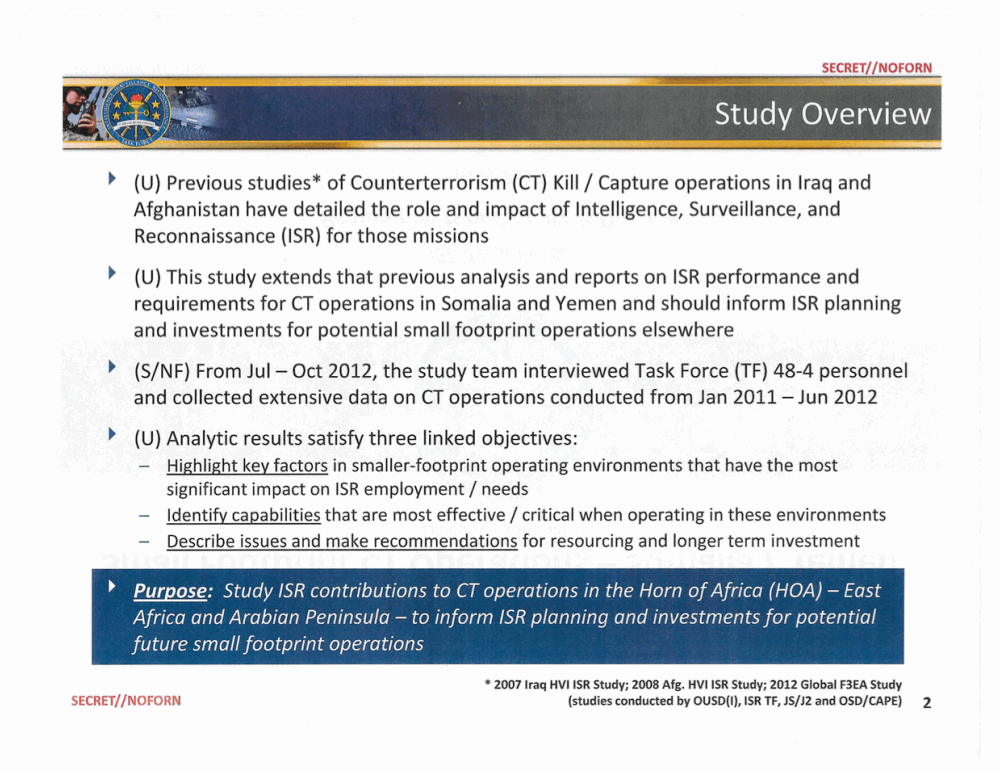
Study Overview
(U) Previous studies* of Counterterrorism (CT) Kill Capture operations in Iraq and
Afghanistan have detailed the role and impact of Intelligence, Surveillance, and
Reconnaissance (ISR) for those missions
(U) This study extends that previous analysis and reports on ISR performance and
requirements for CT operations in Somalia and Yemen and should inform ISR planning
and investments for potential small footprint operations elsewhere
F) From Jul Oct 2012, the study team interviewed Task Force (TF) 48-4 personnel
and collected extensive data on CT operations conducted from Jan 2011 ?Jun 2012
(U) Analytic results satisfy three linked objectives:
Highlight key factors in smaller-footprint operating environments that have the most
significant impact on ISR employment needs
Identify capabilities that are most effective critical when operating in these environments
Describe issues and make recommendations for resourcing and longer term investment
Purose: Study ISR contributions to CT operations in the Horn of Africa (HOA) East
Africa and Arabian Peninsula - to inform ISR planning and investments for potential
future small footprint operations
2007 Iraq HVI ISR Study; 2008 Afg. HVI ISR Study; 2012 Global F3EA Study
(studies conducted by ISR TF, 15/12 and
Study Overview
(U) Previous studies* of Counterterrorism (CT) Kill Capture operations in Iraq and
Afghanistan have detailed the role and impact of Intelligence, Surveillance, and
Reconnaissance (ISR) for those missions
(U) This study extends that previous analysis and reports on ISR performance and
requirements for CT operations in Somalia and Yemen and should inform ISR planning
and investments for potential small footprint operations elsewhere
F) From Jul Oct 2012, the study team interviewed Task Force (TF) 48-4 personnel
and collected extensive data on CT operations conducted from Jan 2011 ?Jun 2012
(U) Analytic results satisfy three linked objectives:
Highlight key factors in smaller-footprint operating environments that have the most
significant impact on ISR employment needs
Identify capabilities that are most effective critical when operating in these environments
Describe issues and make recommendations for resourcing and longer term investment
Purose: Study ISR contributions to CT operations in the Horn of Africa (HOA) East
Africa and Arabian Peninsula - to inform ISR planning and investments for potential
future small footprint operations
2007 Iraq HVI ISR Study; 2008 Afg. HVI ISR Study; 2012 Global F3EA Study
(studies conducted by ISR TF, 15/12 and

TF 48?4 Focus and Organization
TF 48-4 is organized into two main branches: East Africa (EA) in Nairobi, Kenya
and Arabian Peninsula (AP) in Sana?a, Yemen
TF 48-4 EA and AP are further subdivided geographically into teams
TF 48-4 forward support element is at Camp Lemonier, Djibouti
TF 48-4 Theater Footprint
ISR is based at three regional
airfields, supplemented with sea-based ?030"?
- an TF -4.2 AP
Scan Eagles or MCI-8 Fire Scouts marrow Ame San ?8
Djibouti (Camp Lemonier)* Woman"? 3138;
Arba Minch 0.00
Manda Bay Djibomi
Malakal48-4 counterterrorlsm 6x saw-owe TF48-4.3
operations are focused on violent 2* ?made
. . . Arba Minch 8X F-ISE Somalia Sweep
extremist organizations (VEOs) 1x MM GOCO
AI Qaida in the Arabian Peninsula 1x MCI-9 GOCO ,m ..
. . . omaaomga MaritimeISR
Al Qaida In East Africa/AI Shaabab Kampaan 1x ss/rs on
. I . Nairob
TF 48-4 CT operations are only The a. mums
part ofa broader whole-of-government iMandaBay . TF48-45ites
approach to regional security stability m:
Subsequent to data collection and interviews for this study,
Source; r; 43.4 Command Brief ?ight operations are being shifted from Camp Lemonier 3
TF 48?4 Focus and Organization
TF 48-4 is organized into two main branches: East Africa (EA) in Nairobi, Kenya
and Arabian Peninsula (AP) in Sana?a, Yemen
TF 48-4 EA and AP are further subdivided geographically into teams
TF 48-4 forward support element is at Camp Lemonier, Djibouti
TF 48-4 Theater Footprint
ISR is based at three regional
airfields, supplemented with sea-based ?030"?
- an TF -4.2 AP
Scan Eagles or MCI-8 Fire Scouts marrow Ame San ?8
Djibouti (Camp Lemonier)* Woman"? 3138;
Arba Minch 0.00
Manda Bay Djibomi
Malakal48-4 counterterrorlsm 6x saw-owe TF48-4.3
operations are focused on violent 2* ?made
. . . Arba Minch 8X F-ISE Somalia Sweep
extremist organizations (VEOs) 1x MM GOCO
AI Qaida in the Arabian Peninsula 1x MCI-9 GOCO ,m ..
. . . omaaomga MaritimeISR
Al Qaida In East Africa/AI Shaabab Kampaan 1x ss/rs on
. I . Nairob
TF 48-4 CT operations are only The a. mums
part ofa broader whole-of-government iMandaBay . TF48-45ites
approach to regional security stability m:
Subsequent to data collection and interviews for this study,
Source; r; 43.4 Command Brief ?ight operations are being shifted from Camp Lemonier 3

Timeline: Objective Peckham Case Study
?an.
2006 2007 2008 2009 2010 2011 2012
JIFIMIAIMIJIJIAISIOINID JIFIMIAIMI1111AISIOINID JIF A JIAISIOINID
FIFIF a Find
HUMINT -
SIGINT
APG
MV
I - s/su/Nr
Activity Description Summary SI palms"
I
Intelligence collection on target to establish pattern of life :00 5/5
FIX
2006: 081 Peckham attended ?8th Al-linn", a specialized trainin 8
program - Including explosives training
2006 - 2009: OBJ Peckham returned to the UK and provided 3
financial support to A0 allied elements in East Africa "5 .0
Oct 2009: 081 Peckham returned to Somalia after his second
attempt; Travel was coordinated by 08] LOCKHART hi I
Nu .I
- Dec 2009: 081 Peckham coordinated with Kenyan based facilitator ?min ~ur~ntu mum.
to facilitate money, equipment, and ?ghters through the UK to SOM
OBJ PECKHAM MOVEMENT
Target has been located for kinetic/non-kinetic engagement
23 June 2011: Strike failed
Problems with Approval Authorities, NAVAF C2, and AC malfunction .
. 1;
NF 12 Janua 2012: Fix durin a vehicle follow - No Strike ?x
8 ailed Strike '5u?99{jfu'
Kill/Capture or neutralization of an enemy Target an 12)
(23 Jun 11) w'on-m
NF) 21 Jan 2012: 08] PECKHAM was eliminated via kinetic strike .Or
- O359:White SUV enters PECKHAM NAI) - -i'x ri I
- 0502:Adult with heavy strides and slight limp (OBJ PECKHAM) ,f we 9 "9 rave
0811:Vehicle follow begins no Finish (12 Jan 12)
1039: Full Register/Match (SI)
. 12 Jan OBJ traveled to Merca
1254: Continue to monitor the scene 14-21 Jan OBJ returned to Afgooye/Ceelasha
NOFO Source: TF 48-4 Baseball Cards, Oct 2006 - June 2012; EA ISR Logs, Jan 201 1 - June 2012; IBM Analysis 4
Timeline: Objective Peckham Case Study
?an.
2006 2007 2008 2009 2010 2011 2012
JIFIMIAIMIJIJIAISIOINID JIFIMIAIMI1111AISIOINID JIF A JIAISIOINID
FIFIF a Find
HUMINT -
SIGINT
APG
MV
I - s/su/Nr
Activity Description Summary SI palms"
I
Intelligence collection on target to establish pattern of life :00 5/5
FIX
2006: 081 Peckham attended ?8th Al-linn", a specialized trainin 8
program - Including explosives training
2006 - 2009: OBJ Peckham returned to the UK and provided 3
financial support to A0 allied elements in East Africa "5 .0
Oct 2009: 081 Peckham returned to Somalia after his second
attempt; Travel was coordinated by 08] LOCKHART hi I
Nu .I
- Dec 2009: 081 Peckham coordinated with Kenyan based facilitator ?min ~ur~ntu mum.
to facilitate money, equipment, and ?ghters through the UK to SOM
OBJ PECKHAM MOVEMENT
Target has been located for kinetic/non-kinetic engagement
23 June 2011: Strike failed
Problems with Approval Authorities, NAVAF C2, and AC malfunction .
. 1;
NF 12 Janua 2012: Fix durin a vehicle follow - No Strike ?x
8 ailed Strike '5u?99{jfu'
Kill/Capture or neutralization of an enemy Target an 12)
(23 Jun 11) w'on-m
NF) 21 Jan 2012: 08] PECKHAM was eliminated via kinetic strike .Or
- O359:White SUV enters PECKHAM NAI) - -i'x ri I
- 0502:Adult with heavy strides and slight limp (OBJ PECKHAM) ,f we 9 "9 rave
0811:Vehicle follow begins no Finish (12 Jan 12)
1039: Full Register/Match (SI)
. 12 Jan OBJ traveled to Merca
1254: Continue to monitor the scene 14-21 Jan OBJ returned to Afgooye/Ceelasha
NOFO Source: TF 48-4 Baseball Cards, Oct 2006 - June 2012; EA ISR Logs, Jan 201 1 - June 2012; IBM Analysis 4

CLDJ Distances to HOA NAls
Djibouti airfield to Yemen NAls
Somali NAIs are more distant and (km)
0
more dispersed than Yemeni NAls 80% owean NAB
SIN 50 are greater than 500 80%
In Yemen km from Djibouti 609, is
there are 225 ?5 40 go
NAls with average I 20.0 at,
distance of 0%
471 km from If? '90 39? $0 4?0 (3?0
CLDJ Djibouti Airlield to Yemen NAls ?Cumulalive
Djibouti Airfield to Somalia NAI distances
In Somalia 200 (km) 100wu
there are 80% Of Somali NAIS 800/
AI . 150 are greater than 1000
an as km from Djibouti 60% .8
average 3 100 .5
. .0 40%
distance of
2 0"
1065 Somalia NAIs ?Cumulative
For Iraq - 80% of OBJS are within 150 km hr round-trip transit for
For Afghanistan - 80% of OBJs are within 400 km hr round-trip transit for
Source: TF 48-4 Data, HVI Campaign - Afghanistan ISR Assets, 2008 slide 9; IBM Analysis 5
CLDJ Distances to HOA NAls
Djibouti airfield to Yemen NAls
Somali NAIs are more distant and (km)
0
more dispersed than Yemeni NAls 80% owean NAB
SIN 50 are greater than 500 80%
In Yemen km from Djibouti 609, is
there are 225 ?5 40 go
NAls with average I 20.0 at,
distance of 0%
471 km from If? '90 39? $0 4?0 (3?0
CLDJ Djibouti Airlield to Yemen NAls ?Cumulalive
Djibouti Airfield to Somalia NAI distances
In Somalia 200 (km) 100wu
there are 80% Of Somali NAIS 800/
AI . 150 are greater than 1000
an as km from Djibouti 60% .8
average 3 100 .5
. .0 40%
distance of
2 0"
1065 Somalia NAIs ?Cumulative
For Iraq - 80% of OBJS are within 150 km hr round-trip transit for
For Afghanistan - 80% of OBJs are within 400 km hr round-trip transit for
Source: TF 48-4 Data, HVI Campaign - Afghanistan ISR Assets, 2008 slide 9; IBM Analysis 5

an,
Authorization to Use Military Force Operations
A
F) Step 1 - ?Developing a target? to ?Authorization of a target?
TF 48-4 direct action operations are conducted under execution orders for Operation Copper
Dune (AP/Yemen) and Operation Jupiter Garret (EA/Somalia)
These orders specify delegated authorities, authorized targets and criteria for action
TF intelligence personnel, with support from IC partners, builds the case for action
This information, in a condensed format POTUS
known as a ?baseball card is packaged a t? Am?
with the operations information into a PC
package and staffed up to higher
echelons?ultimately to the President
4
Copper Dune (Yemen) 16
CAD: 30km 2012
If prov?? ?lat . Jomt Sta NF) Step 2 - ?Authorizing? to ?Actioning?
presen a rea eres GCC If POTUS approves the CONOP, operations
or personnel, then a 60-day a enter a targeting cycle
authorization to TF-9-22
Actionable intelligence provides potential targeting
windows
The targeting window suitability is determined by ROE:
action is given
Target
Information
TF-48-4
Folder
must be Low CDE ?near certainty? of HVI presence based
on two forms of intelligence, no contradictory intelligence
Actionable
Intelligence
mitulm
.
TF, GCC, HN Gov all must concur or no strike occurs
All Agree:
st
Source: Multiple interviews conducted with JSOC and TF 48?4 personnel
One disagrees:
an,
Authorization to Use Military Force Operations
A
F) Step 1 - ?Developing a target? to ?Authorization of a target?
TF 48-4 direct action operations are conducted under execution orders for Operation Copper
Dune (AP/Yemen) and Operation Jupiter Garret (EA/Somalia)
These orders specify delegated authorities, authorized targets and criteria for action
TF intelligence personnel, with support from IC partners, builds the case for action
This information, in a condensed format POTUS
known as a ?baseball card is packaged a t? Am?
with the operations information into a PC
package and staffed up to higher
echelons?ultimately to the President
4
Copper Dune (Yemen) 16
CAD: 30km 2012
If prov?? ?lat . Jomt Sta NF) Step 2 - ?Authorizing? to ?Actioning?
presen a rea eres GCC If POTUS approves the CONOP, operations
or personnel, then a 60-day a enter a targeting cycle
authorization to TF-9-22
Actionable intelligence provides potential targeting
windows
The targeting window suitability is determined by ROE:
action is given
Target
Information
TF-48-4
Folder
must be Low CDE ?near certainty? of HVI presence based
on two forms of intelligence, no contradictory intelligence
Actionable
Intelligence
mitulm
.
TF, GCC, HN Gov all must concur or no strike occurs
All Agree:
st
Source: Multiple interviews conducted with JSOC and TF 48?4 personnel
One disagrees:

Summary of Factors Impacting ISR Support to Ops
HVI operations in HOA highlight several key factors impacting ISR support to CT
operations in a small-footprint environment
These factors differentiate CT in HOA from similar operations in Afghanistan or Iraq
Key Factors Description Implications
Not an Operations are ?Outside a Defined Theater of Active Armed Conflict? (ODTAAC)
Active - Limits footprint, allowable US activities, penetration of comms networks
Warzone Impacts operations and intel collection and exploitation activities
HVIs are approved for targeting by President of the United States under Authorization
to Use Military Force (AUMF) provisions
AUMF . . . . . . . . .
Process AUMF process requnres Significant Intel ISR to (and maintain) approvals
- Relatively few, high-level terrorists meet criteria for targeting under the provisions
Approved are usually OPSEC and savvy; limits intel and finishing chances
A high level of assurance is required before a strike is approved
Stnc? Must establish Positive Identification (PID) of HVI with "near certainty?
Pre-strike . . . . .
Assurances Only finish in a confirmed low Collateral Damage Envrronment (CDE)
?Near certainty? increases ISR work factor, reduces targeting opportunities
ram of Long distances to operating areas complicate the "fixing" and ?finishing? of
Estanyce Most objectives in Yemen are ~500km away, Somalia can be over 1000 km
Long transits consume ?50% of ISR flight time and complicate strike planning
Summary of Factors Impacting ISR Support to Ops
HVI operations in HOA highlight several key factors impacting ISR support to CT
operations in a small-footprint environment
These factors differentiate CT in HOA from similar operations in Afghanistan or Iraq
Key Factors Description Implications
Not an Operations are ?Outside a Defined Theater of Active Armed Conflict? (ODTAAC)
Active - Limits footprint, allowable US activities, penetration of comms networks
Warzone Impacts operations and intel collection and exploitation activities
HVIs are approved for targeting by President of the United States under Authorization
to Use Military Force (AUMF) provisions
AUMF . . . . . . . . .
Process AUMF process requnres Significant Intel ISR to (and maintain) approvals
- Relatively few, high-level terrorists meet criteria for targeting under the provisions
Approved are usually OPSEC and savvy; limits intel and finishing chances
A high level of assurance is required before a strike is approved
Stnc? Must establish Positive Identification (PID) of HVI with "near certainty?
Pre-strike . . . . .
Assurances Only finish in a confirmed low Collateral Damage Envrronment (CDE)
?Near certainty? increases ISR work factor, reduces targeting opportunities
ram of Long distances to operating areas complicate the "fixing" and ?finishing? of
Estanyce Most objectives in Yemen are ~500km away, Somalia can be over 1000 km
Long transits consume ?50% of ISR flight time and complicate strike planning

Challenges to HOA F3EA Operations
I
.2:
I
HOA operations finish in a kill, vice capture, 75% of the time
- US policy limits footprint and allowable US activities; capture requires capable host-nation partners
Kill operations significantly reduce the intelligence available from detainees and captured material
Impact: actioning can take months to years compared to days to weeks in Iraq/Afghanistan
SHNF F) The study team identified four
. issues impacting F3EA operations
FINISH who 1 1 rely on SIGINT and
4
oomex that is often less relevant and less timely
than "finish-derived? intel
EXPLOITI
PROCESS
2 Limited SIGINT collection capabilities
provides fewer "hand-holds? for ISR
3 Sparse ISR must cover more potential
leads stretching coverage and leading
to ISR ?blinks? that restart the cycle
4 Inability to fix and finish dynamic is
Find/FM Finish AUMF primarily Impacted by critical shortfalls in
capabilities that prowde posmve ID (PID)
Average: 5 to 7 months Average: 18 MOhthS+ and geolocation
"Authorized Use of Military Force? - Congressional declaration giving POTUS powers to wage global war against AI Qaida 8
Challenges to HOA F3EA Operations
I
.2:
I
HOA operations finish in a kill, vice capture, 75% of the time
- US policy limits footprint and allowable US activities; capture requires capable host-nation partners
Kill operations significantly reduce the intelligence available from detainees and captured material
Impact: actioning can take months to years compared to days to weeks in Iraq/Afghanistan
SHNF F) The study team identified four
. issues impacting F3EA operations
FINISH who 1 1 rely on SIGINT and
4
oomex that is often less relevant and less timely
than "finish-derived? intel
EXPLOITI
PROCESS
2 Limited SIGINT collection capabilities
provides fewer "hand-holds? for ISR
3 Sparse ISR must cover more potential
leads stretching coverage and leading
to ISR ?blinks? that restart the cycle
4 Inability to fix and finish dynamic is
Find/FM Finish AUMF primarily Impacted by critical shortfalls in
capabilities that prowde posmve ID (PID)
Average: 5 to 7 months Average: 18 MOhthS+ and geolocation
"Authorized Use of Military Force? - Congressional declaration giving POTUS powers to wage global war against AI Qaida 8

ii
Alternatives to Traditional Exploit/Analyze
A- A
. .
sis/mi
Target Development Data Sources
Lack of intel to Exploit/Analyze and cue
ISR is the most significant reason for delays in the
HOA F3EA process 3 75%
Without DOMEX and Tle, must i 50% .
rely on SIGINT and HUMINT sources to develop 25%
OTHER
lle
ISIGINT
targets I 0%
IRAQ 2007 HOA 2012 I
These are not plentiful, in part due to
limited SIGINT collection capabilities SIGINT - GSM Reports Month
No ?core? SIGINT access 10000
Limited ground-based collection 3000 8,900
Poor airborne SIGINT capabilities 6000
Improving EA requires better partnering 4000
and information sharing plus increased collection 200:
AFGHANISTAN SOMALIA YEMEN LIBYA i
All Finishes - HOA 2011-12
'Str'kcm) Field more airborne cellular SIGINT capabilities
to mitigate loss of DOM EX and Tle
Longer term, develop cyber capabilities to
increase collection of digital information
Mitigate "km" Detained (Partner) Increase capture finishes via host-nation
wedge partners for more "finish-derived" Intelligence
0 F0 RN Source: TF 48-4 SITREPs, Storyboards, Baseball Cards Jan 201 1 - Aug 2012, SIGINT KL Reports Oct 2010, 201 1 IBM Analysis 9
I EKIA (Other)
Reduce
ii
Alternatives to Traditional Exploit/Analyze
A- A
. .
sis/mi
Target Development Data Sources
Lack of intel to Exploit/Analyze and cue
ISR is the most significant reason for delays in the
HOA F3EA process 3 75%
Without DOMEX and Tle, must i 50% .
rely on SIGINT and HUMINT sources to develop 25%
OTHER
lle
ISIGINT
targets I 0%
IRAQ 2007 HOA 2012 I
These are not plentiful, in part due to
limited SIGINT collection capabilities SIGINT - GSM Reports Month
No ?core? SIGINT access 10000
Limited ground-based collection 3000 8,900
Poor airborne SIGINT capabilities 6000
Improving EA requires better partnering 4000
and information sharing plus increased collection 200:
AFGHANISTAN SOMALIA YEMEN LIBYA i
All Finishes - HOA 2011-12
'Str'kcm) Field more airborne cellular SIGINT capabilities
to mitigate loss of DOM EX and Tle
Longer term, develop cyber capabilities to
increase collection of digital information
Mitigate "km" Detained (Partner) Increase capture finishes via host-nation
wedge partners for more "finish-derived" Intelligence
0 F0 RN Source: TF 48-4 SITREPs, Storyboards, Baseball Cards Jan 201 1 - Aug 2012, SIGINT KL Reports Oct 2010, 201 1 IBM Analysis 9
I EKIA (Other)
Reduce

a
Sufficient Capacity to Find-Fix
A
Inability to maintain persistent stare Transit Ranges from 33595::
on active mission areas in HOA is a factor in .1 .
"10% of Find/Fix failures
Somalia averaged .8 ISR orbits? in one op-
area; Yemen avg?d 2.9 total over 3+ op-areas
In Yemen, at least one ISR orbit is moved to
support finishing operations, causing
a
- - - -
coverage gaps on other ?50" I
. . mrange or an -
blink re-starts the process for basedaircfaft sign?;
these HVls; a minimum of one orbit per op- for vim-gr
area is needed to prevent this 'and?basedaircra? .
450km range for sea- i
F) Long distances exact an orbit ?tax? basedaircmn 4
?Does not include ISR coverage out of Niamey, Arba, or Agadez
on ISR sorties
Base-to-Target distance is 450km for Yemen .
and over 1000km for Somalia ecomme" at'OnS
In Iraq 80% of targets were w/in 150km Continue investments that increase mission
ISR platforms spend half their flight time in range and endurance for ISR platforms
transit-generating 38% fewer orbits per 0 Consider sea-based ISR as a complement to
sortie than other theaters land?based ISR and efforts for "gap-filler? bases
Allow for greater distances in orbit calculations
The issue of distance is magnified
to provide a minimum sufficiency of ISR
when translated to all of northern Africa
"Per SOTF, one orbit is equal to 24/7 on-station coverage 10
a
Sufficient Capacity to Find-Fix
A
Inability to maintain persistent stare Transit Ranges from 33595::
on active mission areas in HOA is a factor in .1 .
"10% of Find/Fix failures
Somalia averaged .8 ISR orbits? in one op-
area; Yemen avg?d 2.9 total over 3+ op-areas
In Yemen, at least one ISR orbit is moved to
support finishing operations, causing
a
- - - -
coverage gaps on other ?50" I
. . mrange or an -
blink re-starts the process for basedaircfaft sign?;
these HVls; a minimum of one orbit per op- for vim-gr
area is needed to prevent this 'and?basedaircra? .
450km range for sea- i
F) Long distances exact an orbit ?tax? basedaircmn 4
?Does not include ISR coverage out of Niamey, Arba, or Agadez
on ISR sorties
Base-to-Target distance is 450km for Yemen .
and over 1000km for Somalia ecomme" at'OnS
In Iraq 80% of targets were w/in 150km Continue investments that increase mission
ISR platforms spend half their flight time in range and endurance for ISR platforms
transit-generating 38% fewer orbits per 0 Consider sea-based ISR as a complement to
sortie than other theaters land?based ISR and efforts for "gap-filler? bases
Allow for greater distances in orbit calculations
The issue of distance is magnified
to provide a minimum sufficiency of ISR
when translated to all of northern Africa
"Per SOTF, one orbit is equal to 24/7 on-station coverage 10

Improved Capabilities to Fix-Finish
4,
Ability to fix and finish dynamic requiring ?near certainty? is primarily
impacted by critical shortfalls in PID and geolocation capabilities
Prosecution of Top EAAP HVIs Failure modes for ISR collections
30 i FAILED To - No Intel
25 FIND - No GeoLoc
I
fa 15 . FIX '32 ILow PID
,3 1o 1 FAILED TO Lost PID
5 - Not Authorized
FAILED TO I lit! - High cos
- I
AUMF FIND FIX FINISH Weps Issue
I TF Ops Other Killed/Captured I Active All Occurrences
'"Jackpo t? - confirmed objective kill/capture
Proven PID technology: HD
.
FMV and cellular COMINT exploutation
FMV in FIX SIGINT in FINISH - Provide more HD FMV and cellular COMINT
15 collection/exploitation to improve "near
20
.
If? :gt: certainty PID conclu5Ions
0 0 ii Continue development of next generation APG
NWHD OtherSlG+ to improve geolocation
VID
Successful Fix I Unsuccessful Fix CONF PID I No PID
NO F0 RN includes five confirmed and three probable cases
Source: TF 48-4 Ops/Intel Data Oct 2011 - Aug 2012; IBM Analysis 11
Improved Capabilities to Fix-Finish
4,
Ability to fix and finish dynamic requiring ?near certainty? is primarily
impacted by critical shortfalls in PID and geolocation capabilities
Prosecution of Top EAAP HVIs Failure modes for ISR collections
30 i FAILED To - No Intel
25 FIND - No GeoLoc
I
fa 15 . FIX '32 ILow PID
,3 1o 1 FAILED TO Lost PID
5 - Not Authorized
FAILED TO I lit! - High cos
- I
AUMF FIND FIX FINISH Weps Issue
I TF Ops Other Killed/Captured I Active All Occurrences
'"Jackpo t? - confirmed objective kill/capture
Proven PID technology: HD
.
FMV and cellular COMINT exploutation
FMV in FIX SIGINT in FINISH - Provide more HD FMV and cellular COMINT
15 collection/exploitation to improve "near
20
.
If? :gt: certainty PID conclu5Ions
0 0 ii Continue development of next generation APG
NWHD OtherSlG+ to improve geolocation
VID
Successful Fix I Unsuccessful Fix CONF PID I No PID
NO F0 RN includes five confirmed and three probable cases
Source: TF 48-4 Ops/Intel Data Oct 2011 - Aug 2012; IBM Analysis 11

Summary and Recommendations
FINISH
SIGINT and HUMINT
. i
4 Findings
1 Absent "finish-derived? intel, rely on
1
DOMEX
2 Poor SIGINT collection capabilities provide few
FIX im?gg "hand-holds? for ISR
3 Sparse ISR coverage is stretched and creating
6? ?blinks?
FIND
2 4 Shortfalls in PID and geolocation capabilities
3 impact our ability to fix and finish
ource Ops
Key Recommendations Focus Issue
Continue investments that increase mission range and
3
endurance of ISR platforms
Transition to FMV to increase sources of ?near certainty? 4
PID conclusions
Field improved air layer cellular SIGINT capabilities to mitigate 1 2 4
loss of DOMEX and Tle and improve Fix-Finish performance
- Other recommendations: Increase partnership, develop cyber, provide sufficient and balanced ISR mix
12
Summary and Recommendations
FINISH
SIGINT and HUMINT
. i
4 Findings
1 Absent "finish-derived? intel, rely on
1
DOMEX
2 Poor SIGINT collection capabilities provide few
FIX im?gg "hand-holds? for ISR
3 Sparse ISR coverage is stretched and creating
6? ?blinks?
FIND
2 4 Shortfalls in PID and geolocation capabilities
3 impact our ability to fix and finish
ource Ops
Key Recommendations Focus Issue
Continue investments that increase mission range and
3
endurance of ISR platforms
Transition to FMV to increase sources of ?near certainty? 4
PID conclusions
Field improved air layer cellular SIGINT capabilities to mitigate 1 2 4
loss of DOMEX and Tle and improve Fix-Finish performance
- Other recommendations: Increase partnership, develop cyber, provide sufficient and balanced ISR mix
12