

Hours before conceding to Republican incumbent Susan Collins on Election Day 2020, Sara Gideon’s U.S. Senate campaign blasted out multiple urgent fundraising pleas to its email list.
“We still need your support in order to keep our digital ads running until the minute the polls close,” one email read. “Rush your final contribution to Sara Gideon’s campaign right now.”
A month later, campaign finance reports revealed that Gideon had almost $15 million in unused campaign cash on Election Day, even after spending almost $63 million by that point.
“Elections are unpredictable, and campaigns plan for a number of different outcomes and scenarios at any given point,” Maeve Coyle, Gideon’s spokesperson, said at the time, addressing the ethics of the campaign’s last-minute fundraising requests while having a surplus of cash on hand. “That planning involves ensuring that the campaign has the resources it might need for any number of potential outcomes.”
Ten months later, Gideon is still hoarding close to $10 million, a hefty sum that comes after giving $750,000 to 21 Maine charities and $1 million to the state’s Democratic Party. Gideon did not respond to The Intercept’s request for comment regarding the remaining funds. All the while, she’s also been climbing the professional ranks, joining the ultraprestigious Institute of Politics at Harvard University’s Kennedy School as a fellow.

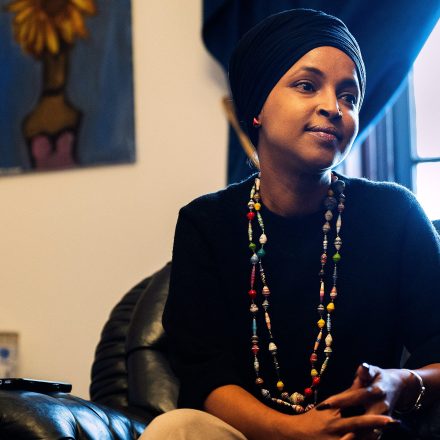
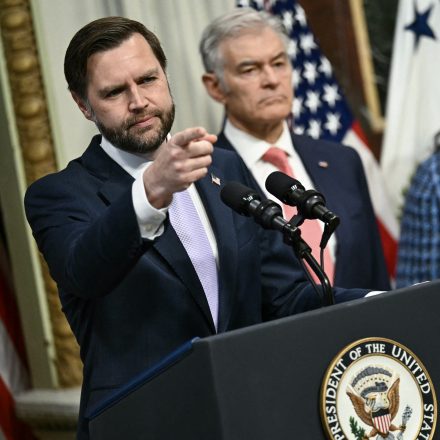
Gideon is one of several 2020 U.S. Democratic Senate candidates who raked in obscene amounts of money by riding national anti-Trump 2020 animus and then lost by a huge margin. Amy McGrath of Kentucky raised $96 million only to lose by 20 points to incumbent Sen. Mitch McConnell, and Jaime Harrison of South Carolina amassed $109 million but lost by more than 10 points to incumbent Sen. Lindsey Graham.
Leftover cash isn’t the only windfall from Gideon’s electoral loss. During the campaign, her team built a national fundraising list with relentless anti-Trump and anti-Collins advertising spots that went viral on social media. While the strategy failed locally — Gideon lost her Senate race by almost 10 points — it was a boon financially, netting her over $75 million.
Now Gideon is renting out that same fundraising list to the D.C. digital consulting firm Aisle 518 Strategies — the same firm that Gideon paid $6 million to during her own Senate run. Campaign finance reports show that Gideon’s campaign fund has earned almost $500,000 from “list rental income” during 2021 alone.
It’s not unheard of for political candidates to resell their fundraising lists. In 2018, the Democratic National Committee funneled $1.65 million to Hillary Clinton’s Onward Together organization for access to the email list, voter data, and software produced by Clinton’s failed 2016 presidential campaign, Xochitl Hinojosa, a spokesperson for the DNC, told The Intercept.
Former DNC Chair Donna Brazile said at the time that the deal was the result of “tough negotiations between the Clinton campaign and the DNC.”
Lobbying dollars from major centrist Democratic groups are also flowing into Gideon’s campaign bank account. Since November 2020, Gideon’s campaign fund received nearly $200,000 from the pro-Israel JStreetPAC and more than $35,000 from the League of Conservation Voters, a liberal environmental group.
“Most ordinary people view campaign finance as something with no immediate bearing on their lives, when in actuality it drives who gets to make decisions about the things that do.”
“We are made to believe that donating to politicians is a path to candidates who will make our voices heard,” Bre Kidman, a civil defense lawyer who ran against Gideon in the Democratic Senate primary, said. “Most ordinary people view campaign finance as something with no immediate bearing on their lives, when in actuality it drives who gets to make decisions about the things that do.”
Professional titles are another benefit establishment elites provide cash cow candidates like Gideon to buffer their résumés for future runs. On August 25, the Harvard Kennedy School announced that Gideon would be a 2021 Institute of Politics fellow. She joins a “holistic and pragmatic” group that includes the director of Fox News’s Decision Desk, the executive director of the George W. Bush Institute, and a former Republican lawmaker.
“Gideon, the former Speaker of the Maine House of Representatives, launched a high-profile challenge against Senator Susan Collins (R-Maine) last year,” Harvard said in a statement introducing Gideon and explaining her credentials. “While she was ultimately unsuccessful, the race was one of the most expensive and closely watched Senate races of 2020, with more than $106 million raised throughout the campaign.”
The Institute of Politics did not immediately respond to requests for comment on its decision to induct Gideon as a fellow.
Meanwhile, Maine’s mainstream media has been mostly silent on Gideon’s mountain of cash — only reporting on her millions with the caveat that she may run again in the near future.
Angus King, Maine’s junior senator, has already said it’s unlikely that he will run for reelection in 2024. And local pundits are constantly chattering that Rep. Chellie Pingree may move on as well, paving the way for another statewide campaign and payday for Gideon and her friends in Washington, D.C.
“Mainers of all political backgrounds are frustrated with the flood of outside money in our politics,” Anna Kellar, executive director of the League of Women Voters of Maine, said. “It’s one of the few things we have broad agreement on.”
Kellar believes that the “For the People Act” — a national bill that addresses voter access, election integrity, and campaign finance reforms — can help mitigate the increasingly influential effect of big money on Maine’s politics.
“We support passage of the ‘For the People Act’ in part because a small donor program, with limits on spending, could be transformative to our federal elections,” Kellar concluded. “We need to reform big money in politics to restore confidence in our elections and government.”
IT’S EVEN WORSE THAN WE THOUGHT.
What we’re seeing right now from Donald Trump is a full-on authoritarian takeover of the U.S. government.
This is not hyperbole.
Court orders are being ignored. MAGA loyalists have been put in charge of the military and federal law enforcement agencies. The Department of Government Efficiency has stripped Congress of its power of the purse. News outlets that challenge Trump have been banished or put under investigation.
Yet far too many are still covering Trump’s assault on democracy like politics as usual, with flattering headlines describing Trump as “unconventional,” “testing the boundaries,” and “aggressively flexing power.”
The Intercept has long covered authoritarian governments, billionaire oligarchs, and backsliding democracies around the world. We understand the challenge we face in Trump and the vital importance of press freedom in defending democracy.
We’re independent of corporate interests. Will you help us?
IT’S BEEN A DEVASTATING year for journalism — the worst in modern U.S. history.
We have a president with utter contempt for truth aggressively using the government’s full powers to dismantle the free press. Corporate news outlets have cowered, becoming accessories in Trump’s project to create a post-truth America. Right-wing billionaires have pounced, buying up media organizations and rebuilding the information environment to their liking.
In this most perilous moment for democracy, The Intercept is fighting back. But to do so effectively, we need to grow.
That’s where you come in. Will you help us expand our reporting capacity in time to hit the ground running in 2026?
We’re independent of corporate interests. Will you help us?

I’M BEN MUESSIG, The Intercept’s editor-in-chief. It’s been a devastating year for journalism — the worst in modern U.S. history.
We have a president with utter contempt for truth aggressively using the government’s full powers to dismantle the free press. Corporate news outlets have cowered, becoming accessories in Trump’s project to create a post-truth America. Right-wing billionaires have pounced, buying up media organizations and rebuilding the information environment to their liking.
In this most perilous moment for democracy, The Intercept is fighting back. But to do so effectively, we need to grow.
That’s where you come in. Will you help us expand our reporting capacity in time to hit the ground running in 2026?
We’re independent of corporate interests. Will you help us?
Contact the author:
Related

Secret Donors to Nonprofit Pushing Trump’s “Big Lie” Election Conspiracy Revealed

The “For the People Act” Would Make the U.S. a Democracy

In Maine, Ranked-Choice Voting Was a Reaction to GOP Wins. Susan Collins Might Be Its First Victim.

A Crop of Dark-Money Groups Is Backing Democratic Efforts to Retake the Senate
Latest Stories

Hegseth Built a New Pentagon Office for Religion. Military Religious Leaders Wish He Hadn’t.
“What do I tell a soldier who believes an action is immoral, but also believes that God commanded it?” one Army chaplain told The Intercept.

Voices
The Spirit of “Party Unity, My Ass” Is Back and Coming for the DSA (and El-Sayed)
Centrist Democrats’ calls to fall in line behind the party’s nominee only ever seem to cut one way — and fall apart when their candidate loses.

Bodycam: Cop Was Not in Danger When He Fired Shots That Killed 1-Year-Old Kohen Wiley
Mississippi investigators said the shooting was “justified,” but new body camera footage shows the cop firing into the passenger’s side as the car passed by him.