
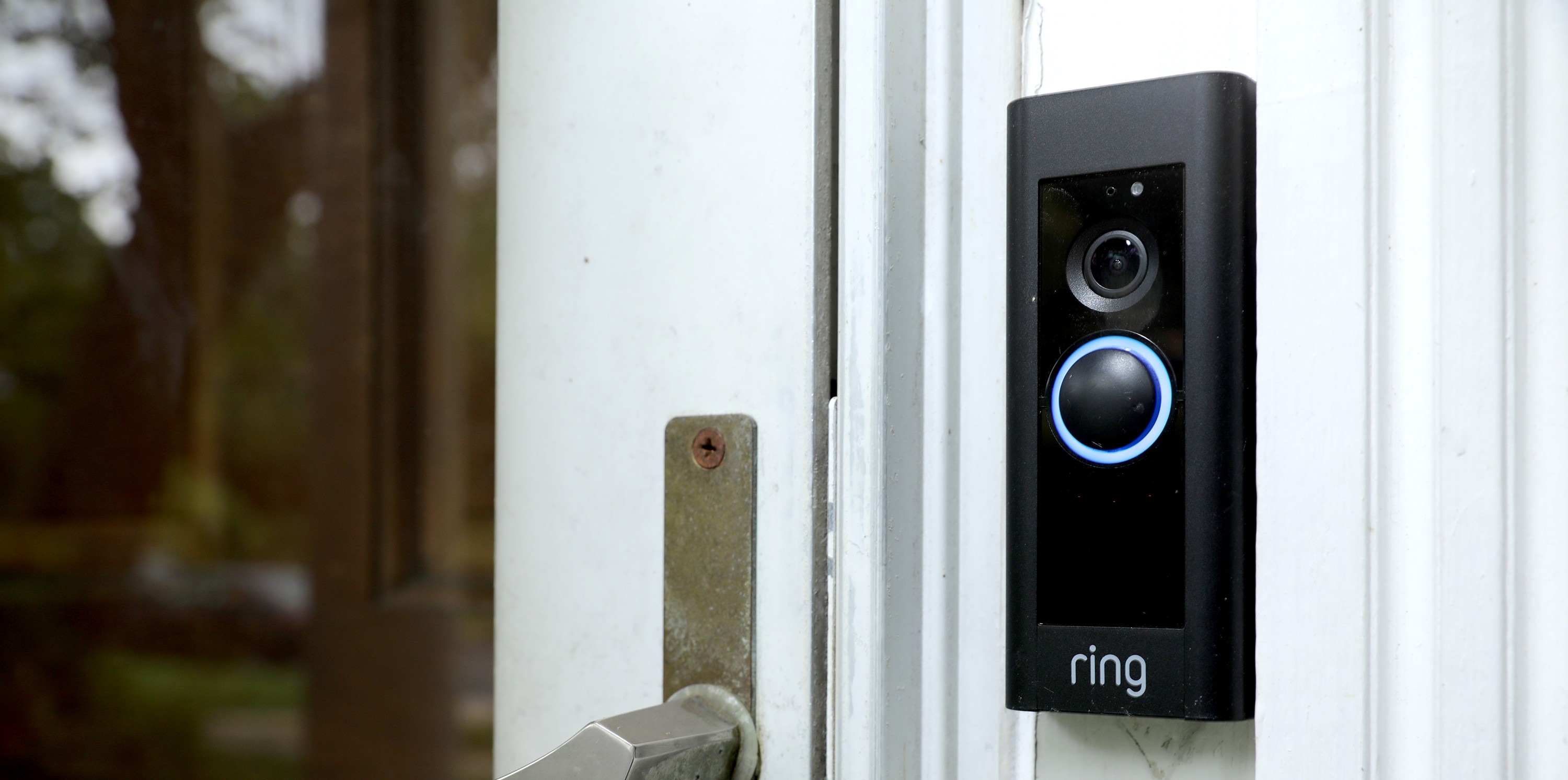
Ring, Amazon’s perennially controversial and police-friendly surveillance subsidiary, has long defended its cozy relationship with law enforcement by pointing out that cops can only get access to a camera owner’s recordings with their express permission or a court order. But in response to recent questions from Sen. Ed Markey, D-Mass., the company stated that it has provided police with user footage 11 times this year alone without either.



Last month, Markey wrote to Amazon asking it to both clarify Ring’s ever-expanding relationship with American police, who’ve increasingly come to rely on the company’s growing residential surveillance dragnet, and to commit to a raft of policy reforms. In a July 1 response from Brian Huseman, Amazon vice president of public policy, the company declined to permanently agree to any of them, including “Never accept financial contributions from policing agencies,” “Never allow immigration enforcement agencies to request Ring recordings,” and “Never participate in police sting operations.”
Although Ring publicizes its policy of handing over camera footage only if the owner agrees — or if judge signs a search warrant — the company says it also reserves the right to supply police with footage in “emergencies,” defined broadly as “cases involving imminent danger of death or serious physical injury to any person.” Markey had also asked Amazon to clarify what exactly constitutes such an “emergency situation,” and how many times audiovisual surveillance data has been provided under such circumstances. Amazon declined to elaborate on how it defines these emergencies beyond “imminent danger of death or serious physical injury,” stating only that “Ring makes a good-faith determination whether the request meets the well-known standard.” Huseman noted that it has complied with 11 emergency requests this year alone but did not provide details as to what the cases or Ring’s “good-faith determination” entailed.
Ring spokesperson Mai Nguyen also declined to reveal the substance of these emergency requests or the company’s approval process.
Matthew Guariglia, a policy analyst with the Electronic Frontier Foundation, told The Intercept he encourages any Ring owners concerned about warrantless access of their cameras to enable end-to-end encryption — an option the company declined to make the default setting after being urged to do so by Markey. “I am disturbed that Ring continues to offer, in any situation, warrantless footage from user’s devices despite the fact that once again, police are not the customers for Ring; the people who buy the devices are the customers,” said Guariglia.
“Police are not the customers for Ring; the people who buy the devices are the customers.”
Guariglia added that even though the “emergency” exception hypothetically might be warranted in the most dire circumstances, there will always be the risks of “mission creep” and police abuse without any meaningful oversight. “If there is the infrastructure, if there is the channel by which police can request footage without a warrant or consent of the user, under what circumstances they get it is out of our control. I worry that because it’s decided by the police and by somebody at Ring, there will be temptation to use that for increasingly less urgent situations.”
In a statement to The Intercept, Markey said that he believed Amazon and Ring have both lost the benefit of the doubt, despite their purported good-faith efforts. “I’m deeply concerned to learn that the company has repeatedly disclosed users’ recordings to law enforcement without requiring the users’ permission,” the senator added. “This revelation is particularly troubling given that the company has previously admitted to having no policies that restrict how law enforcement can use Ring users’ footage, no data security requirements for law enforcement entities that have users’ footage, and no policies that prohibit law enforcement officers from keeping Ring users’ footage forever.”
Update: July 14, 2022
This article has been updated to note that Ring declined to answer questions about the emergency requests.
IT’S EVEN WORSE THAN WE THOUGHT.
What we’re seeing right now from Donald Trump is a full-on authoritarian takeover of the U.S. government.
This is not hyperbole.
Court orders are being ignored. MAGA loyalists have been put in charge of the military and federal law enforcement agencies. The Department of Government Efficiency has stripped Congress of its power of the purse. News outlets that challenge Trump have been banished or put under investigation.
Yet far too many are still covering Trump’s assault on democracy like politics as usual, with flattering headlines describing Trump as “unconventional,” “testing the boundaries,” and “aggressively flexing power.”
The Intercept has long covered authoritarian governments, billionaire oligarchs, and backsliding democracies around the world. We understand the challenge we face in Trump and the vital importance of press freedom in defending democracy.
We’re independent of corporate interests. Will you help us?
IT’S BEEN A DEVASTATING year for journalism — the worst in modern U.S. history.
We have a president with utter contempt for truth aggressively using the government’s full powers to dismantle the free press. Corporate news outlets have cowered, becoming accessories in Trump’s project to create a post-truth America. Right-wing billionaires have pounced, buying up media organizations and rebuilding the information environment to their liking.
In this most perilous moment for democracy, The Intercept is fighting back. But to do so effectively, we need to grow.
That’s where you come in. Will you help us expand our reporting capacity in time to hit the ground running in 2026?
We’re independent of corporate interests. Will you help us?

I’M BEN MUESSIG, The Intercept’s editor-in-chief. It’s been a devastating year for journalism — the worst in modern U.S. history.
We have a president with utter contempt for truth aggressively using the government’s full powers to dismantle the free press. Corporate news outlets have cowered, becoming accessories in Trump’s project to create a post-truth America. Right-wing billionaires have pounced, buying up media organizations and rebuilding the information environment to their liking.
In this most perilous moment for democracy, The Intercept is fighting back. But to do so effectively, we need to grow.
That’s where you come in. Will you help us expand our reporting capacity in time to hit the ground running in 2026?
We’re independent of corporate interests. Will you help us?
Contact the author:

Related

Sen. Ed Markey Calls On Ring to Make Itself Less Cop-Friendly

Doorbell Cameras Like Ring Give Early Warning of Police Searches, FBI Warned

Amazon’s Home Surveillance Chief Declared War on “Dirtbag Criminals” as Company Got Closer to Police

For Owners of Amazon’s Ring Security Cameras, Strangers May Have Been Watching Too
Latest Stories

U.S. Personnel Who Died in Mexico Were Working for the CIA, Sources Say
Two Americans killed in Mexico, previously identified only as “staff from the United States Embassy,” participated in a raid on a drug lab.

The War on Immigrants
ICE Is Looking for Parking in New York City — For a 150-Vehicle Deportation Fleet
With its last contract expiring, activists say garage owners should spurn ICE to avoid becoming complicit in Trump’s deportation blitz.

Voices
How the Lebanon Ceasefire Could Make It Harder to End the War on Iran
The deal is a welcome reprieve from Israel’s bombing — but separating Lebanon from the ceasefire with Iran sets a dangerous precedent.