

In recent months, officials in a handful of states have proposed legislation aimed at preventing citizens from select foreign countries from owning property. In Texas, a bill to ban Iranian, Syrian, North Korean, Russian, and Chinese citizens from buying farmlands advanced to the state Senate. A bill in Florida banning citizens of most of the same countries from buying property near “critical infrastructure” was signed into law last month by Republican Gov. Ron DeSantis.
With the bills moving forward, activist groups are mounting a challenge at the state level. Now, they are getting support from Washington, where a new bill in the U.S. Congress aims to stop states from discriminating on the basis of citizenship.
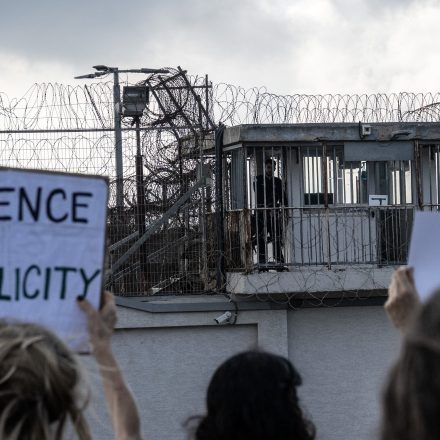

The federal legislation comes in response to the proliferating state-level efforts. Legislation to restrict property ownership based on citizenship has been signed into law in Arkansas and Tennessee, and similar measures are also being pushed forward in Kansas, Louisiana, Hawaii, and South Carolina. In some cases, the bills include even more far-reaching restrictions that would, for example, ban foreign citizens’ enrollment in public universities.
The potential for legislating discrimination based on citizenship has alarmed civil liberties groups, who are calling for a federal response to the measures.
“These bills are 21st century versions of the Alien Land Laws.”
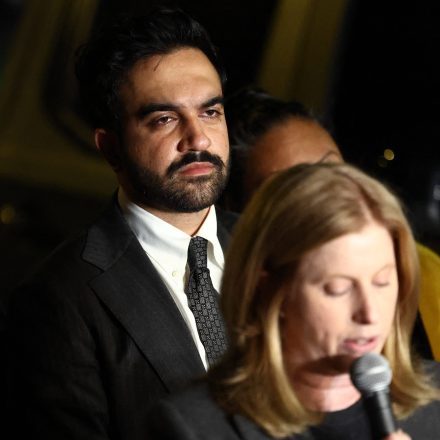
“These bills are 21st century versions of the Alien Land Laws,” said a national organizing manager for the National Iranian American Council, which is part of a coalition of groups opposing the laws, referring to a series of proposed laws a century ago banning foreign ownership. “These laws are being passed in southern states with relatively minimal national attention. It could be a slippery slope towards bringing more discrimination based on people’s ethnic identity.”
Public pressure roused by activists has helped stall some of these bills in state legislatures. One measure proposed in Texas earlier this year was significantly watered down after public protests and has not yet been signed into law by Gov. Greg Abbott, a Republican.
The Texas bill was originally proposed in response to concerns over plans by a Chinese firm to buy land to build a wind farm, portions of which would have been near a U.S. military base. Although U.S. officials who reviewed the purchase did not deem it to be a threat, the Chinese-run firm involved in the purchase was ultimately forced to sell to a Spanish company.
Despite the questionable security benefits of the laws, DeSantis championed the bill in his state as “one example of Florida really leading the nation in terms of what we’re doing to stop the influence of the Chinese Communist party.” The measure in Florida, set to take effect on July 1, would ban property purchases within 10 miles of sites deemed to be critical infrastructure.
Chinese immigrants living in Florida are currently suing over the measure, with the American Civil Liberties Union saying that the laws “will have the net effect of creating ‘Chinese exclusion zones’ that will cover immense portions of Florida, including many of the state’s most densely populated and developed areas.”
The coalition of organizations opposing the bills around the country represent those targeted, including Asian and Iranian American communities.
The proposed federal measure against the state laws — introduced in the U.S. House in late May by Reps. Judy Chu, D-Calif., and Al Green, D-Texas — aims to preempt state legislation seeking to ban property purchases based on citizenship.
“We don’t want 50 states to have 50 different laws related to ownership of land. If there are rules around sensitive sites, that is something that we should legislate at the federal level and it should apply to individuals rather than targeting people based on their citizenship,” Green told The Intercept. “I think that we have to be very careful because many persons will take this type of legislation as an invitation to determine that people not born in this country, or who are not citizens, are unfit to have property or even to be in the country.”
The bill was announced by the Congressional Asian Pacific American Caucus. A press release announcing the bill last week took aim at the laws for unjustly discriminating against individual citizens of foreign governments.
“Buying real property – whether that’s a new house to call home or a commercial property to run a business in – is a critical step for immigrant families, students, and refugees to pursue the American Dream,” Chu said in the statement. “While there are specific, legitimate threats that these foreign governments and their state-owned enterprises pose to our national security, banning individuals from purchasing land or properties because of their citizenship, national origin, race, ethnicity, or immigration status is a flagrant assault on their civil rights and unconstitutional.”
IT’S EVEN WORSE THAN WE THOUGHT.
What we’re seeing right now from Donald Trump is a full-on authoritarian takeover of the U.S. government.
This is not hyperbole.
Court orders are being ignored. MAGA loyalists have been put in charge of the military and federal law enforcement agencies. The Department of Government Efficiency has stripped Congress of its power of the purse. News outlets that challenge Trump have been banished or put under investigation.
Yet far too many are still covering Trump’s assault on democracy like politics as usual, with flattering headlines describing Trump as “unconventional,” “testing the boundaries,” and “aggressively flexing power.”
The Intercept has long covered authoritarian governments, billionaire oligarchs, and backsliding democracies around the world. We understand the challenge we face in Trump and the vital importance of press freedom in defending democracy.
We’re independent of corporate interests. Will you help us?
IT’S BEEN A DEVASTATING year for journalism — the worst in modern U.S. history.
We have a president with utter contempt for truth aggressively using the government’s full powers to dismantle the free press. Corporate news outlets have cowered, becoming accessories in Trump’s project to create a post-truth America. Right-wing billionaires have pounced, buying up media organizations and rebuilding the information environment to their liking.
In this most perilous moment for democracy, The Intercept is fighting back. But to do so effectively, we need to grow.
That’s where you come in. Will you help us expand our reporting capacity in time to hit the ground running in 2026?
We’re independent of corporate interests. Will you help us?

I’M BEN MUESSIG, The Intercept’s editor-in-chief. It’s been a devastating year for journalism — the worst in modern U.S. history.
We have a president with utter contempt for truth aggressively using the government’s full powers to dismantle the free press. Corporate news outlets have cowered, becoming accessories in Trump’s project to create a post-truth America. Right-wing billionaires have pounced, buying up media organizations and rebuilding the information environment to their liking.
In this most perilous moment for democracy, The Intercept is fighting back. But to do so effectively, we need to grow.
That’s where you come in. Will you help us expand our reporting capacity in time to hit the ground running in 2026?
We’re independent of corporate interests. Will you help us?
Contact the author:

Related

Ban on Property Sales to Citizens of China, Iran, and Others Is Cruising Through Texas Legislature

Ron DeSantis Has Raked in $3.9 Million From Insurance Industry, New Report Reveals

Hundreds Turn Out to Denounce Texas Republicans’ “Vigilante Death Squads Policy”

Anti-Palestinian Hate on Social Media Is Growing, Says a Facebook Partner
Latest Stories

Voices
An Arkansas Mom Obtained Public Records About a New Data Center. Then She Got Sued.
Cases in Arkansas and California show how desperately we need a federal law against lawsuits intended to chill free speech.

The War on Immigrants
Don’t Stop at ICE, Says Progressive Dem: Abolish the Department of Homeland Security
Rep. Delia Ramirez is bringing a bill to eliminate DHS a day after the raid on Rep. Ilhan Omar’s home.

Voices
ICE Raid on Ilhan Omar Shows How Dangerous Two Years of Flailing Trump Could Get
With his popularity tanking and his grip on power growing tenuous, Trump is becoming a decrepit tyrant — and the checks to stop him are failing.