

Indian Prime Minister Narendra Modi, on a visit to the United States this week that has included meetings with Elon Musk and author Nassim Nicholas Taleb, among others, will meet with President Joe Biden on Thursday and be hosted at a state dinner in the evening. The trip is intended to solidify a future partnership between India and the United States against China, among other goals.
Yet while Modi’s visit has been touted as the blossoming of a friendship between two of the world’s largest democracies, the rosy optics have clouded out a darker story: the increasingly grim fate of Indian political prisoners, including many well known to Western nongovernmental organizations and media establishments, under the right-wing Modi government.
A long list of Indian civil society members are currently languishing in the country’s prisons.
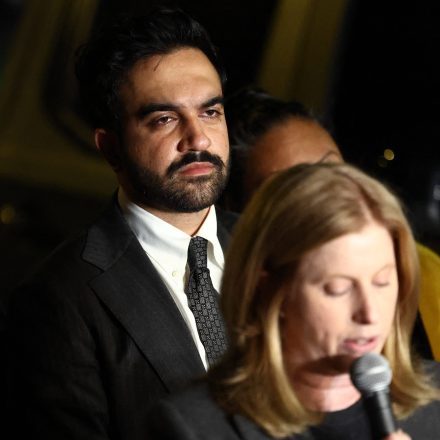
Perhaps the most emblematic example is Khurram Parvez, a Kashmiri human rights activist and chair of the Asian Federation Against Involuntary Disappearances. Parvez, 45, has for years been at the forefront of documenting human rights violations in Kashmir, particularly torture, extrajudicial detention, and mass killings, during a long-running insurgency in the territory. He was arrested in November 2021 amid a broader Indian government crackdown and has been in prison ever since. His arrest has not gone entirely unnoticed: Time magazine in 2022 named Parvez on their list of the 100 most influential people in the world, calling him a “modern-day David who gave a voice to families that lost their children to enforced disappearances, allegedly by the Indian state.”
Despite his prominent status, the fate of Parvez and others like him, has not figured much into the celebratory pronouncements about the U.S.-India relationship. Although the United Nations Working Group on Arbitrary Detention recently criticized his detention and called for his release, no major U.S. human rights organization has issued a statement about Parvez timed to Modi’s high-profile U.S. visit. That silence has had a chilling effect with repercussions far beyond his own fate.
“If we can’t even get them to speak up about his case, who is going to speak about a 16-year-old with no connections in prison?”
“Over the past 20 years, Khurram has become the face of human rights work in Kashmir, as well as the person who was the most vocal and outgoing in making connections with the international community. He was someone that others assumed had implicit protections because of his notoriety,” said Imraan Mir, co-founder of the Kashmir Law and Justice Project. “His arrest has effectively meant the end of any human rights work in Kashmir. Famous people all over the world know Khurram and call him their friend. If we can’t even get them to speak up about his case, who is going to speak about a 16-year-old with no connections in prison?”
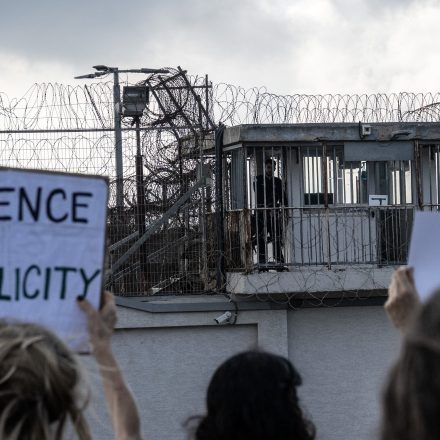

Parvez is only one of many prominent Indian activists and journalists who have disappeared into prison over the past several years under Modi’s government. A few of the other most famous names include Fahad Shah, a contributing writer for American left-wing magazine The Nation; Irfan Mehraj, a writer for Deutsche Welle and Al Jazeera; activists Sharjeel Imam and Umar Khalid; and countless others who have had the misfortune of running afoul of Modi’s ruling Bharatiya Janata Party.
India’s prisons have begun to fill with many of its own highly educated citizens, even as the BJP continues to grow in popularity, in part through flashy economic and infrastructure projects planned for completion across the country.
Modi is widely expected to win in elections scheduled for next year. The Indian leader, whose star has risen in the U.S. years after he was banned from the country for his alleged involvement in serious human rights abuses, is also set to give a speech to a joint session of Congress on Thursday.
A perception of democratic backsliding in India under his rule has led several progressive U.S. politicians to announce a boycott of the address, including members of the so-called Squad: Reps. Alexandria Ocasio-Cortez, D-N.Y.; Rashida Tlaib, D-Mich.; and Ilhan Omar, D-Minn.
“A joint address is among the most prestigious invitations and honors the United States Congress can extend. We should not do so for individuals with deeply troubling human rights records — particularly for individuals whom our own State Department has concluded are engaged in systematic human rights abuses of religious minorities and caste-oppressed communities,” Ocasio-Cortez said in a statement, calling on colleagues who support “pluralism, tolerance and freedom of speech” to join her in sitting out the address.

Despite the symbolic value of the boycott, these members of Congress are clear outliers in the U.S. establishment, which has shown minimal reservations about embracing Modi.
The strategic reasons for doing so — including tapping into what is believed to be a major market in the future for Western companies and shoring up military cooperation to contain China in case of a conflict — seem compelling on the surface. Letting human rights fall entirely by the wayside, however, risks making a mockery of the oft-repeated claim that India and the U.S. are bound by values as opposed to merely interests.
“Western countries have been very reluctant to criticize India on its human rights record.”
“Anyone who criticizes the government, whether human rights defenders, journalists, or climate change activists, is being harassed or, in the worst case, detained and charged under the country’s sedition laws,” said Juliette Rousselot, program officer for West and South Asia for the International Federation for Human Rights. “Khurram’s case is emblematic of Indian authorities’ systematic muzzling of civic space in India. Kashmiris bear the brunt of that policy, but he’s far from the only victim. His case has unfortunately not gotten as much attention as we would like for a number of reasons. But, generally speaking, it is because Western countries have been very reluctant to criticize India on its human rights record.”
Despite calls to prioritize human rights matters in the context of the U.S.-India bilateral relationship, there is little indication that the fate of political prisoners in India has figured into discussions between the two leaders at all, which have seemed more prominently focused on securing lucrative weapons deals for the future. In that context, human rights — and the fate of activists like Parvez, among others — has come to be seen by many as merely a distraction from more important matters.
“People in policy circles have a notion that if they speak about human rights issues, Indians will get very angry,” said Mir, the Kashmiri legal advocate. “So they don’t want to ruffle any feathers.”
IT’S EVEN WORSE THAN WE THOUGHT.
What we’re seeing right now from Donald Trump is a full-on authoritarian takeover of the U.S. government.
This is not hyperbole.
Court orders are being ignored. MAGA loyalists have been put in charge of the military and federal law enforcement agencies. The Department of Government Efficiency has stripped Congress of its power of the purse. News outlets that challenge Trump have been banished or put under investigation.
Yet far too many are still covering Trump’s assault on democracy like politics as usual, with flattering headlines describing Trump as “unconventional,” “testing the boundaries,” and “aggressively flexing power.”
The Intercept has long covered authoritarian governments, billionaire oligarchs, and backsliding democracies around the world. We understand the challenge we face in Trump and the vital importance of press freedom in defending democracy.
We’re independent of corporate interests. Will you help us?
IT’S BEEN A DEVASTATING year for journalism — the worst in modern U.S. history.
We have a president with utter contempt for truth aggressively using the government’s full powers to dismantle the free press. Corporate news outlets have cowered, becoming accessories in Trump’s project to create a post-truth America. Right-wing billionaires have pounced, buying up media organizations and rebuilding the information environment to their liking.
In this most perilous moment for democracy, The Intercept is fighting back. But to do so effectively, we need to grow.
That’s where you come in. Will you help us expand our reporting capacity in time to hit the ground running in 2026?
We’re independent of corporate interests. Will you help us?

I’M BEN MUESSIG, The Intercept’s editor-in-chief. It’s been a devastating year for journalism — the worst in modern U.S. history.
We have a president with utter contempt for truth aggressively using the government’s full powers to dismantle the free press. Corporate news outlets have cowered, becoming accessories in Trump’s project to create a post-truth America. Right-wing billionaires have pounced, buying up media organizations and rebuilding the information environment to their liking.
In this most perilous moment for democracy, The Intercept is fighting back. But to do so effectively, we need to grow.
That’s where you come in. Will you help us expand our reporting capacity in time to hit the ground running in 2026?
We’re independent of corporate interests. Will you help us?
Contact the author:

Related


Latest Stories

Voices
An Arkansas Mom Obtained Public Records About a New Data Center. Then She Got Sued.
Cases in Arkansas and California show how desperately we need a federal law against lawsuits intended to chill free speech.

The War on Immigrants
Don’t Stop at ICE, Says Progressive Dem: Abolish the Department of Homeland Security
Rep. Delia Ramirez is bringing a bill to eliminate DHS a day after the raid on Rep. Ilhan Omar’s home.

Voices
ICE Raid on Ilhan Omar Shows How Dangerous Two Years of Flailing Trump Could Get
With his popularity tanking and his grip on power growing tenuous, Trump is becoming a decrepit tyrant — and the checks to stop him are failing.