

In the wake of the political assassination of Minnesota lawmaker Melissa Hortman and her husband, prominent right-wing figures moved quickly to assign blame. Utah Sen. Mike Lee pinned the killings on “Marxism.” Elon Musk pointed to the “far left.” Donald Trump Jr., the president’s son, said it “seems to be a leftist.”
But the facts quickly told a different story: The suspect, 57-year-old Vance Boelter is a Trump supporter who held radical anti-abortion views.
“There’s an entire right-wing media machine aimed at pushing disinformation around breaking news events and specifically attributing violence to the left,” says Taylor Lorenz, independent journalist and author of “Extremely Online: The Untold Story of Fame, Influence, and Power on the Internet.” “You see this over and over and over again, no matter who is perpetrating the violence.”
“The reality is that the vast overwhelming majority of political violence in recent years has come from the right,” adds Akela Lacy, The Intercept’s senior politics reporter. “It basically treats that fact as if it’s not real, as if it doesn’t exist,” she says — a dynamic that then fails to address the root causes.

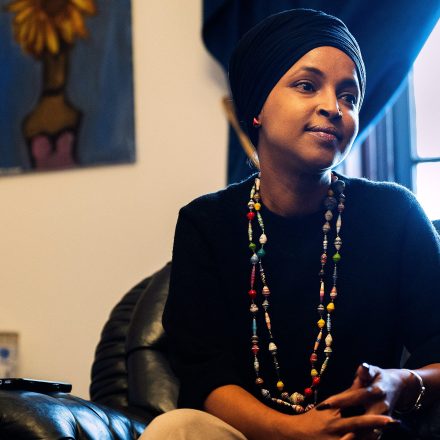
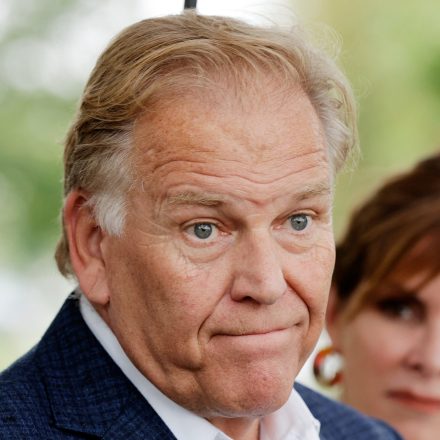
This week on The Intercept Briefing, host Jordan Uhl talks with Lorenz and Lacy about how online disinformation is distorting public understanding of major events — from political violence to immigration to potential war with Iran. In this chaos-driven ecosystem, the right — and Trump especially — know how to thrive.
“There are these right-wing influencer networks that exist to amplify misinformation and shape narratives online,” says Lorenz. “A lot of them coordinate, literally directly coordinate through group chats,” she explains. “They receive messaging directly from leaders in the Republican Party that they immediately disseminate.”

That messaging loop reinforces itself — seeping into mainstream culture, dominating social media, and driving Trump’s policies. Lacy points to a striking example: Democratic Sen. Tina Smith from Minnesota confronting Lee over his false claim that the shooter was a Marxist, and his apparent surprise at being held accountable. “ There’s no reason that a sitting U.S. senator is spreading these lies, should not expect to be confronted by his colleagues over something like this. And that says volumes about the environment on the Hill,” says Lacy.
But this right-wing narrative war doesn’t work without help to boost their legitimacy. “These manufactured outrage campaigns are not successful unless they’re laundered by the traditional media,” says Lorenz. “If the New York Times or the BBC or NPR — which is one of the worst — don’t launder those campaigns and pick those campaigns up, they kind of don’t go anywhere.”
You can hear the full conversation of The Intercept Briefing on Apple Podcasts, Spotify, or wherever you listen.
IT’S EVEN WORSE THAN WE THOUGHT.
What we’re seeing right now from Donald Trump is a full-on authoritarian takeover of the U.S. government.
This is not hyperbole.
Court orders are being ignored. MAGA loyalists have been put in charge of the military and federal law enforcement agencies. The Department of Government Efficiency has stripped Congress of its power of the purse. News outlets that challenge Trump have been banished or put under investigation.
Yet far too many are still covering Trump’s assault on democracy like politics as usual, with flattering headlines describing Trump as “unconventional,” “testing the boundaries,” and “aggressively flexing power.”
The Intercept has long covered authoritarian governments, billionaire oligarchs, and backsliding democracies around the world. We understand the challenge we face in Trump and the vital importance of press freedom in defending democracy.
We’re independent of corporate interests. Will you help us?
IT’S BEEN A DEVASTATING year for journalism — the worst in modern U.S. history.
We have a president with utter contempt for truth aggressively using the government’s full powers to dismantle the free press. Corporate news outlets have cowered, becoming accessories in Trump’s project to create a post-truth America. Right-wing billionaires have pounced, buying up media organizations and rebuilding the information environment to their liking.
In this most perilous moment for democracy, The Intercept is fighting back. But to do so effectively, we need to grow.
That’s where you come in. Will you help us expand our reporting capacity in time to hit the ground running in 2026?
We’re independent of corporate interests. Will you help us?

I’M BEN MUESSIG, The Intercept’s editor-in-chief. It’s been a devastating year for journalism — the worst in modern U.S. history.
We have a president with utter contempt for truth aggressively using the government’s full powers to dismantle the free press. Corporate news outlets have cowered, becoming accessories in Trump’s project to create a post-truth America. Right-wing billionaires have pounced, buying up media organizations and rebuilding the information environment to their liking.
In this most perilous moment for democracy, The Intercept is fighting back. But to do so effectively, we need to grow.
That’s where you come in. Will you help us expand our reporting capacity in time to hit the ground running in 2026?
We’re independent of corporate interests. Will you help us?
Contact the author:

Related

Tucker Carlson Outdid the Mainstream Media — But Still Missed This Crucial Point

Josh Hawley Blames Nonprofits for “Bankrolling Civil Unrest” in LA Without Evidence

Steve Scalise Knows Exactly What Led to the Bourbon Street Attack: DEI Initiatives

Leaked Documents Show Police Knew Far-Right Extremists Were the Real Threat at Protests, Not “Antifa”
Latest Stories

Bodycam: Cop Was Not in Danger When He Fired Shots That Killed 1-Year-Old Kohen Wiley
Mississippi investigators said the shooting was “justified,” but new body camera footage shows the cop firing into the passenger’s side as the car passed by him.

The Intercept Briefing
The Intercept Live in Conversation With Robert Reich
Inequality Media co-founder Robert Reich and The Intercept’s Akela Lacy break down the most pressing issues of the midterm elections.

Midterms 2026
Giant Crypto Super PAC Funnels Big Money to Former Trump Official’s Firm to Support… Democrats?
The Fellowship PAC routed more than half a million dollars in support of Democrats through a firm co-founded by former Trump crypto adviser Bo Hines.