
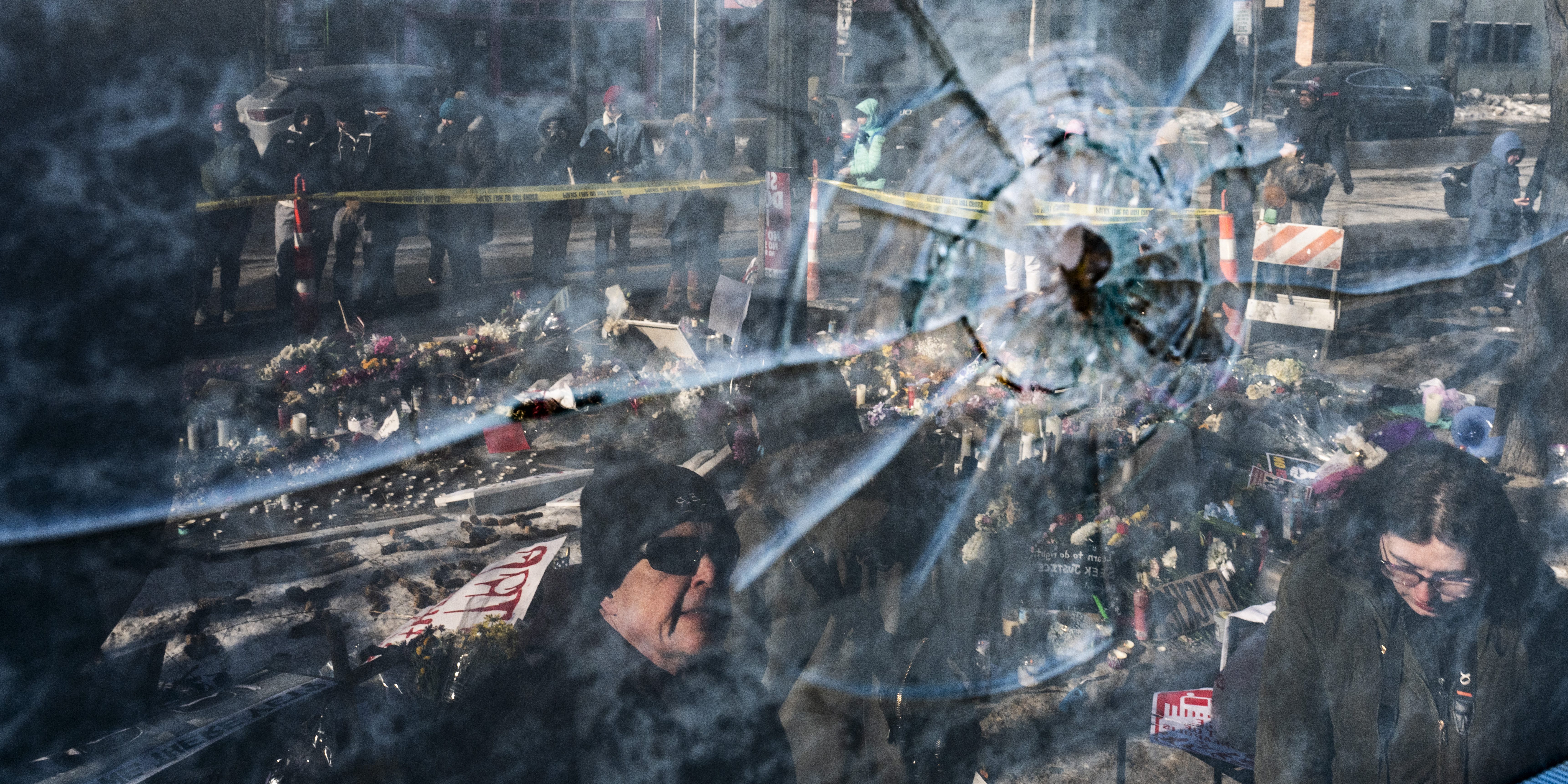
More than six months after federal agents descended on Minnesota, the toll of the immigration crackdown on the Twin Cities continues to mount.
The latest revelations about the far-reaching and deeply felt impacts of the campaign known as Operation Metro Surge come in a Human Rights Watch report published Thursday.
Based on more than 130 interviews, video analysis, and government arrest data, the report documents a dizzying array of abuses over the multi-month siege of Minneapolis and St. Paul — from lethal violence to free speech violations, unlawful detentions, and more.
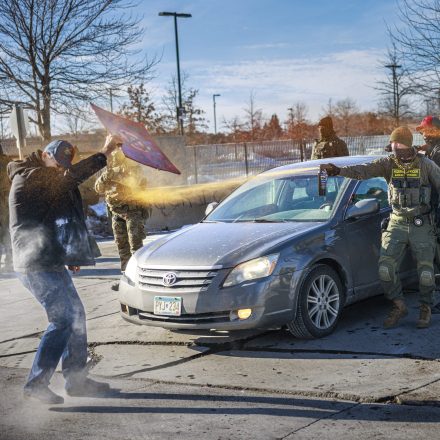
While many of the abuses are well-known — including the killings of Minnesota residents Renee Good and Alex Pretti by federal agents — others occurred in the shadows of the infamous campaign.
Among the most troubling accounts are those provided by healthcare and mental health professionals.
According to the report, the National Alliance on Mental Illness in Minnesota saw a 120 percent increase in calls and a “significant increase” in the number of people struggling with suicidal thoughts or actions during Metro Surge. One medical provider knew of at least three teenagers who attempted to take their own life after their parents were detained in the crackdown, with one of the adolescents doing so on a “frequent” basis.
“One goal of the report is to bring light back to the full scope of the harm, and not only the harm that we saw in terms of violence in the streets, in terms of abusive detentions,” Reagan Williams, the author of the new report, told The Intercept, “but also the effects that that had for aspects of daily life for everybody here — the impact it had on people’s ability to leave their homes, to go to doctor, to go to school, to go to work.”
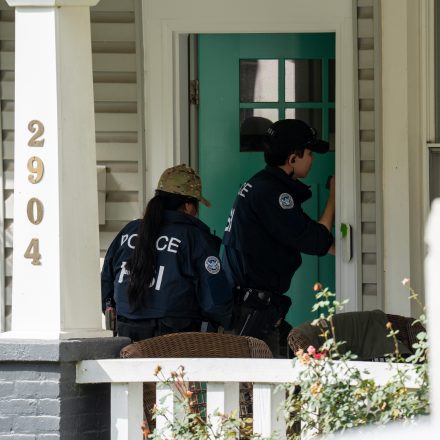


Human Rights Watch found the combination of violence and racial profiling that defined the crackdown caused many Minnesotans to forgo medical care.
The day after Good was killed, nearly a third of one healthcare provider’s patients — mostly Somali or Spanish-speaking immigrants — did not show up for pre-scheduled appointments. Another provider said the number of in-person visits at their office dropped by as much as 50 percent.
When Williams arrived in the Twin Cities, her focus was the kind of violent interactions documented in viral videos proliferating from Minnesota. She soon learned those weren’t the only issues community members were desperate to discuss.
“People that we talked with expressed emotions of exhaustion, fear, frustration, immense stress,” she said. “They expressed particular concerns for children, medical providers in particular, the impact of missing school, of knowing violence is happening in their communities — for immigrant children and children of color, the fear of having a parent taken, of themselves being taken.”
“Children are particularly vulnerable to long-term impacts of this kind of acute violence and stress,” Williams added. “Those are impacts that will continue on.”
“Near-Total Impunity”
Described by Trump administration officials as the largest immigration enforcement operation in history, the crackdown in the Twin Cities began in December and stretched into February. Thousands of officials from Immigration and Customs Enforcement and the U.S. Border Patrol conducted roving arrest operations throughout the area.
More than 4,000 immigrants were arrested during Metro Surge. At roughly 100 arrests per day, it was the highest per capita arrest rate in the country; 64 percent of immigrants arrested in the campaign had no criminal record.

“In Minnesota, US citizens and immigrants alike were racially profiled in the ordinary course of their day — approached by federal agents while driving, while at work, or while shoveling snow,” the report said. “Minnesota residents of Somali and Latin American descent were notably targeted, despite the fact that the overwhelming majority of these communities are US citizens or have green cards.”
A hotline run by the National Lawyers Guild recorded 524 cases of the U.S. citizens detained during the surge, though the figure is believed to be a significant undercount. A survey by the U.S. Immigration Policy Center at the University of California, San Diego earlier this year found that nearly a third of Minneapolis residents experienced an interaction with federal agents; of those interactions, nearly half occurred “at or near a school, healthcare facility, childcare facility, courthouse, or place of worship.”
The new report follows a fresh tally from Minneapolis officials, announced last week, estimating that Metro Surge cost the city nearly $700 million. A nonprofit serving tenants in Minnesota described the economic fallout as a “crisis,” the Human Rights Watch report said, with an 85 percent increase in people seeking rent payment assistance.
“If I told you every time ICE was near a school, you’d stop reading my messages.”
In one Minnesota school district, attendance dropped by nearly a third during the government operation. At least 14 incidents of immigration enforcement reported at or near campuses, including the arrest of a preschool teacher, a special education staff member, and a parent at a school bus stop.
“If I told you every time ICE was near a school,” the district’s superintendent told Human Rights Watch, “you’d stop reading my messages.”

Considering the sweeping impacts of the crackdown, Human Rights Watch is calling for an overhaul of the Department of Homeland Security, which oversees ICE and Border Patrol; congressional investigations into the actions of officials involved in the operation; legislation to prohibit immigration arrests at sensitive locations such as schools and hospitals; and a host of other reforms.
To date, the report said, “The many abuses committed by federal agencies during Operation Metro Surge have so far been met with near-total impunity.”
IT’S EVEN WORSE THAN WE THOUGHT.
What we’re seeing right now from Donald Trump is a full-on authoritarian takeover of the U.S. government.
This is not hyperbole.
Court orders are being ignored. MAGA loyalists have been put in charge of the military and federal law enforcement agencies. The Department of Government Efficiency has stripped Congress of its power of the purse. News outlets that challenge Trump have been banished or put under investigation.
Yet far too many are still covering Trump’s assault on democracy like politics as usual, with flattering headlines describing Trump as “unconventional,” “testing the boundaries,” and “aggressively flexing power.”
The Intercept has long covered authoritarian governments, billionaire oligarchs, and backsliding democracies around the world. We understand the challenge we face in Trump and the vital importance of press freedom in defending democracy.
We’re independent of corporate interests. Will you help us?
IT’S BEEN A DEVASTATING year for journalism — the worst in modern U.S. history.
We have a president with utter contempt for truth aggressively using the government’s full powers to dismantle the free press. Corporate news outlets have cowered, becoming accessories in Trump’s project to create a post-truth America. Right-wing billionaires have pounced, buying up media organizations and rebuilding the information environment to their liking.
In this most perilous moment for democracy, The Intercept is fighting back. But to do so effectively, we need to grow.
That’s where you come in. Will you help us expand our reporting capacity in time to hit the ground running in 2026?
We’re independent of corporate interests. Will you help us?

I’M BEN MUESSIG, The Intercept’s editor-in-chief. It’s been a devastating year for journalism — the worst in modern U.S. history.
We have a president with utter contempt for truth aggressively using the government’s full powers to dismantle the free press. Corporate news outlets have cowered, becoming accessories in Trump’s project to create a post-truth America. Right-wing billionaires have pounced, buying up media organizations and rebuilding the information environment to their liking.
In this most perilous moment for democracy, The Intercept is fighting back. But to do so effectively, we need to grow.
That’s where you come in. Will you help us expand our reporting capacity in time to hit the ground running in 2026?
We’re independent of corporate interests. Will you help us?
Contact the author:

Related

A Redditor Criticized ICE. Trump Is Trying to Unmask Them by Dragging the Company to a Secret Grand Jury.

ICE at Airports Trains Us to Accept Being Terrorized in Our Daily Lives

Trump’s War on America

Unnamed Source in Viral Minnesota Somali Fraud Video Is Right-Wing Lobbyist Who Called Muslims “Demons”
Latest Stories

Targeting Iran
Dems Have an Opportunity to Force an End to the Iran War. Will They Take It?
With Democrats campaigning on ending the war, advocates want them to put their money where their mouth is and risk a lame-duck shutdown.

DHS Was Designed as a Weapon
Rep. Delia Ramirez and writers Rozina Ali and Will Sommer discuss the ICE raid on Ilhan Omar and the years of “counterterror” surveillance that paved the way for the Trump administration’s abuses.

Long After the Maui Fires, Toxic Metals Linger in Residents’ Bodies
The toxic exposures didn’t begin with the flames. Researchers are examining how fires affected a community already harmed by plantation agriculture, development, and colonialism.