
Eoin Higgins is the author of “Owned: How Tech Billionaires on the Right Bought the Loudest Voice on the Left.”
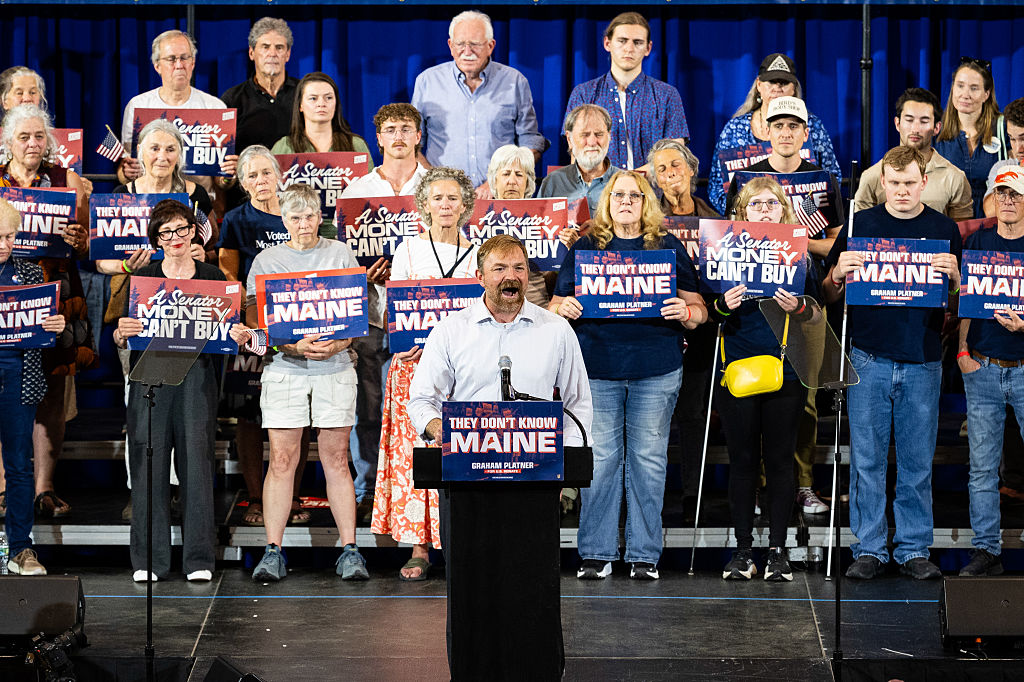
The day Graham Platner became Maine’s Democratic Senate nominee, he spoke behind a podium bearing his indignant campaign slogan: “They don’t know Maine.” But when sexual assault allegations against the candidate broke this week, supporters and political allies in the state were left wondering instead if they ever really knew Platner — and uncertain about what’s next for the movement that rallied around him.
On Monday, Jenny Racicot alleged in a Politico article that a “deeply intoxicated” Platner broke into her home and raped her in late 2021, while the two were dating casually. In June, Platner faced claims from conservative activist Lyndsey Fifield that he was physically abusive toward her; on Tuesday, Fifield went on the record with the Washington Post to allege that during their relationship, Platner repeatedly removed condoms during sex without her consent.
The oyster farmer-turned-politician called Racicot’s allegations “false” and “categorically untrue” to Politico and deemed Fifield’s new allegation “categorically false and politically motivated” to the Post.
The revelations come on the heels of a long line of scandals that dogged Platner’s campaign, beginning in September 2025 with the revelation that he had a Totenkopf Nazi symbol tattoo from his time in the service. Maine voters and the state Democratic Party have had enough — and Platner’s chances appear to have run out.
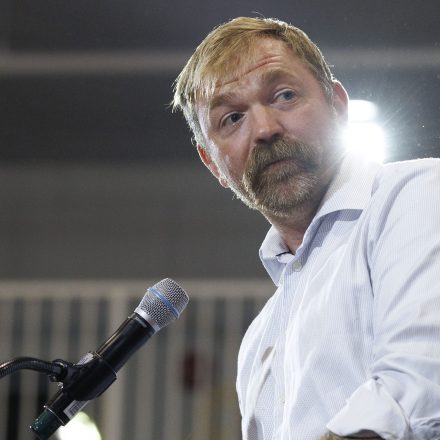
Still, the populist politics and campaign style the candidate espoused were highly effective in Maine. He relied on a simple message, delivered at town halls and meet-ups across the state. This retail politics allowed to weather earlier storms and, most importantly, to decisively beat his only serious challenger, 78-year-old Gov. Janet Mills, who chose to drop out of the race before the June primary election.
But while the message was effective, the cascading scandals that have derailed and effectively ended his campaign reveal a problem for progressives ascendant in the Democratic Party: vetting candidates. In June, the Wall Street Journal reported that Dan Moraff, who recruited Platner to run, spent $6,250 on an expedited risk-assessment memo.
Some centrist Democrats, like Center for American Progress CEO Neera Tanden, have seized on Platner’s fall as a chance to score political points against the left wing of the party on the heels of its high-profile election wins. In a post on X, Tanden smirked: “Say what you will, but the establishment vets candidates.” She did not, however, address the lack of vetting for establishment candidates like Eric Swalwell or the long list of losses for her wing of the party, showing that this back and forth is ultimately useless and counterproductive.


As CNN reported on Wednesday, Platner could drop out of the race as soon as this afternoon as pressure continues to mount from the Democratic Party and key allies. The campaign team — which includes wunderkind Morris Katz, the Gen Z political strategist who helped Mayor Zohran Mamdani win in New York last year — is reportedly attempting to negotiate Platner’s exit in exchange for some control over the selection of his replacement, although the state party said Tuesday the campaign should have “no role” in that process. On Wednesday afternoon, the campaign sent a poll to volunteers asking for feedback on next steps.
“We firmly believe that the supporters and volunteers who built this movement deserve to have a real role in any nomination process,” Ben Chin, Platner’s campaign manager, said in the Wednesday text blast.
Platner’s leverage shouldn’t be mistaken for having the support of a movement that has swiftly distanced itself from him. Almost every single one of his high-profile endorsers, from Bernie Sanders to the advocacy group MoveOn, have issued calls for Platner to leave the race. The Democratic Senatorial Campaign Committee also said it would not spend money on ads in the race if Platner stays in.
It’s far from out of the question for the left movement that backed his meteoric rise to have an outsized say in who takes his place, especially after the political message that Platner ran on resonated deeply with voters.

A reasonable path forward would involve Platner resigning before July 13 — the last day he can drop off the general election ticket — which would give state Democrats until July 27 to nominate a replacement. In a message to party committee members Tuesday, Maine Democratic Party Executive Director Devon Murphy-Anderson asked for patience. There’s no accepted process in place by law, but however the party proceeds, it “must reflect our Democratic values,” Murphy-Anderson wrote. “It should be open, inclusive, transparent, and fair.”
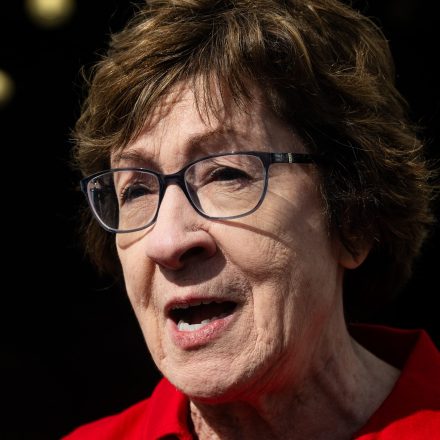
This is uncharted territory, but due to Maine’s ranked-choice voting system, there are a number of potential replacements who just spent months talking to voters for the governor’s race. Of the losing candidates, Nirav Shah, Troy Jackson, and Shenna Bellows are most likely to make a strong case for facing off against Sen. Susan Collins in the fall.
Shah placed second in the final count to ultimate nominee Hannah Pingree but has work to do to appeal to the progressive Democratic base that propelled Platner to his dominant showing in the primary. It looks like he’s already making moves to position himself as a possible candidate, telling one user on X that he would vote against military aid to Israel and is calling the Gaza genocide a genocide.
Jackson, a former state Senate president, is widely seen as Platner’s most obvious successor and the progressive lane darling; he’s already filed paperwork to run in Platner’s place. But due to his closeness with Platner’s campaign, he will have to answer questions about what he knew about the allegations and when — as well as addressing a history that includes opposition to marriage equality and anti-abortion positions that, in fairness, he has done an admirable job of making up for in recent years.
If the decision comes down to a mini-convention or a caucus, Bellows has a good shot. As Maine’s secretary of state, she has visibility and name recognition, she’s pushed back against Trump on the national stage, and she appeals to progressives and centrists alike. Her last time running for Senate, in 2014, resulted in a blow-out win for Collins by more than 35 percentage points; in order to make a strong case for her candidacy, Bellows will have to convince Democrats that this time would be different.
Platner became a political sensation on the back of his ability to articulate a humane, progressive politics to the public. That political message, more than anything about the candidate, was the core to his appeal. For Maine Democrats, the mission is clear: They need to replace Platner with someone who can win. The key is to find a candidate who can embody the politics that lifted Platner to success while moving on from a figure who has lost the moral and ideological right to be that movement’s standard bearer.
IT’S EVEN WORSE THAN WE THOUGHT.
What we’re seeing right now from Donald Trump is a full-on authoritarian takeover of the U.S. government.
This is not hyperbole.
Court orders are being ignored. MAGA loyalists have been put in charge of the military and federal law enforcement agencies. The Department of Government Efficiency has stripped Congress of its power of the purse. News outlets that challenge Trump have been banished or put under investigation.
Yet far too many are still covering Trump’s assault on democracy like politics as usual, with flattering headlines describing Trump as “unconventional,” “testing the boundaries,” and “aggressively flexing power.”
The Intercept has long covered authoritarian governments, billionaire oligarchs, and backsliding democracies around the world. We understand the challenge we face in Trump and the vital importance of press freedom in defending democracy.
We’re independent of corporate interests. Will you help us?
IT’S BEEN A DEVASTATING year for journalism — the worst in modern U.S. history.
We have a president with utter contempt for truth aggressively using the government’s full powers to dismantle the free press. Corporate news outlets have cowered, becoming accessories in Trump’s project to create a post-truth America. Right-wing billionaires have pounced, buying up media organizations and rebuilding the information environment to their liking.
In this most perilous moment for democracy, The Intercept is fighting back. But to do so effectively, we need to grow.
That’s where you come in. Will you help us expand our reporting capacity in time to hit the ground running in 2026?
We’re independent of corporate interests. Will you help us?

I’M BEN MUESSIG, The Intercept’s editor-in-chief. It’s been a devastating year for journalism — the worst in modern U.S. history.
We have a president with utter contempt for truth aggressively using the government’s full powers to dismantle the free press. Corporate news outlets have cowered, becoming accessories in Trump’s project to create a post-truth America. Right-wing billionaires have pounced, buying up media organizations and rebuilding the information environment to their liking.
In this most perilous moment for democracy, The Intercept is fighting back. But to do so effectively, we need to grow.
That’s where you come in. Will you help us expand our reporting capacity in time to hit the ground running in 2026?
We’re independent of corporate interests. Will you help us?
Contact the author:
Related


Latest Stories

Targeting Iran
Dems Have an Opportunity to Force an End to the Iran War. Will They Take It?
With Democrats campaigning on ending the war, advocates want them to put their money where their mouth is and risk a lame-duck shutdown.

DHS Was Designed as a Weapon
Rep. Delia Ramirez and writers Rozina Ali and Will Sommer discuss the ICE raid on Ilhan Omar and the years of “counterterror” surveillance that paved the way for the Trump administration’s abuses.

Long After the Maui Fires, Toxic Metals Linger in Residents’ Bodies
The toxic exposures didn’t begin with the flames. Researchers are examining how fires affected a community already harmed by plantation agriculture, development, and colonialism.