
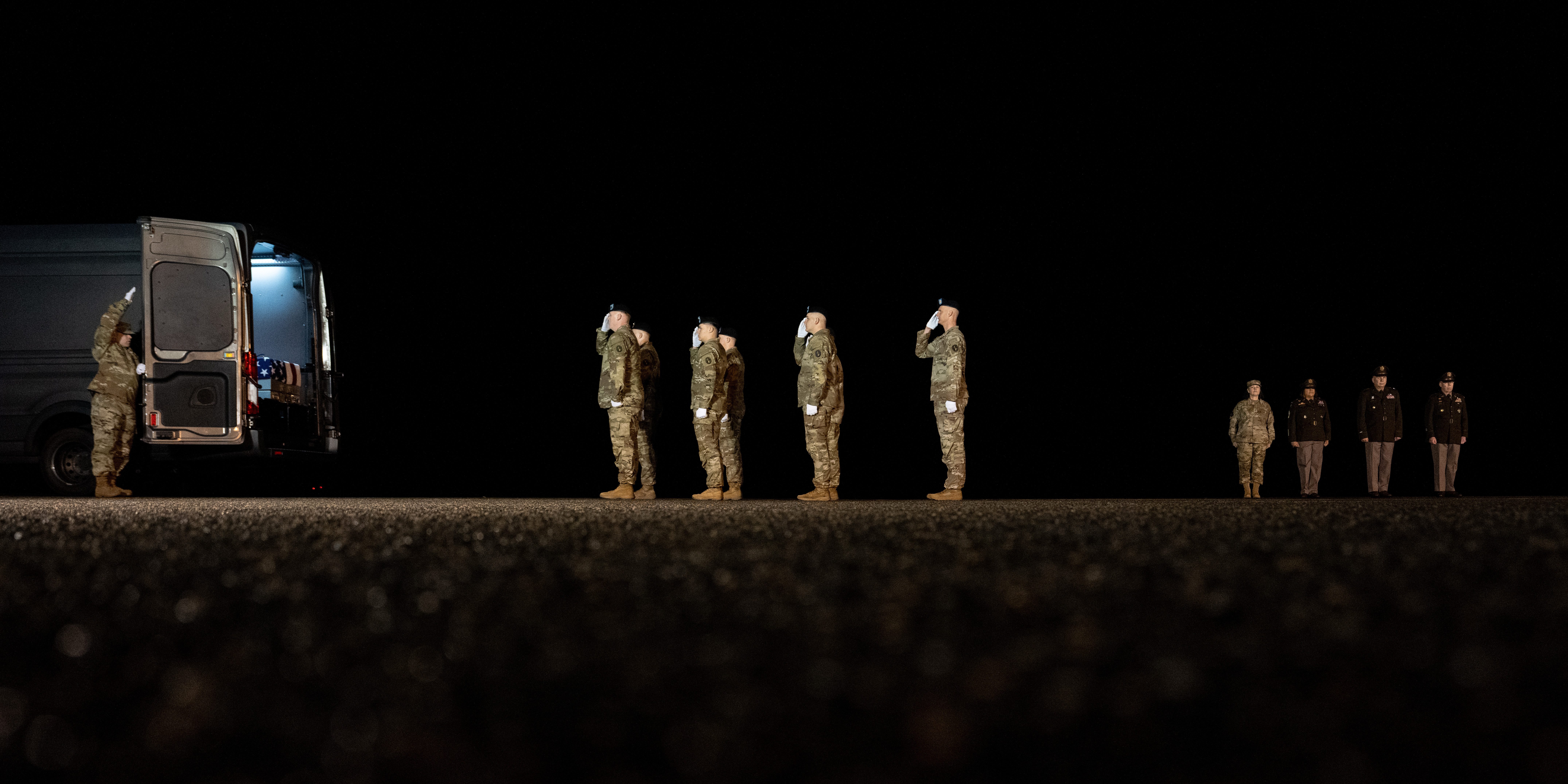
After Iran claimed to have killed three U.S. personnel in Kuwait over the weekend, the Pentagon’s official toll of injuries and deaths in the war quietly climbed on Monday.
The increase followed the collapse last week of the ceasefire with Iran amid tit-for-tat attacks between the countries.
As hostilities escalated, Iran called for revenge on the U.S. for killing Supreme Leader Ayatollah Ali Khamenei at the outset of the war in February.
The numbers for both wounded and dead U.S. service members in the war increased on Monday, according to the Defense Department.
The numbers for both wounded and dead U.S. service members in the war increased on Monday.
Iran claimed Sunday that it “demolished the U.S. Army’s surface-to-surface missile base” in Kuwait, killing three American military personnel.
U.S. Central Command responded: “There are zero reports of U.S. service member deaths or injuries in the region.”
On Monday, however, the Pentagon’s Iran war death toll, which was last updated Friday, went up by one.
Pentagon statistics show a sailor died in what was provisionally deemed a “non-hostile” fatality with a “pending” caveat, meaning it could later be revised to a hostile death.
It marks the first U.S. fatality on the Pentagon rolls since March. It was not immediately clear whether the new death listed occurred in Kuwait.
The U.S. Office of the Secretary of Defense, CENTCOM, and the Iranian Ministry of Foreign Affairs did not immediately respond to requests for comment.


Ceasefire Collapse
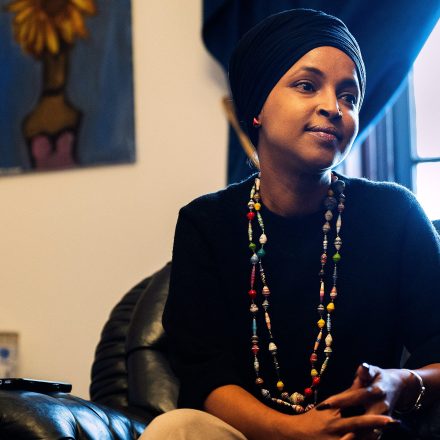
Iran’s military said on Monday that it launched strikes aimed at American military targets in Jordan, Bahrain, Kuwait, and Oman. Hours before, U.S. forces attacked Iran in response to strikes on commercial ships in the Strait of Hormuz.
President Donald Trump renewed his past protection-racket threats to seize the Strait and begin charging a 20 percent toll on all goods passing through it.
“We’re gonna keep the strait, and we’ll probably run it,” he said on Monday. “We’re gonna get paid for guarding it, a lot of money.”
Following a week of public funeral ceremonies for Khamenei, his son and successor Mojtaba Khamenei called for retribution for the late supreme leader’s assassination.
“We pledge that we will avenge your pure blood and the blood of all those martyred in these two wars from the criminal and disgraced killers,” he said. “This revenge is the demand of our nation, and it must certainly be carried out.”
In addition to killing Khamenei, Trump’s war on Iran has killed thousands of Iranian civilians, including more than 150 — most of them children — in an attack on an elementary school.
U.S. Death Toll
The official number of dead and wounded U.S. personnel stands at 428, a more than 11 percent increase since the first ceasefire between the U.S. and Iran was struck on April 8.
Reporting by The Intercept previously found that the Pentagon’s official count of dead and wounded personnel is a gross undercount, stemming from what one U.S. government official called a “casualty cover-up.” The Defense Casualty Analysis System, or DCAS, which tracks “deceased, wounded, ill or injured” service members for Congress and the president, is missing hundreds of known casualties.
The number of casualties in the DCAS system fluctuates from time to time. On Monday, the number of U.S. deaths during Operation Epic Fury, the military’s name for the campaign in Iran, increased by one, to 14 total.
For a short time in May, however, the count was already at 14 before dropping back to 13, without explanation. Following the drop, DCAS listed 13 hostile and non-hostile U.S. deaths.
The Pentagon list of the dead is missing Maj. Sorffly Davius, a signals and communication officer with the New York Army National Guard who reportedly died of a sudden illness in Kuwait on March 6.
Davius’s death was widely acknowledged even as it was excluded from the official count. Rep. Mike Lawler, R-N.Y., spoke about him during a memorial service and Gen. Dan Caine, chair of the Joint Chiefs of Staff, publicly recognized Davius as a fallen service member.
Wounded U.S. Personnel
On Monday, the number of U.S. wounded from the Iran war rose by one, to 414.
Like the official U.S. death toll, it has fluctuated, rising from 385 to 428 during a pause in hostilities in April. Later that month, the number suddenly declined by 15 without public comment from the Defense Department, leading to questions about manipulation of the figures or incompetence at the Pentagon.
While DCAS provides a running tally of “non-hostile” deaths — meaning those who died from accidents or by illness — it doesn’t include “non-hostile” injuries.
The DCAS figures show that 65 Navy personnel have been wounded in action. More than 200 sailors injured during a fire aboard the USS Gerald R. Ford in March are, however, missing from the tally.
IT’S EVEN WORSE THAN WE THOUGHT.
What we’re seeing right now from Donald Trump is a full-on authoritarian takeover of the U.S. government.
This is not hyperbole.
Court orders are being ignored. MAGA loyalists have been put in charge of the military and federal law enforcement agencies. The Department of Government Efficiency has stripped Congress of its power of the purse. News outlets that challenge Trump have been banished or put under investigation.
Yet far too many are still covering Trump’s assault on democracy like politics as usual, with flattering headlines describing Trump as “unconventional,” “testing the boundaries,” and “aggressively flexing power.”
The Intercept has long covered authoritarian governments, billionaire oligarchs, and backsliding democracies around the world. We understand the challenge we face in Trump and the vital importance of press freedom in defending democracy.
We’re independent of corporate interests. Will you help us?
IT’S BEEN A DEVASTATING year for journalism — the worst in modern U.S. history.
We have a president with utter contempt for truth aggressively using the government’s full powers to dismantle the free press. Corporate news outlets have cowered, becoming accessories in Trump’s project to create a post-truth America. Right-wing billionaires have pounced, buying up media organizations and rebuilding the information environment to their liking.
In this most perilous moment for democracy, The Intercept is fighting back. But to do so effectively, we need to grow.
That’s where you come in. Will you help us expand our reporting capacity in time to hit the ground running in 2026?
We’re independent of corporate interests. Will you help us?

I’M BEN MUESSIG, The Intercept’s editor-in-chief. It’s been a devastating year for journalism — the worst in modern U.S. history.
We have a president with utter contempt for truth aggressively using the government’s full powers to dismantle the free press. Corporate news outlets have cowered, becoming accessories in Trump’s project to create a post-truth America. Right-wing billionaires have pounced, buying up media organizations and rebuilding the information environment to their liking.
In this most perilous moment for democracy, The Intercept is fighting back. But to do so effectively, we need to grow.
That’s where you come in. Will you help us expand our reporting capacity in time to hit the ground running in 2026?
We’re independent of corporate interests. Will you help us?
Contact the author:

Related
Latest Stories

Voices
Mamdani’s High-Wire Balancing Act Between ICE and NYPD Can’t Last
The New York City mayor has said he doesn’t want to “normalize” ICE. But the NYPD, led by Jessica Tisch, has other plans.

Google DeepMind Engineer Resigns in Protest of Pentagon Contract
Sofia Liguori stepped down from DeepMind due to current military contracts — not speculative fears of an AI apocalypse.

The War on Immigrants
Trump’s Obsession With Somalia Isn’t Just Racist. It’s Been Lethal.
Beyond targeting Rep. Ilhan Omar, the Trump administration has killed, arrested, deported, and demonized Somalis at home and abroad.