
A report published this week by the State Department is the latest weapon employed by the Trump administration in its campaign for aggressive intervention in Cuba, according to members of Congress and experts on the beleaguered Caribbean island nation.
Despite Cuba being severely hobbled by in the throes of a humanitarian crisis engineered by U.S. sanctions and fuel blockades, the new report paints the country as a major threat.
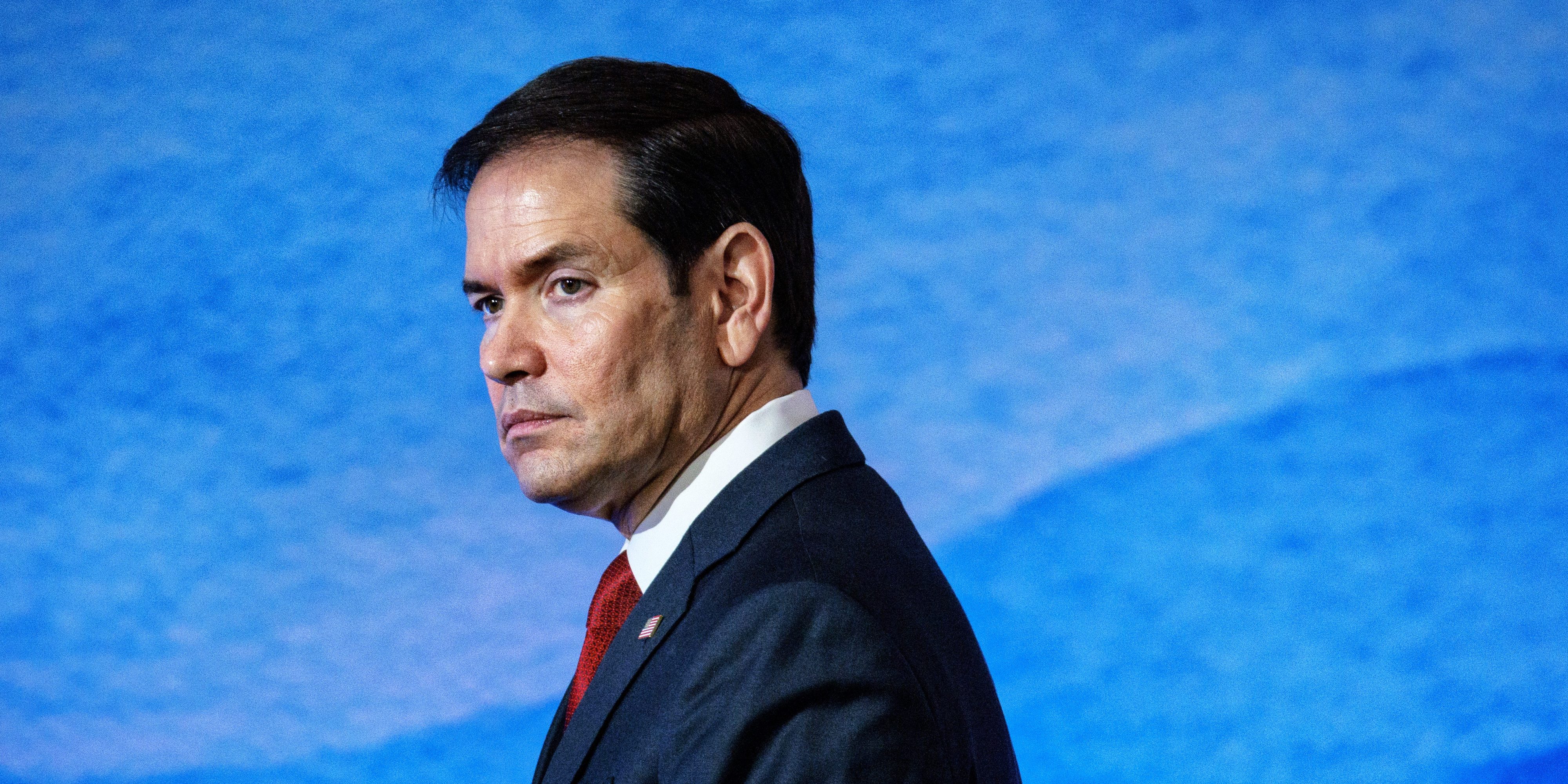
The report appears to be the brainchild of Secretary of State Marco Rubio, a first-generation Cuban American who has made the overthrow of the Cuban government a top priority under the second Trump administration.
Published Monday without a listed author, the report says Cuba is the “capital of 21st century communism,” ideologically immovable, and a permanent enemy committed to the destruction not just of the U.S. but also of “Western civilization” through the spread of “Third Worldism.”
If that sounds like a throwback to the long-settled Cold War, that’s because it is — something critics of the report in Congress seized upon.
Whatever truths the report contains, they’re largely overshadowed by a feverish paranoia about the alleged reach of Cuban intelligence into American civil society, according to Rep. Mark Pocan, D-Wis., days after returning from a fact-finding trip to Cuba.
“It may be the stupidest, most fantastical, most biased thing I’ve ever read from a governmental agency,” Pocan said in a statement Tuesday. “This report focuses on the 1960s & 70s with no clear connection to today. Yet somehow, the State Department uses this report to say that this impoverished nation is responsible for everything from Black Lives Matter to Antifa, the anti-ICE protests and more.”
Rep. Delia Ramirez, D-Ill., who went on the fact-finding mission with Pocan, said the report was aimed at manufacturing consent for an invasion of the island — and to crack down on dissent at home.
“While criticizing the regime in Cuba, it instead attacks Americans’ constitutional rights to free speech and free assembly.”
“This report was intentionally designed to instill fear of the Cuban people and to justify a military attack on Cuba,” Ramirez told The Intercept. “It’s hypocrisy at its finest, because while criticizing the regime in Cuba, it instead attacks Americans’ constitutional rights to free speech and free assembly.”
In sketching a broad, anti-American conspiracy in nearly dozens of left-wing social movements, organizations, and educational institutions, the report also functions as a broadside on civil society in the U.S — and hardly for the first time.
“Cuba is not a new cudgel,” said Miriam Pensack, a historian at Princeton University specializing in Latin America and the Caribbean. “The Cuban revolution was a galvanizing event for the way that the United States thought about its national security, really until the end of the Cold War. And it still has an ideological utility, even as the country is limping along.”
Center of Global Conspiracy
Running 100 pages, the report lays out what its authors describe as a decadeslong effort by Cuba to foment revolutionary movements throughout the world and to build a latter-day “axis of evil” by allying with other governments opposed to U.S. interests, including the current-day governments of Iran, Russia, China, and North Korea.
“Even as it expands and revitalizes its network within the next generation of American left-wing activists, it has also forged new partnerships — or deepened and repurposed old ones — with other foreign governments and movements around the world,” the report warns. “The regime continues to act as a force multiplier for a much broader anti-American coalition, positioning itself as a staging ground for a wide range of foreign adversaries to conduct operations against the United States.”
Cuba, the authors allege, is “less a nation-state than an all-encompassing intelligence and subversion operation, focused around its existential revolution against the United States.”
The report goes on to list a slew of left-wing groups and individuals as accomplices, both witting and unwitting, of this intelligence operation, including the Democratic Socialists of America, Code Pink, Los Angeles Mayor Karen Bass, and left-wing streamer Hasan Piker.
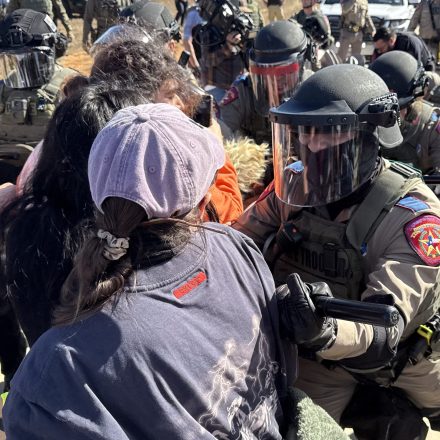
In a section stretching nearly five full pages on the National Lawyers Guild, a long-standing right-wing bugaboo, the report’s authors describe the venerable progressive law association as “one of the most persistently relevant — and insidious — organizations in Cuba’s U.S. network.”
Posting to X for the first time since March, the organization quipped, “We have been called much worse, by much better.”
Academic Freedom at Home
The report took aim at universities in the U.S. for maintaining exchange programs and partnerships with Cuban universities, implying that such programs functioned as a feeding ground for Cuban agents looking to recruit spies and fellow travelers.
The report singled out Harvard University, pointing to trips by faculty to Cuba as recently as 2017.
The Cuban government “would probably argue that it was U.S. universities that were trying to penetrate Cuban institutions and to foment subversion there!”
If anything, however, the Cuban government has been wary of exchange programs with American schools, according to Alejandro de la Fuente, a professor of Latin American history and economics at Harvard who chairs the university’s Cuba Studies Program and took part in a trip to Cuba in 2017 that is mentioned in the report.
“They did their best to delimit those exchanges as much as possible because they understood that knowledge production requires freedom and a plurality of viewpoints — precisely what they do not allow,” de la Fuente told The Intercept in an email Wednesday. “Indeed, they would probably argue that it was U.S. universities that were trying to penetrate Cuban institutions and to foment subversion there!”
Born in Cuba, De la Fuente is hardly an apologist for the Cuban government, at whose feet he laid the blame for the country’s collapse. He acknowledged that Cuban intelligence may have targeted American students and academics in the past, but scoffed at the underlying thesis of the report that Cuba continues to pose a grave threat to the U.S.
“The ineptitude and corruption of the regime have destroyed the country’s economy and society, to the point that the very existence of the nation is in danger,” de la Fuente said. “Can a country like this pose a threat to the national security of the United States today? The answer, any reasonable observer would agree, is emphatically no.”
“War on the Cuban People”
Cuba has made no secret of its support for revolutionary movements throughout the 20th century. And it was a vital partner to left-wing governments in Latin America in the 21st century.
With Cuba today crippled by sanctions and fuel shortages, however, Ramirez, the member of Congress, said the report’s notion of the country as a central node in some threatening conspiracy was a “fiction.”
Accusations about Cuba’s extensive reach into protests against U.S. Immigration and Customs Enforcement, antifascist organizing, and Black Lives Matter don’t square with the reality of the severe crisis that has gripped Cuba. In early January, the Trump administration tightened its embargo of the country into a virtual blockade on all fuel arriving in Cuba.
Already weakened by internal tensions and by decades of economic sanctions imposed by the U.S., the island nation has in recent months been plunged into repeated, extended blackouts; its tourism-dependent economy has effectively collapsed; and its citizens face a daily question of where to find their next meal.
Her voice on the verge of tears as she described the humanitarian crisis she witnessed on the island, Ramirez forcefully rejected the notion that the U.S. has anything to fear from Cuba.
“Under no circumstances, at any moment during my trip, did I see anything to make me believe that Cuba poses an existential threat to the United States,” Ramirez said. “On the contrary, what I witnessed was a war on the Cuban people by the United States, and specifically by Donald Trump and Marco Rubio.”
IT’S EVEN WORSE THAN WE THOUGHT.
What we’re seeing right now from Donald Trump is a full-on authoritarian takeover of the U.S. government.
This is not hyperbole.
Court orders are being ignored. MAGA loyalists have been put in charge of the military and federal law enforcement agencies. The Department of Government Efficiency has stripped Congress of its power of the purse. News outlets that challenge Trump have been banished or put under investigation.
Yet far too many are still covering Trump’s assault on democracy like politics as usual, with flattering headlines describing Trump as “unconventional,” “testing the boundaries,” and “aggressively flexing power.”
The Intercept has long covered authoritarian governments, billionaire oligarchs, and backsliding democracies around the world. We understand the challenge we face in Trump and the vital importance of press freedom in defending democracy.
We’re independent of corporate interests. Will you help us?
IT’S BEEN A DEVASTATING year for journalism — the worst in modern U.S. history.
We have a president with utter contempt for truth aggressively using the government’s full powers to dismantle the free press. Corporate news outlets have cowered, becoming accessories in Trump’s project to create a post-truth America. Right-wing billionaires have pounced, buying up media organizations and rebuilding the information environment to their liking.
In this most perilous moment for democracy, The Intercept is fighting back. But to do so effectively, we need to grow.
That’s where you come in. Will you help us expand our reporting capacity in time to hit the ground running in 2026?
We’re independent of corporate interests. Will you help us?

I’M BEN MUESSIG, The Intercept’s editor-in-chief. It’s been a devastating year for journalism — the worst in modern U.S. history.
We have a president with utter contempt for truth aggressively using the government’s full powers to dismantle the free press. Corporate news outlets have cowered, becoming accessories in Trump’s project to create a post-truth America. Right-wing billionaires have pounced, buying up media organizations and rebuilding the information environment to their liking.
In this most perilous moment for democracy, The Intercept is fighting back. But to do so effectively, we need to grow.
That’s where you come in. Will you help us expand our reporting capacity in time to hit the ground running in 2026?
We’re independent of corporate interests. Will you help us?
Contact the author:

Related


Latest Stories

DHS Was Designed as a Weapon
Rep. Delia Ramirez and writers Rozina Ali and Will Sommer discuss the ICE raid on Ilhan Omar and the years of “counterterror” surveillance that paved the way for the Trump administration’s abuses.

Long After the Maui Fires, Toxic Metals Linger in Residents’ Bodies
The toxic exposures didn’t begin with the flames. Researchers are examining how fires affected a community already harmed by plantation agriculture, development, and colonialism.

Midterms 2026
Lockheed Martin Showered Susan Collins With Cash as F-35 Program Hit Turbulence
Collins received tens of thousands from Lockheed during a two-month period surrounding a critical 2023 watchdog report.