
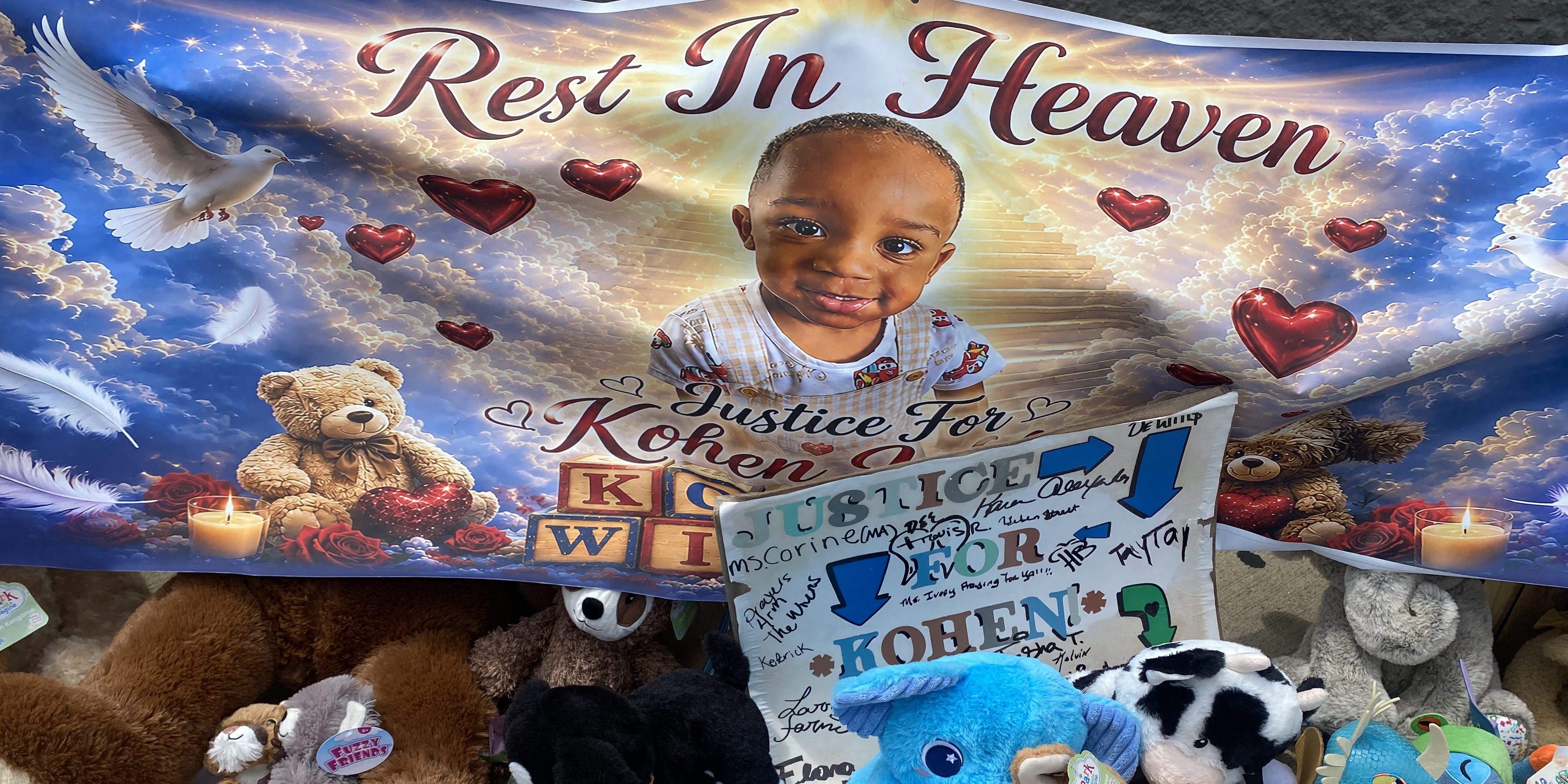
For months, the residents of Senatobia, Mississippi, have waited with a mix of dread and anticipation for state authorities to decide what, if anything, they plan to do about the killing of Kohen Wiley. Ever since the 1-year-old child was shot by a white police officer outside a local Walmart in June, organizers have held protests and press conferences outside the town’s city hall to call for accountability — or even a simple acknowledgment — for the loss of the Black toddler.
On Monday, Senatobia residents got their answer: Officials plan to do nothing. “In this incident, the Attorney General’s Office found the use of force was justified,” Republican Mississippi AG Lynn Fitch announced in a three-sentence news release posted on her official website.
The announcement was met with anguish and outrage from people inside and outside the state. The Mississippi Legislative Black Caucus demanded more information. “Kohen Wiley was a baby,” said state Rep. Kabir Karriem, who chairs the MLBC. “He posed no threat. He deserved protection, and he deserved a future. His family is owed more than a conclusion. … Announcing that a review is complete does not fulfill the responsibility to explain how a police encounter ended with a baby dead.”
The attorney general’s decision followed a probe into the case by the Mississippi Bureau of Investigation, which was “responsible for conducting a thorough and impartial investigation,” as Mississippi Department of Public Safety Press Secretary Alex Gibert wrote to The Intercept on Tuesday. The email said that the probe “remains open and active.” But in a subsequent phone call, Gibert said that the investigation “involving the officer is closed.”
Gibert reiterated what the agency has previously said: that body camera footage and other investigative materials will be made available through public records requests. But she added that nothing will be released until after officials meet with Wiley’s family. “We are meeting with the family later this week,” she said.
As recently as Monday, however, the family maintained they had received no communication from the state. Kohen’s grandmother, Veronica Roberson, told Mississippi Today that she found out about the attorney general’s decision on Facebook and that no one had reached out. The outlet also reported last month that, although the investigation was complete and on the attorney general’s desk as of mid-September, no one had interviewed Kohen’s mother, Vel’lesiya Wiley, who was holding her child in her lap when he was shot dead by police. This called into question whether the investigation is as “thorough” as authorities have claimed. Asked by The Intercept whether the MBI investigation sought to interview Wiley, Gibert said she could not comment.
The man who killed Baby Kohen, as the child is now known, was identified by the press as Senatobia Police Sgt. Hunter Foster, who fired his gun into the car where Wiley was riding in the passenger’s seat on June 14. The exact circumstances that led to the shooting remain murky. Police said that officers responded to a shoplifting call at the Walmart; a two-page incident log released to The Intercept via a public records request contained no information about the shooting but noted that the items allegedly stolen were baby clothes and a pack of Pampers.
In a video posted on social media shortly after her child was killed, Wiley said she got into the passenger’s seat of the Ford Fusion after the driver, Latoya Ferrell, was stopped on her way out of the store. Police accused the women of trying to flee; according to Wiley, when she saw officers approach with guns drawn, she said, “I raised my baby up” to warn that he was in the car. Then the police shot him. Ferrell was also struck and was hospitalized, but survived.
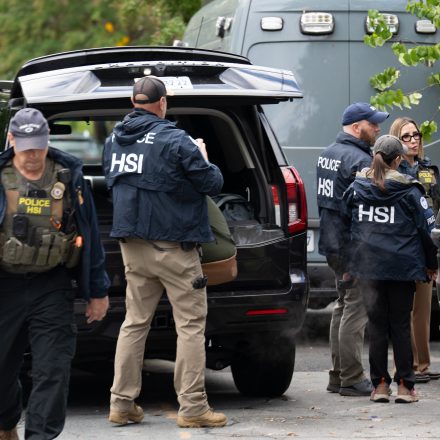
The Senatobia Police Department immediately claimed that the car drove toward police, almost hitting them — an account swiftly echoed by the Mississippi Bureau of Investigation. But to date, officials have released no evidence to support this account. Civil rights attorney Ben Crump, who took the family’s case, hired an outside pathologist to do an external examination of the child and to review visual evidence. In July, the medical examiner concluded, based on the appearance of the injuries and path of the fatal bullet, that the officer shot the baby from the side of the car, undermining the police’s version of events.
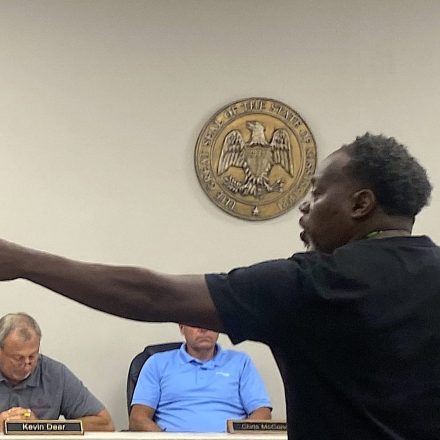
The announcement by the attorney general has renewed long-standing calls for video to be released. In a press conference held earlier this month, local activist Patrick Lumumba of the Senatobia Committee for Accountability and Transparency accused the state of tailoring its investigation to support a lie — that Wiley and Ferrell deliberately sought to strike Foster with the car.
“If video footage would prove that, they would have released it the next day,” he said.

The killing of Kohen Wiley drew national attention to Senatobia, a small city just south of Memphis, Tennessee. City leaders mostly refused to address the killing, save for a brief, scripted video released by Senatobia Mayor Greg Graves a few days after the shooting. By the time Kohen’s family laid him to rest in late June, the police narrative had prompted many inside and outside Senatobia to blame Kohen’s mother for his death, with rumors suggesting that, rather than charge the police officer, authorities would charge the mother and driver.
The child’s death followed years of warnings by Black residents over the police’s treatment of adults and children alike. Among the string of high-profile incidents was the jailing of a 10-year-old boy for public urination, as well as the violent arrest of two sisters, 13 and 14, outside a public housing complex. According to the girls and their mother, then-police chief Richard Chandler personally ordered one of the girls to “get your Black ass out of the road” before forcing her to the ground. And on Mother’s Day 2025 — in the same Walmart parking lot where Kohen Wiley would be shot dead — a female officer forced a woman out of her car in front of her young children for sitting in a handicapped parking space.
In the summer of 2025, the Senatobia Board of Aldermen dismissed Chandler, replacing him with interim police chief Harold Vanderford, a move aimed at restoring trust, as one alderman put it. But the killing of Kohen Wiley revealed that, in reality, nothing had changed.

Residents of Senatobia, including one former law enforcement officer, told The Intercept that the institutional culture brought by Chandler remained entrenched, with Senatobia officers showing disdain and disregard for the community. City records also showed that the chief had pushed the city to adopt new ordinances that would bring in revenue for the police department, while expanding punishments for misdemeanors like loitering.
At several board of alderman meetings over the summer, Lumumba and other activists reminded city leaders that they’d warned officials about the danger posed to Black residents by Senatobia police. At the same time, Mississippi Today revealed evidence that Foster had a history of racist remarks. Just days before he shot Kohen Wiley, Foster was accused of making racist comments to a Black colleague, who later left the police department. Foster is still on the force, on paid leave.
Then, in late August, Mississippi Today exposed racist text messages sent by Vanderford himself. The text messages dated back to the summer of 2025 and contained more than a dozen uses of the N-word. City leadership initially tried to sweep the scandal under the rug: Vanderford claimed that the messages were created by AI and, after a closed-door meeting, the mayor and members of Senatobia’s board of aldermen announced that Vanderford would stay on. But individual aldermen pushed back publicly. On September 1, Vanderford tried to resign, only for the board to announce that they had voted to fire him. Vanderford was replaced by a Black woman, Senatobia Police Lieutenant Angelica Maze.
In a statement accepting the appointment as interim chief on September 5, Maze did what the police department had previously failed to do: express “heartfelt condolences to Kohen Wiley’s family and to everyone in the community who has been affected by this tragic loss.”
In another statement on Monday, after the attorney general announced the use of force was justified, Maze acknowledged that the community “may have questions, concerns, and strong emotions, and we respect everyone’s right to express their views peacefully.”
With the body camera footage likely to be released within the next several days, a new round of waiting begins in Senatobia. In the meantime, the Senatobia Committee for Accountability and Transparency released a statement on social media.
“This was never just a news story for us. It was personal – many of us are residents of Senatobia and parents of vulnerable children. … We are also human beings who need time to grieve, reflect, and process everything that has transpired.”
IT’S EVEN WORSE THAN WE THOUGHT.
What we’re seeing right now from Donald Trump is a full-on authoritarian takeover of the U.S. government.
This is not hyperbole.
Court orders are being ignored. MAGA loyalists have been put in charge of the military and federal law enforcement agencies. The Department of Government Efficiency has stripped Congress of its power of the purse. News outlets that challenge Trump have been banished or put under investigation.
Yet far too many are still covering Trump’s assault on democracy like politics as usual, with flattering headlines describing Trump as “unconventional,” “testing the boundaries,” and “aggressively flexing power.”
The Intercept has long covered authoritarian governments, billionaire oligarchs, and backsliding democracies around the world. We understand the challenge we face in Trump and the vital importance of press freedom in defending democracy.
We’re independent of corporate interests. Will you help us?
IT’S BEEN A DEVASTATING year for journalism — the worst in modern U.S. history.
We have a president with utter contempt for truth aggressively using the government’s full powers to dismantle the free press. Corporate news outlets have cowered, becoming accessories in Trump’s project to create a post-truth America. Right-wing billionaires have pounced, buying up media organizations and rebuilding the information environment to their liking.
In this most perilous moment for democracy, The Intercept is fighting back. But to do so effectively, we need to grow.
That’s where you come in. Will you help us expand our reporting capacity in time to hit the ground running in 2026?
We’re independent of corporate interests. Will you help us?

I’M BEN MUESSIG, The Intercept’s editor-in-chief. It’s been a devastating year for journalism — the worst in modern U.S. history.
We have a president with utter contempt for truth aggressively using the government’s full powers to dismantle the free press. Corporate news outlets have cowered, becoming accessories in Trump’s project to create a post-truth America. Right-wing billionaires have pounced, buying up media organizations and rebuilding the information environment to their liking.
In this most perilous moment for democracy, The Intercept is fighting back. But to do so effectively, we need to grow.
That’s where you come in. Will you help us expand our reporting capacity in time to hit the ground running in 2026?
We’re independent of corporate interests. Will you help us?
Contact the author:

Related

Latest Stories

Targeting Iran
Yemenis Unable to Reach Hospital Are Part of the Iran War Death Toll
At least 10 patients with kidney failure near Taiz, a city under a Houthi siege, died because they were unable to get to their dialysis treatments.

Midterms 2026
Mike Rogers Spent $100K on Private Jets and Luxury Travel Last Quarter
The Republican running for Senate in Michigan is directing campaign funds toward chartered flights, a Miami car service, and BMW repairs.

The Army Wants to Sic AI Agents on Its Enemies. What Could Go Wrong?
Documents obtained by The Intercept show the military is trying to deploy autonomous AI agents to hack its adversaries.