

Bankrolling Empire
During the Cold War, the Subic Bay Naval Base in the Philippines was a key enabler of U.S. military operations in the Pacific and beyond. It served as a critical support facility for the U.S. war in Vietnam and a transit point for U.S. weapons destined for American military personnel in the 1991 Persian Gulf War. That all changed in June of that year, when the Philippine Congress, under pressure from a grassroots anti-bases movement, refused to renew the lease for Subic Bay and other U.S. outposts in that nation.
After the closing of U.S. bases, military relations between the U.S. and the Philippines were conducted indirectly through arms transfers, joint training exercises, and deployments of Special Operations forces to aid Philippine counterinsurgency efforts, rather than by the permanent presence of tens of thousands of troops. The relationship was codified in 1999, when Washington and Manila entered into a Visiting Forces Agreement, which eased the movement of U.S. troops and equipment in and out of the Philippines and put U.S. personnel in the country under the jurisdiction of U.S. rather than Philippine authorities.
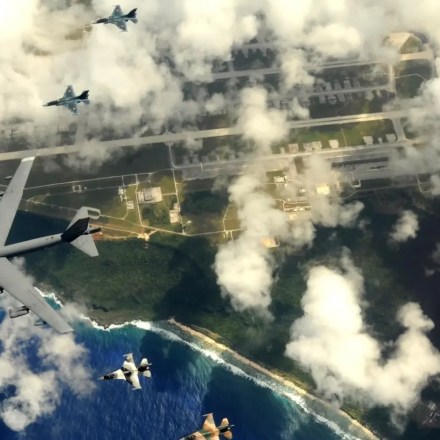
But now Subic Bay is back in play as part of a new expansion of the U.S. military presence in the Philippines. And this time around, private capital is financing these empire games.

Military Might Versus Human Rights
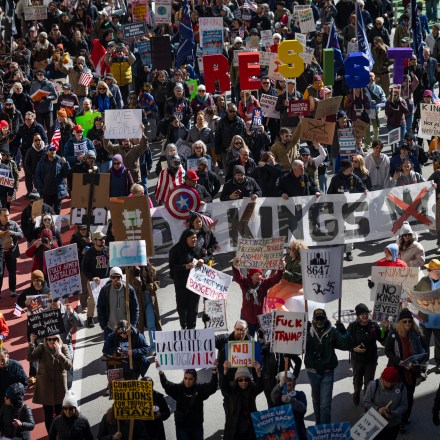
The long-standing U.S. military ties with the Philippines have come at a high price for the residents of that nation. Washington’s military and economic interests there have prompted it to look the other way as repressive leaders like Ferdinand Marcos and Rodrigo Duterte engaged in systematic human rights abuses against their own people.

To its credit, the Reagan administration eventually cut ties with Marcos — who was overthrown through peaceful protests known as the “People Power” revolt in 1986 — throwing its support behind his democratically elected opponent, Corazon Aquino. But there was no such shift with respect to Duterte, whose regime ruled the Philippines from 2016 to 2022, and engaged in extrajudicial killings of thousands of Filipinos, including journalists and land reform activists, all under the guise of a “war on drugs.” Duterte is now under indictment by the International Criminal Court, which has cited him for “the crimes against humanity of murder and attempted murder.”
While Marcos and his family fled the Philippines in the 1980s, his son — Ferdinand Marcos Jr. — returned and, in 2022, won the presidency in a landslide, in part by promising to continue some of the strongman policies introduced by Duterte. According to Human Rights Watch, since the younger Marcos took office:
Serious human rights violations have continued in the country largely unabated, including arbitrary arrests, extrajudicial killings and enforced disappearances by security forces. The murderous ‘war on drugs’ has continued, though with fewer killings. Leftist civil society activists, journalists, environmentalists, Indigenous leaders, trade unionists, and left-wing politicians remain under serious, at times deadly, threat.
During the Biden presidency, the U.S. expanded a 2014 pact — the Enhanced Defense Cooperation Agreement — which gave the U.S. military access to five major sites in the Philippines. In 2023, the number of bases was expanded to nine. The State Department has described the scope of the EDCA as authorizing “U.S. forces access to agreed locations in the Philippines on a rotational basis, for security cooperation exercises, joint and combined military training activities, and humanitarian assistance and disaster relief activities.” That official summary fails to admit the real reason for the signing of the EDCA: to give the U.S. access to territory that can be used in a future war with China.
The Privatization of Subic Bay
Building on his predecessor’s enhanced cooperation with the Philippines, President Donald Trump, who had been a staunch Duterte supporter, has pursued even tighter ties with Marcos’s government. This has been driven, in significant part, by the desire to use the Philippines as a platform for potential U.S. military interventions in the Pacific region and further economic penetration of Asia.

As part of the accelerating security partnership between the U.S. and the Philippines, military activities at Subic Bay have resumed. But this time, formal access has been secured by a private investment firm, Cerberus Capital Management, which controls the area through a 50-year lease granted through collaboration with a Philippine company, Agila.
A report by the New York Committee for Human Rights in the Philippines, a member of the International Coalition for Human Rights in the Philippines, summarized current activities at Subic Bay:
In mid-2025, the U.S. Congress approved a plan to build a forward operating base and ammunition production facility in Subic Bay. It is projected to be the world’s largest weapons hub. … The shipyard [is home to] HD Hyundai Heavy Industries, deep sea fiber optic data cables manufacturer Sub Com, defense contractor V2X and the Philippine Navy, which operates a portion of the facility.
Cerberus has strong ties to the Trump administration, first and foremost through its founder, Stephen Feinberg, who is deputy secretary of the Department of War, second in command at the Pentagon behind Pete Hegseth. In that role, Feinberg oversees the Pentagon’s Office of Strategic Capital, which makes loans to military tech companies, many of which are current or former Cerberus clients.
Feinberg “earned” his position the old-fashioned way — by giving millions to Rebuilding America Now, a super PAC devoted to supporting Trump, and hosting a $50,000-a-plate fundraiser, the proceeds of which also went to support candidate Trump in 2016.

Bloomberg News has identified four other former Cerberus executives now in key positions at the Pentagon: David Lorch, director of the OSC; George Kollitides, a special government employee who is simultaneously a director of D. Boral Acquisition, a company that brokers mergers and acquisitions in the weapons sector; and senior Pentagon advisers John Gallagher and Tom Rakusan.
On the other side of the revolving door, Cerberus has hired major Republican figures like former Treasury Secretary John Snow and former Vice President Dan Quayle, who serves as chair of the company’s global investment unit. Given these connections, the Pentagon is all-in behind Cerberus’s activities in the Philippines. But this has prompted a backlash. Activists in the Philippines and beyond are speaking out against the role of Cerberus, calling for public pension funds to withdraw their investments in the company for underwriting the militarization of the Philippines.
Another important avenue of increased cooperation between the U.S. and the Marcos government is the Philippines’ participation in Pax Silica, a U.S.-initiated cartel that the State Department describes as its “flagship effort on AI and supply chain security, advancing new economic security consensus among allies and trusted partners.” And by “supply chain security,” the declaration primarily means “reducing dependence on China” for critical minerals needed to feed and sustain the computing power now central to the Pentagon and the U.S. arms industry.

In addition to the Philippines, there are 24 other participants in Pax Silica, including two other key Asian partners, India and Japan, as well as Taiwan, which is an associate member of the cartel. Jacob Helberg, a former adviser to military tech giant Palantir who now serves as the State Department’s point person on Pax Silica, has stressed that the initiative goes well beyond just securing the supply of specific critical resources. “If the 20th century ran on oil and steel, the 21st century runs on [computing power] and the minerals that feed it,” he said. “This declaration [announcing Pax Silica] hails a new economic security consensus ensuring aligned partners build the AI ecosystem of tomorrow — from energy and critical minerals to high-end manufacturing models.”
The China Syndrome
Although it supplies many other benefits to U.S. corporations and America’s national security state, the enhanced effort to bring the Philippines more securely into the U.S. military, political and economic orbit is all rationalized as moves toward reining in China’s economic and military power and garnering Manila’s support in a possible war between China and the U.S.
The policy of economic warfare and aggressively preparing for a military conflict with China could not be more misguided. The oft-cited “need” to posture U.S. forces to do battle with China over Taiwan ignores the fact that there are diplomatic means of preventing such a conflict.
What is needed is a joint understanding on the status of Taiwan. For over 40 years, peace in the Taiwan Strait has been maintained through the U.S.–China agreement that Washington will not take steps toward recognizing Taiwan as an independent state and China would agree not to resolve the issue of Taiwan by force — the so-called “One China” policy. That agreement has been weakened by actions taken during both the Biden and Trump administrations. The simplest and best way for Washington and Beijing to avoid a war over Taiwan would be to revert to the “One China” policy.
Using trade wars and military buildups as the primary U.S. tool for influencing China simply will not work.
China does not pose a direct military threat to the United States. Its last major war was its invasion of Vietnam in 1979, a conflict in which its troops were badly beaten by battle-hardened Vietnamese forces. The U.S. also spends almost three times as much on its military as China does, and is far ahead of Beijing in numbers of advanced combat aircraft, naval firepower, and nuclear weapons.
In areas where China might be a peer competitor with the U.S. military, like AI-driven weapons, there need to be some rules of the road on how such systems can be used. Using trade wars and military buildups as the primary U.S. tool for influencing China simply will not work. The likely result of persisting in such an approach will be a dangerous arms race and an increased risk of outright war.
A more productive approach to U.S.–China relations would be to seriously explore cooperation on central issues like arms control, addressing the climate crisis, and stabilizing the global economy. There would still be a U.S. military strategy for the Asia–Pacific region, but it should be genuinely defensive in nature, a posture that could save hundreds of billions of dollars in the years to come.
Pursuing a more balanced policy toward China would open the way to developing more equal, less exploitative relations with the Philippines and other nations in the Pacific, and it would allow Washington to finally take a genuine interest in promoting human rights and opposing repression as central pillars of U.S. international relations.
At a time when armed conflict and threats of war are the bedrock of U.S. policy, from the Western Hemisphere to the Middle East, a shift toward diplomacy seems daunting. But it is the only way forward if we want to move toward a more peaceful world where no one nation or group of nations dominates, and where corporations aren’t bending foreign and domestic policies to their will.
IT’S EVEN WORSE THAN WE THOUGHT.
What we’re seeing right now from Donald Trump is a full-on authoritarian takeover of the U.S. government.
This is not hyperbole.
Court orders are being ignored. MAGA loyalists have been put in charge of the military and federal law enforcement agencies. The Department of Government Efficiency has stripped Congress of its power of the purse. News outlets that challenge Trump have been banished or put under investigation.
Yet far too many are still covering Trump’s assault on democracy like politics as usual, with flattering headlines describing Trump as “unconventional,” “testing the boundaries,” and “aggressively flexing power.”
The Intercept has long covered authoritarian governments, billionaire oligarchs, and backsliding democracies around the world. We understand the challenge we face in Trump and the vital importance of press freedom in defending democracy.
We’re independent of corporate interests. Will you help us?
IT’S BEEN A DEVASTATING year for journalism — the worst in modern U.S. history.
We have a president with utter contempt for truth aggressively using the government’s full powers to dismantle the free press. Corporate news outlets have cowered, becoming accessories in Trump’s project to create a post-truth America. Right-wing billionaires have pounced, buying up media organizations and rebuilding the information environment to their liking.
In this most perilous moment for democracy, The Intercept is fighting back. But to do so effectively, we need to grow.
That’s where you come in. Will you help us expand our reporting capacity in time to hit the ground running in 2026?
We’re independent of corporate interests. Will you help us?

I’M BEN MUESSIG, The Intercept’s editor-in-chief. It’s been a devastating year for journalism — the worst in modern U.S. history.
We have a president with utter contempt for truth aggressively using the government’s full powers to dismantle the free press. Corporate news outlets have cowered, becoming accessories in Trump’s project to create a post-truth America. Right-wing billionaires have pounced, buying up media organizations and rebuilding the information environment to their liking.
In this most perilous moment for democracy, The Intercept is fighting back. But to do so effectively, we need to grow.
That’s where you come in. Will you help us expand our reporting capacity in time to hit the ground running in 2026?
We’re independent of corporate interests. Will you help us?
Contact the author:
Related


Latest Stories

Pentagon Records Missed Almost Half of Troops’ Domestic Abuse Killings
“Records are important,” said the mother of a woman killed by her Navy colleague. We found nearly twice as many domestic-abuse killings by servicemembers as the DoD listed.

Hegseth Built a New Pentagon Office for Religion. Military Religious Leaders Wish He Hadn’t.
“What do I tell a soldier who believes an action is immoral, but also believes that God commanded it?” one Army chaplain told The Intercept.

Voices
The Spirit of “Party Unity, My Ass” Is Back and Coming for the DSA (and El-Sayed)
Centrist Democrats’ calls to fall in line behind the party’s nominee only ever seem to cut one way — and fall apart when their candidate loses.