Sen. Bernie Sanders forced a vote on Wednesday to block the sales of bombs and bulldozers to Israel. The resolutions failed mostly along party lines with a handful of defections to the Republican side, but a record number of Democrats voted against sending weapons to Israel.
“A supermajority of Democrats oppose this war, are generally against America’s global military interventions,” former Sanders foreign policy adviser Matt Duss tells The Intercept Briefing. Yet Senate Minority Leader Chuck Schumer, D-N.Y., joined 11 Democrats in voting against the measure to block the sale of 1,000-pound bombs to Israel, and seven Democrats against the sale of bulldozers used in Israel’s military occupations.
“We do have a Democratic Party leadership that still is part of this very small — and thankfully dwindling, though not fast enough — hawkish faction that is wedded to this idea of American global military domination,” says Duss.
This week on the podcast, Duss speaks to host Akela Lacy about how Democrats should use the overwhelming unpopularity of the war to push an anti-war agenda that brings about real change.
“There’s a real constituency here for this message,” says Duss, “We need a foreign policy for this era that is based around building peace rather than making war, that is focused on foreign policy that benefits American communities and American workers, but also does not export insecurity and poverty onto others in the world. And I think this is a really opportune moment for it.”
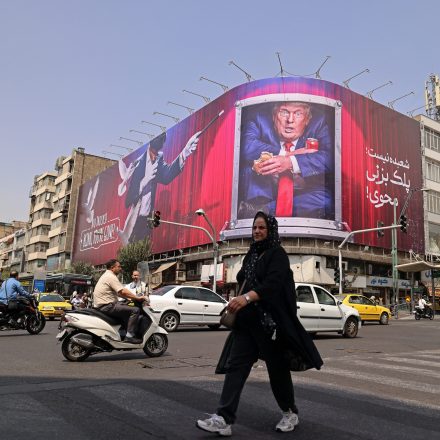
The watershed moment in the Senate came against the backdrop of President Donald Trump’s hyper-aggressive military adventurism.
“My concern about blaming this all on Israel is that it lets Washington off the hook,” says Duss. “We have a foreign policy establishment that is addicted to militarism, that is addicted to war, who often work at think tanks that are largely funded by the military–industrial complex. They are funded by weapons manufacturers. We have a political class that is really deeply committed to an almost religious degree to American primacy in the world, to American global hegemony. Which means that we are up in everyone’s business all over the place all the time.”
“This Iran war is the most egregious and horrible expression of trends in our foreign policy that have been building for a long time, so are these boat strikes,” he says, referring to the Trump administration’s ongoing assassinations of alleged drug traffickers. “We’ve been killing people with flying robots in the Middle East and Africa and elsewhere for decades now.”
Listen to the full conversation of The Intercept Briefing on Apple Podcasts, Spotify, YouTube, or wherever you listen.
Transcript
Akela Lacy: Welcome to The Intercept Briefing. I’m Akela Lacy, senior politics reporter for The Intercept.
Ali Gharib: And I’m Ali Gharib, a senior editor at The Intercept.
AL: We are well over a month into the U.S.-Israel war on Iran and about a week into a ceasefire that, depending on which side you’re listening to, has either held or not held. Ali, walk us through the latest developments. What’s the status of this war?
AG: When the talks broke down over the weekend, a lot of bluster started to be exchanged between Iran and the U.S. The U.S. imposed its own blockade on the Strait of Hormuz, which is almost, like, comically perfect if it wasn’t so tragic — that the U.S. started this war for unclear reasons, and then Iran punished the U.S. and the world by closing the Strait of Hormuz. Then the U.S. made the war about opening the Strait of Hormuz. Iran agreed to do that under certain conditions, and the U.S. has rejected Iran’s terms, though, as the U.S. tells it, Iran rejected their terms.
But either way, we came to an impasse. And now it is the U.S. that is blocking the Strait of Hormuz. So that’s the Kafkaesque state of affairs in the straits these days.
But for the moment, the ceasefire is holding. The U.S. and its allies — Israel — are not, so far, attacking Iran, and Iran has not been launching weapons at Israel and the U.S.’s Gulf allies and U.S. military assets.
One of the most interesting things about the state of the ceasefire right now is that even though the U.S. imposed this “blockade” — I’m doing air quotes now — on Iranian ports, the Iranians have not forced the issue when the U.S. has ordered ships coming from Iranian ports to turn around. They have complied, and Iran has not been firing on U.S. naval assets in the strait. So far, everybody is complying. There was word from thinly sourced reporting that our colleague at CNN, Leila Gharagozlou — who, full disclosure, also happens to be my cousin — had mentioned that there had been a U.S. request to Iran, according to the Iranians, for another round of talks coming up.
So diplomacy may indeed be proceeding. We don’t really know, but that’s the state of things right now is that — and I think we can all be thankful for it — is that there’s a lot of bluster, there’s a lot of talk about “They won’t accept our terms, and it’s gonna be bad for them,” on both sides. But so far, there’s been no major escalations in the fighting.
AL: Our listeners know that Israel’s bombing campaign in Lebanon and Gaza is powered by U.S. money and weapons. And there was a historic vote in the Senate on Wednesday when Sen. Bernie Sanders forced a vote to block more than $450 million in sales of weapons and bombs to Israel.
This is the latest in a series of votes that Sanders has introduced to block these kinds of weapon sales to Israel. The latest vote failed, as did the previous two in April and July of last year. But just as the last vote, a historic number of senators voted for this measure. The last vote to block these weapon sales to Israel in July had a record number of senators vote for it, 27.
But the vote on Wednesday saw an even greater number of senators move to support this bill, bringing the total to 36. That includes Sanders and another independent senator, Angus King. Zero Republicans voted for this measure. But what’s notable here is that several people who voted either against the last iteration of this resolution, the joint resolution of disapproval, or the previous one, either voted against it or voted present.
Several of the senators who voted against it or voted present have voted for this bill now. This is part of what Sen. Sanders said after the vote is a major shift among Democrats on the topic of Israel and U.S. military support for Israel, particularly during the genocide in Gaza, but also as the war on Iran continues to escalate, and both Republicans and Democrats face increasing criticism over the U.S. entanglement in this war side by side with Israel.
I also want to note several notable Democrats who did sign on to this bill: Cory Booker, who has been a longtime ally of AIPAC, who’s recently sworn off AIPAC money in his upcoming Senate race as part of a broader pledge to reject corporate PAC money. John Hickenlooper, who is facing a progressive challenger who said that she won’t send money to Israel while it’s committing genocide in Gaza. Adam Schiff, who previously voted no on this. Elissa Slotkin, who also previously voted no on this.
Ruben Gallego and Mark Kelly were some of the names who stood out to me here. With the exception of Gallego, who started out as a progressive and tacked pretty moderate during his Senate race, these are the bread and butter of the centrists of the Democratic Party. We’re talking about Adam Schiff, Elissa Slotkin, Michael Bennet of Colorado.
AG: Mark Kelly, I think, was a really telling one because he has been such a staunch supporter of Israel and, I think, has the ambitions and maybe also the profile that makes him more viable — and just on a personal judgment level is less silly than the Cory Bookers of the world.
AL: Less silly. He’s an astronaut, he can’t be silly. [Laughs.]
AG: [Laughs.] Well, Kelly is a guy who has voted no on these resolutions again and again and again. Here’s a guy — staunch supporter of Israel — he hasn’t previously voted for any of these resolutions before, and now he is. His logic was interesting because he came out and said that, I am a supporter of Israel, and this is our ally, and we need to be helping them. But we also have to recognize that what’s going on right now in the Middle East is not normal. His phrase was, “Not business as usual.” And he said, “It’s not making us safer,” and the U.S. and Israel are in this war, and there’s no end in sight. That’s what seemed to have turned him against the [bombs and bulldozers].
And I think that coming from maybe one of the more legit presidential contenders in Capitol Hill is pretty significant, Akela.
AL: Yes, I agree. So this vote was broken up into two measures: one which was to block the sale of bombs, the other which was to block the sale of bulldozers, which garnered more support. Ali, tell us about that.
AG: This one, to me, was really interesting. Forty Democrats voted for this. I mean, that is about 80 percent of the Democrats in the Senate. That’s a remarkable number. Maybe not as remarkable as the shift to 36 senators on the bombs. It’s significant nonetheless. What was really interesting here, and our colleague Matt Sledge had reported about this in his article, was that it seemed like these Democrats had an easier time voting against bulldozers than voting against bombs, which doesn’t make sense at first blush.
But how we see the bulldozers actually work in practical application — in southern Lebanon today, in the occupation in general, in the efforts to annex the West Bank — has been to use it to destroy villages and homes and change the realities on the ground to create Israel hegemony over what’s left of the rubble of Palestinian and, more recently, Lebanese villages.
So that, to me, was an interesting development, because having so many of the Democrats overwhelmingly oppose these things that I think that there is for, maybe not by the twisted logic of an AIPAC-infused Capitol Hill, but to the wider world, you’re like, “Wait a second. Bulldozers?” And actually, these are weapons of occupation and annexation and the apartheid system in Israel.
AL: It speaks to the thinking or the process by which senators are able to talk themselves out of the line that they previously walked on what is considered self-defense for Israel. It’s easier to say, “Yeah, we support an Iron Dome” than “We support bulldozers that we’re seeing used to raze people’s homes and buildings.”
AG: In some ways, it is a much more clear war crime to be razing entire villages than dropping bombs. The Israelis, the Americans, everybody always comes up with these bullshit excuses that are like, “Oh, they were targeting military assets,” and this whole cockamamie collateral damage argument and stuff.
There’s no dispute that when Israel razes an entire village on the Lebanese border — and they said they were going to do this — that is a prima facie war crime. That’s what it is.
“In some ways, it is a much more clear war crime to be razing entire villages than dropping bombs.”
So even though that’s not what Capitol Hill is saying, what Democrats on Capitol Hill are saying, when they voted for this resolution; it’s just interesting to me that that’s the avenue that we’re starting to go down now, even on Capitol Hill.
AL: We talk about all of this and more in today’s episode with Matt Duss, the executive vice president at the Center for International Policy and former foreign policy adviser to Sen. Bernie Sanders, who introduced the measures to block the bombs and bulldozers that we’ve been discussing. Duss was also the former president of the Foundation for Middle East Peace and a national security and international policy analyst at the Center for American Progress.
AG: I, for one, am really eager to hear this conversation. Thanks, Akela.
AL: Thank you, Ali.
Matt, welcome to “The Intercept Briefing.”
Matt Duss: Thank you. Great to be with you.
AL: Over the weekend, Vice President JD Vance left negotiations he was leading to end the war in Iran and open the Strait of Hormuz without a deal. Talks fell apart over U.S. demands that Iran suspend uranium enrichment for 20 years; Iran agreed to five. For context, former President Barack Obama’s nuclear deal with Iran — that Trump proudly shredded in his first term — took nearly two years to negotiate.
To start, Matt, can you bring us up to speed? What is the latest on this war that the U.S. provoked and is now trying to find a way out of?
MD: We’re about a month and a half into this war that began at the very end of February, launched by the United States and Israel together. I think that is notable, as opposed to last June’s so-called 12-Day War, which was begun by Israel bombing Iran. Then days later, the U.S. joined in, dropping its biggest bombs on Iranian nuclear facilities.
This is very much the United States and Israel acting together from the beginning, and they’ve done enormous damage. They bombed a lot of buildings, destroyed a lot of nuclear and military infrastructure, destroyed much if not most of Iran’s navy, killed a lot of Iranian leaders, including notably the Supreme Leader Ali Khamenei in the first day of the war.
But it has not achieved anything like a victory because no one had any doubt that the United States and Israel could do a lot of damage militarily to Iran, but Iran’s security and defense doctrine has always been based on that understanding and has been built around creating the ability to inflict pain in other ways, economic and otherwise. That is what we are seeing with Iran shutting down shipping through the Strait of Hormuz, a very narrow waterway in the Persian Gulf through which a large amount of global oil shipping flows.
This pain is being felt in the United States with gas prices going up, but, more importantly, by the rest of the world. Even though the U.S. population is feeling the pain, the worst consequences of this war are already being felt and will continue to be felt by some of the world’s most vulnerable populations. Which is to say the worst consequences of this war will fall upon those who didn’t start it.
AL: On Wednesday morning, Trump told Fox Business’s Maria Bartiromo that the U.S.–Iran war is “very close to being over.” We’ve heard that before, several times in the last few weeks. Do you think that Trump will use the ceasefire period to end U.S. involvement at this point?
MD: I would hope so. The best way for this war to end would be for the people who started it to stop, and that is the United States and Israel. They launched an unprovoked and illegal — and in my view, a strategically counterproductive — war of aggression. But I think the question here is, at what point does Trump either get bored of this war or decide he needs really to get out of it? We’ve seen some reporting indicating that Trump is starting to realize, if not already, that he really miscalculated here, that he was led to believe that this war would be much quicker and easier than it actually was.
“At what point does Trump either get bored of this war or decide he needs really to get out of it?”
I think he was looking at Venezuela as a model. He came to believe in the magical powers of the American military and special forces to do things and achieve goals. And certainly he had people around him, like Lindsey Graham, like Tom Cotton, and obviously Israeli Prime Minister Benjamin Netanyahu, who were feeding him this information to say, it’s going to be amazing and quick. It’s going to be glorious, and you’ll demonstrate once again the greatness of Donald Trump. He’s clearly frustrated that it has not gone that way.
The United States has the ability to inflict enormous damage on Iran or any country, but Iran has also shown that it has ways to respond. And it has not relented, it has not agreed to Trump’s demands, particularly on its nuclear program.
These are the demands that were presented by Vice President JD Vance in Islamabad last weekend, which Iran did not accept because those demands have not changed. You referenced the Obama administration’s nuclear agreement with Iran, and I think what led to the breakthrough there that led to that agreement being signed in 2015 was the United States’ acknowledgment that Iran has a right to enrich uranium. That is a right that Iran had long claimed. It does have a valid argument under the non-proliferation treaty — of which it is a member — which guarantees signers of that treaty the right to peaceful nuclear energy. Iran interprets that to mean they have a right to enrich on their soil. There may be some dispute on that. But Iran, for its own nationalist and political reasons, has always asserted that right. And the Obama administration acknowledging that is what led to what was, I think, a very good nuclear agreement.
As you noted, Trump withdrew from that, that led to this moment. I think until the United States is willing to accept some formula that doesn’t require Iran to give up that right. Iran could agree to not enrich for the time being, while still retaining the right to enrich. It’s possible to see some language that they could come up with that both sides could be satisfied with. But as long as the U.S. continues to press these same demands, we are not going to resolve this issue.
“The United States has the ability to inflict enormous damage on Iran or any country, but Iran has also shown that it has ways to respond.”
AL: One follow-up here. Iran has characterized the falling apart of these latest round of talks led by JD Vance as a result of the U.S. moving the goalposts and insisting on Iran suspending uranium enrichment after that not having led the strikes under that demand. What’s happening here? Obviously, the nuclear question is always in the background when we’re talking about Iran. But is it fair to say that the U.S. moved the goalpost here?
Matt Duss: I think it’s fair to say that the U.S. moved the goalpost once Trump was convinced to make zero enrichment a condition of talks; this was ongoing last year. I think you saw conflicting information from Steve Witkoff, who’s the real estate dealer, who Trump has decided for some reason to make his lead negotiator everywhere. Witkoff at one point was saying, no, we’re not going to require them to give up all their enrichment.
“We should understand this was designed to prevent an agreement because these people understand that Iran will not agree to that.”
Some of us heard that and we’re like, OK. That means there’s a possibility of a deal if they want other guarantees — inspections. It’s possible. But once Trump made zero enrichment a demand — and again, you had Netanyahu pressing him on this, you had people like Lindsey Graham, you had a bunch of hawkish think tankers in Washington pressing this on him — we should understand, this was designed to prevent an agreement because these people understand that Iran will not agree to that. That is why they press Trump to make this demand because they understood it would lead to no agreement, and they would get the war they’ve always wanted, which is of course what has happened.
AL: You recently wrote a piece for Foreign Policy about why blaming Israel for the war on Iran lets Washington off the hook. Part of your argument is that war-hungry members of both parties have been pushing for this war just as hard as Israel has, including Democrats. I want to talk about those Democrats. Who are they, and what responsibility do they have for this war?
MD: The point I made in the piece, I acknowledge, it’s very clear that this war would not be happening without pressure from Israel. It would not be happening without pressure from Prime Minister Netanyahu in particular, and without pressure from the Israel lobby in Washington.
But also, as you noted, I think my concern about blaming this all on Israel is that, yeah, it lets Washington off the hook. We have a foreign policy establishment that is addicted to militarism, that is addicted to war, who often work at think tanks that are largely funded by the military–industrial complex. They are funded by weapons manufacturers. We have a political class that is really deeply committed to an almost religious degree to American primacy in the world, to American global hegemony. Which means that we are up in everyone’s business all over the place all the time. This war that we are witnessing right now is an expression of that — it is one of the most horrible possible expressions of it.
But my concern about blaming it all on Israel, it distracts us from the problem being here in the United States. It is here in Washington. This is what we need to reform about our own foreign policy rather than locating blame in other places.
“My concern about blaming it all on Israel, it distracts us from the problem being here in the United States. It is here in Washington.”
AL: Are there Democrats who you think hold particular responsibility, particularly for this iteration of the Iran war? We had reporting about Democratic leadership trying to slow walk this war powers resolution and all this sort of stuff. And our listeners are very interested in knowing actually who bears responsibility for this.
MD: You mentioned, we have the Democratic leadership — Chuck Schumer in the Senate and Hakeem Jeffries in the House — even though they eventually came out in support of the war powers resolution that Senator Kaine and Senator Paul offered a few weeks ago. Actually, they announced their support just days before the war began.
That’s good. I’m glad they came around to the right place. But in my view, it just took way too long. It took too much work to support something that a supermajority of Democratic voters support. A supermajority of Democrats oppose this war, are generally against America’s global military interventions in general.
Yet we do have a Democratic Party leadership that still is part of this very small — and thankfully dwindling, though not fast enough — hawkish faction that is wedded to this idea of American global military domination.
I’d also note here too, we need to hold the Biden administration responsible for some of this too. Joe Biden campaigned in 2020 on a commitment to rejoin the Iran nuclear agreement that Trump withdrew from in 2018. It was pretty unequivocal. He wrote a piece, or a piece was written under his name, that was published in October of 2020 that laid out, here’s what I’m going to do, I’m going to rejoin this deal, and here’s why.
A lot of us were very encouraged by that. Yet, once taking office his administration hit the brakes, decided we’re going to take our time to rejoin this agreement in the hopes of using the sanctions that Trump had imposed as leverage and get a longer and stronger deal.
They didn’t do what they promised. Now, in my view, and many of us were advocating this at the time, the thing to do would’ve been just rejoin the deal, remove the sanctions. The U.S. committed to this along with its allies — and then we withdrew from it. So first, rejoin the deal, and that creates an environment where the Iranians are like, “OK, Biden is doing what he said he’d do. Maybe we can talk about a longer deal. Maybe we can keep engaging to address a broader range of issues between the United States and Iran.”
Instead, Joe Biden showed the Iranians that you cannot trust Joe Biden. And we lost, I think, a really important opportunity. After a few months, Iran had its own presidential elections coming up. That current administration that had signed the nuclear agreement under President Rouhani and Foreign Minister Zarif were replaced by a much more hawkish, hard-line president and foreign minister that drove a much, much harder bargain. That made it much more difficult to come to any kind of agreement to getting back into the JCPOA. And of course that failed. We have to acknowledge it was basically the Biden administration that lost the JCPOA and put us on the path to where we are now.
AL: I also just have to mention John Fetterman because we just have to.
MD: Do we? OK.
AL: [Laughs] I’m curious while I have you, because you were in the Senate at a point in time, and he has been, pretty openly calling for blood thirsty retaliation against Iran.
Now, the latest is that he’s backing Trump’s peace talks. But what do you make of his, I don’t know if you can really call it an evolution, because he seems to have been this way for quite some time. But yeah, what is your analysis of his position?
MD: Yeah, I don’t really have a great read on it. He basically seems to have been handed a set of talking points about Israel as the good guys and Iran as the bad guys and the Palestinians as the bad guys. And that’s good enough for him. He just has shown no real understanding of these issues. No understanding of the history here or of the policy.
From what I understand, he really resents a lot of the pressure, but that’s tough luck, man. You’re a U.S. senator. That’s part of how this works. If you support bad inhumane policies, get ready to be protested.
As far as I can see, he has just decided he’s just doubling down. And he doesn’t want to talk about it. I know people who have tried to talk to him about this issue. I’m not one of them. But they have reported he just won’t even consider his position, regardless of the evidence. He’s just made this part of his identity, and I think that I think is very weird and regrettable.
AL: I love that description, “weird and regrettable.”
[Break]
AL: You worked in Congress at a time when there was a major shift on norms in foreign policy and an increasing willingness by some members, including your former boss, to oppose foreign wars. I want you to tell us about that time and what you saw as prompting that shift.
MD: I think we have seen a really important movement over the past few years, but let’s also remember that Barack Obama was elected in 2008 because of his opposition to the Iraq War. That is really what distinguished Obama in that field. There were some other things, but even he himself and the people around him understood that, one of the strongest arguments, if not the strongest arguments for his presidency was the fact that he opposed the Iraq War when everyone else in Washington was supporting it, falling in line, either because of their ideology or because they were just political cowards.
He showed that when it mattered, he was able to stand up against the tide. Now, Obama’s project of changing foreign policy obviously ran into some strong headwinds. People can argue that he didn’t try as hard as he should have. I think that’s probably true in some cases, but I think there were some important achievements. The Iran nuclear agreement was one. Of course, I think changing Cuba policy was another, withdrawing from Iraq. We can run down the list of mistakes he made as well. But I think, the lesson from those two terms was just, there is a deeply entrenched, foreign policy establishment in both parties and in Washington broadly, a bipartisan establishment that is, as I described earlier, just committed to this idea of American global military hegemony. Changing that is very difficult. But yet American voters continue to show that they’re supportive of a change.
I wrote a piece in The Guardian last year in the wake of Kamala Harris’s election loss that argued that Trump had won in part because he presented himself as an anti-war president. He and Vance really in the last few weeks before the election made a pro-peace argument.
Now, of course, they were lying. We should have known they were lying at the time. We, of course, know for a fact they were lying now. But my point is not that we should have believed them. My point is that Trump and Vance were at least smart enough to acknowledge that there is a real anti-war constituency in this country.
If you go back every election since the end of the Cold War, every election since 1992, with the one exception of 2004, the more anti-war candidate has won. Now I think that’s just an interesting data point. I’m not going to say that’s why they won, but I’m also saying that what it does show is that there’s a real constituency here for this message.
I want Democrats to realize this is an opportunity to really lean into this argument. We saw Bernie, when he ran in 2016 against Hillary Clinton, again, as with Obama in 2008, a big part of his argument was that he had also opposed the Iraq war. He had the courage to stand up against the tide, and because he rightly predicted it would be a disaster. Even Biden. Going back to 2020, Biden promised to end the forever wars.
In the wake of these different things that I mentioned I do think you’ve got a more energetic, a better organized set of organizations, journalists, analysts, let’s just say that there’s a larger anti-war policy community that’s been built over the past 25 years, especially since the Iraq War. We have more champions in Congress who are saying this message, who believe that American foreign policy needs to change.
But obviously, as we see, this war is an expression, as I said earlier, of how deeply entrenched this pro-war establishment remains. So there’s so much work left to be done.
AL: The point that no matter what their policy ends up being that anti-war candidates have been largely popular, is a really crucial one. I wonder, how can we account for any effect that this shift has had on foreign policy if anti-war candidates are doing different policy once they actually take office?
MD: I think the key is to have first a candidate who is generally committed to an anti-war position. And then staffing that administration with anti-war officials and making clear that this is the policy we’re going to execute as president. We’ve not really had that.
Like I said, Obama did some really important things, but for various reasons, including the fact that he made Joe Biden his vice president, and he made Hillary Clinton his secretary of state, his foreign policy apparatus in his administration was largely populated by Clinton and Biden folks. Let’s just say many of whom did not share Barack Obama’s views about shifting American foreign policy.
I don’t want to impute that they were going against him. I’m just saying you’ve got a whole cohort of people who have been raised in their whole professional career with these assumptions about American power and how American power should work and the importance of America being everywhere all the time.
And I think the way you really change that is to have a president who understands we’re not going back. We need a foreign policy for this era that is based around building peace rather than making war that is focused on foreign policy that benefits American communities and American workers, but also does not export insecurity and poverty onto others in the world. And I think this is a really opportune moment for it.
AL: One of the latest developments here was that J Street came out in support of phasing out U.S. military funding for defensive weapons for Israel. While I think there is a fair criticism to be made here that the distinction between offensive and defensive weapons is really one without a difference, the broader point is that this is something that J Street has never done before. This comes on the heels of Rep. Alexandria Ocasio-Cortez making the same policy commitment earlier this month. I know you’ve been vocal about this, so please, what are your thoughts?
Matt Duss: I think ending military aid not just for offensive weapons, but for all weapons — taxpayer aid — is absolutely right. Now there’s a debate about will we still sell them weapons to commit these atrocities that we’re all witnessing every day, all the time? Some people are calling for a weapons embargo — a full embargo. I think that makes total sense.
But I’ve also made the point, and Congresswoman Alexandria Ocasio-Cortez made this statement that, when it comes to sales, we need to enforce our own laws, which prohibit these sales as well. So that’s important to note too because I think it’s a very fair argument. If we’re not going to give them these weapons at taxpayer expense, why do we sell them to continue carrying out these same atrocities?
But I would also note that J Street’s shift is a reflection of a lot of really important work that’s been done by the progressive movement, by the Palestinian rights’ movement, by activists and advocates for a long time.
Some people have pointed to the announcement or the reports that Benjamin Netanyahu also supports phasing out taxpayer aid to Israel. I think that’s right. The way I read that is that Netanyahu understands that we are in a moment right now. Netanyahu, for all his faults and he has many, does have a pretty savvy read on American politics and he understands that negotiating a new MOU, which provides billions of dollars every year in U.S. taxpayer support for weapons for Israel is going to be extremely politically contentious.
This is not 2015 anymore. It’s even a real question whether this could pass. I think it really couldn’t, but at the very least he understands. That a contentious process around aid to Israel would be bad in his view for Israel. He’s right. Zeroing out the aid makes some political sense from his point of view.
But I also think it’s worth noting, and this is a point I made as well, is that no country is going to turn down free money. What I’ve seen some indications of is that they’re going to try and reprogram and rebrand this taxpayer aid into “joint research projects,” which is a way of tucking this money away. It’s still going to support and subsidize the Israeli weapons industry and tech industry. It’s still going to be a way to funnel money to U.S. defense contractors for Israel’s benefit. But it’s going to be rebranded in this different way.
But ultimately the goal is the same to get taxpayer aid to Israel and keep it away from the political process. So I think that’s a really important thing to watch for right now.
AL: Going back to the world stage. I was struck by the fact that in the midst of this war in Iran, where JD Vance has been leading key negotiations, he also took a quick trip to Hungary last week to try to help save Viktor Orbán from losing his elections over the weekend.
MD: Huge success.
AL: [Laughs.] It did not work.
MD: Yeah. Oh, wait. No?
AL: No, it did not work.
MS: Oh, yeah. No, it did not.
AL: For our listeners, Orbán lost after 16 years in power, leaving behind him a legacy of eroding democratic institutions and undermining press freedom in his country, a model championed by right-wing movements in Europe and the U.S..
The libertarian think tank, the Cato Institute, said “Orbán’s Hungary is a cautionary tale of what results from an unrestrained executive with strongly centralized power, crony capitalism, and the systematic dismantling of the rule of law.”
What is your understanding of what, if any, implications this loss has for not only the rise of right-wing authoritarianism around the world, but also for Trump, and the fact that his number two was out there trying to push him over the finish line and it did not work?
Matt Duss: Yeah, no I think it’s great news. We don’t get a lot of that these days, but it’s really great news that Orbán lost, not that he lost, but that he lost resoundingly. That his opponent, Péter Magyar won, didn’t just win, but has a strong enough presence in the legislature now that they’ll actually be able to make real change. So this is really important.
So Orbán had been serving for his many terms, as a model of an illiberal democrat — as people have various terms — but someone who had been slowly and steadily and quite aggressively refashioning the institutions of government in Hungary to ensure as much as possible a permanent ruling majority by himself and his party and his interests and his populist right-wing authoritarian allies. Of course many around Trump see this as a very attractive model. Steve Bannon is someone who has been working on these issues for many years and promoting this is the way we do it.
We see parties in other countries. We see, for example, the AFD in Germany, which is a very right-wing party, fortunately, does not have a majority or anything close to it, but they have been steadily increasing their support in the country.
I think the fact that Orbán finally failed because of his corruption and his failure to deliver basic democratic things. But Hungarian voters just decided, OK, this guy really is too corrupt. Whether their concerns were about basic economic issues, jobs, corruption or ideology, protection of democracy, at the end of the day, they decided to give a strong majority to Orbán’s opponent.
Now, we shouldn’t imagine that Péter Magyar is some huge progressive. He is not. He was someone who was part of Orbán’s party until relatively recently. He’s just less conservative than Orbán. It does seem that he is more committed to real democracy.
AL: In waging this war on Iran, the U.S. has pit itself even more aggressively against a range of global actors, including Russia, China, and India. In the backdrop, Trump has used his second term to increasingly isolate the U.S., alienating even our allies by imposing tariffs and threatening to leave NATO, the trans-Atlantic military alliance between the U.S. and Europe. Where does all of that leave the U.S. and other major world powers geopolitically right now?
MD: What we’ve seen since Trump took office this time, we saw this a little bit in the first term, but in his second term, we’ve really seen an aggressiveness and a sharpening of the way that the United States is using its power. It’s using the dependence of allies and the rest of the world on the United States as a weapon to pressure them, to get them to do things we want.
I forget where this is from. I should probably know this. The idea of diplomacy is getting other countries to see your interests as their interests. Trump dispensed with that. He’s basically like if you don’t do what I want, I’m going to tariff you. If you don’t do what I want, I’m going to, I don’t know, maybe I’ll invade you. You just have to wait to find out.
The United States has so many tools by virtue of our multiple partnerships, by virtue of the fact that we play such a major role in the global economic and financial plumbing, so to speak. We can use so many levers and tools to create economic pain for other countries to coerce them.
Now, it shouldn’t be surprising that countries don’t like that. Listen, it’s fine for the United States to state its interest to say, listen, we want to do this, and if other countries want to do a different thing, OK, let’s talk about it and see what we can work out. But Trump has simply decided that the United States is powerful, and as a powerful country, we get to do what we want and force others to do what we want as well.
That’s just how he understands foreign policy and global politics. We see this reflected a bit in his approach to Russia, to China and also to Israel. I don’t think he sees the world as divided up amongst great powers per se. I think Trump really does have a belief in American dominance.
It is a different form of American dominance that was shared by previous administrations — America as the unipolar power, upholding the rules-based order by virtue of its great might and strength. Donald Trump doesn’t believe in a rules-based order. He doesn’t really believe in rules.
He believes that the United States is strong and it gets to do what it wants. And other countries that are strong get to do what they want. He sees the world in terms of a mafia arrangement, in which the United States is the most powerful mob family, and gets to determine the order of how people behave.
But other powerful mafia families get to do what they want too, whether it’s Putin in Russia, whether it’s China, or in the Middle East still the United States remains dominant, but Israel is treated as the U.S. enforcer in the Middle East by virtue of Israel’s military and economic power.
AL: Do you think that Trump’s approach to foreign policy has opened the door for another country to step in as a more reliable partner in some of these relationships, like maybe a China or Russia?
MD: I don’t think any country is able or interested in stepping in to take over. This is one of the concerns I had with some of the Biden administration’s approach. Their approach to the Middle East in many ways seemed like it was designed to box out China from coming in and establishing any kind of influence in the region. My response to that was like, why would China, watching the United States for two and a half decades constantly tripping over itself and bleeding resources and attention and wasting all this energy, why would China want a piece of that? It never made sense to me. I think that’s still true.
China clearly wants influence. It expects to play, and I think it has a right to play a major role in shaping global affairs. There are people who disagree with this. Their view is ultimately China does want to replace the United States as the global hegemon, but at least in the short term, I don’t see anyone doing that.
But what we do already see is other countries, including longtime allies of the United States as hedging against the United States, they now see the United States as a predator. They are building and strengthening relationships with as many other countries, including China as they can because they understand, listen, we need options. We have invested and believed for so long that, whatever disagreements we might have with the United States, ultimately we shared some basic principles about how the world should be ordered.
But now it’s clear, and frankly, I think it took them way too long to realize this. But now it’s clear that’s all wrong. So we need to find ways to protect ourselves. We need to create options for ourselves, alternatives to the United States.
AL: I think this is a really interesting distinction because it puts the previous order where there’s a hegemon at the top and everyone else falls into line on its head and raises the question of — I don’t think it’s a new critique to say — why do we keep asking like whether China or Russia’s going to step into this whatever, to this role that the U.S. played? And that the global stage and the relationships in foreign policy are just changing as the world advances and as society changes. I think that’s interesting. I will say that Trump is currently scheduled to visit Beijing in May to meet with President Xi Jinping.
MD: This summit has already been delayed once. It may very well be delayed again because of this war. The Chinese government has just recently issued some of its strongest statements yet about this war in response to Trump’s blockade of the Strait of Hormuz. Trump responded to Iran’s, blocking the strait by blocking the strait, I don’t know what that’s all about.
It’s interesting because China is the more reasonable actor here. China right now is the government that is standing up for the rules-based order, standing up for international law. When you look at what Israel and the United States are doing here they have an argument and that argument has a lot of appeal to countries around the world. So we’ll see.
I think many have been surprised, especially, looking at the first Trump administration, which really focused Washington’s attention on China as the competitor for the United States. Some have been surprised, including me at how relatively little he’s focused on China in this second term. But clearly they have been building to this, but the fact that they’ve had to delay this summit once already goes back to the point that Trump just miscalculated with this war.
I’m sure he imagined he would’ve wrapped this up already and forced Iran to put up a new government that loved the United States and loved Donald Trump, and he could just move on to dealing with China. But now he’s bogged down in precisely the sort of war that he promised he would never get into.
AL: And because you mentioned it. China’s President Xi Jinping on Tuesday made the first public statement about this war. As you said, Matt, China is the rational actor or the more reasonable actor in this, demonstrated by this quote, “Maintaining the authority of international rule of law means not using it when it suits us and abandoning it when it doesn’t.” That was Xi Jinping.
Before we go, I also just want to add that because of the war and the significant ripple effects it’s having, not just here in the U.S. but around the world, other issues that are just as important have received less attention in this current news cycle. Like the fact that the Trump administration is continuing to kill civilians in the Pacific and the Caribbean striking what he claims are alleged drug smugglers. These extrajudicial killings now exceed 170. And on Monday Trump threatened to use the “same system of kill that we use against the drug dealers on boats at sea” against ships that approached its blockade in the Strait of Hormuz.”
MD: It’s just staggering. It’s just straight murder. That is what we’re doing.
Let’s just say they have never provided any evidence either in a public or a classified setting that these people were even carrying drugs, let alone that they posed a clear and present danger to the security of the United States. They have not bothered with any of these steps. Anytime they have tried, they have met in a classified setting with members of Congress, those members have almost always come out and said, they didn’t give us anything.
In the same way that this Iran war is the most egregious and horrible expression of trends in our foreign policy that have been building for a long time, so are these boat strikes. We’ve been killing people with flying robots in the Middle East and Africa and elsewhere for decades now. Now one can argue, OK, those assassinations were done with more of a legal process. I’m not convinced or comforted by that at all. I’m sorry.
So really what this goes to in my mind is that we still need a very serious reckoning with the global war on terror. We need to bring it to an end. We need to dismantle our security state.
This is a huge political project. And going back to what I said about this being a moment for a real anti-war movement and anti-war president, I want a president who’s going to commit to doing that. It’s not just because it would be nice to have. This is a core thing for our security and our prosperity and for global security we need to pull ourselves back from this.
We need to hold American officials accountable. Not just for the Trump administration, but for multiple administrations who had a hand in these kinds of policies. If we really want to prepare a U.S. foreign policy that’s fit for this new era.
AL: That’s a good place to leave it. Matt, thank you so much for joining me on the Intercept Briefing.
MD: Glad to do it. Thank you for everything you do at The Intercept. I love it.
AL: And that does it for this episode.
This episode was produced by Laura Flynn. Ben Muessig is our editor-in-chief. Maia Hibbett is our Managing Editor. Chelsey B. Coombs is our social and video producer. Fei Liu is our product and design manager. Nara Shin is our copy-editor. Will Stanton mixed our show. Legal review by David Bralow.
Slip Stream provided our theme music.
This show and our reporting at The Intercept doesn’t exist without you. Your donation, no matter the amount, makes a real difference. Keep our investigations free and fearless at theintercept.com/join.
And if you haven’t already, please subscribe to The Intercept Briefing wherever you listen to podcasts. Leave us a rating or a review, it helps other listeners to find us.
Let us know what you think of this episode, or If you want to send us a general message, email us at podcasts@theintercept.com.
Until next time, I’m Akela Lacy.
IT’S EVEN WORSE THAN WE THOUGHT.
What we’re seeing right now from Donald Trump is a full-on authoritarian takeover of the U.S. government.
This is not hyperbole.
Court orders are being ignored. MAGA loyalists have been put in charge of the military and federal law enforcement agencies. The Department of Government Efficiency has stripped Congress of its power of the purse. News outlets that challenge Trump have been banished or put under investigation.
Yet far too many are still covering Trump’s assault on democracy like politics as usual, with flattering headlines describing Trump as “unconventional,” “testing the boundaries,” and “aggressively flexing power.”
The Intercept has long covered authoritarian governments, billionaire oligarchs, and backsliding democracies around the world. We understand the challenge we face in Trump and the vital importance of press freedom in defending democracy.
We’re independent of corporate interests. Will you help us?
IT’S BEEN A DEVASTATING year for journalism — the worst in modern U.S. history.
We have a president with utter contempt for truth aggressively using the government’s full powers to dismantle the free press. Corporate news outlets have cowered, becoming accessories in Trump’s project to create a post-truth America. Right-wing billionaires have pounced, buying up media organizations and rebuilding the information environment to their liking.
In this most perilous moment for democracy, The Intercept is fighting back. But to do so effectively, we need to grow.
That’s where you come in. Will you help us expand our reporting capacity in time to hit the ground running in 2026?
We’re independent of corporate interests. Will you help us?
I’M BEN MUESSIG, The Intercept’s editor-in-chief. It’s been a devastating year for journalism — the worst in modern U.S. history.
We have a president with utter contempt for truth aggressively using the government’s full powers to dismantle the free press. Corporate news outlets have cowered, becoming accessories in Trump’s project to create a post-truth America. Right-wing billionaires have pounced, buying up media organizations and rebuilding the information environment to their liking.
In this most perilous moment for democracy, The Intercept is fighting back. But to do so effectively, we need to grow.
That’s where you come in. Will you help us expand our reporting capacity in time to hit the ground running in 2026?
We’re independent of corporate interests. Will you help us?
Latest Stories
Voices
Israel Will Keep Occupying Lebanon Despite Ceasefire
Reduced violence is welcome, but the Gaza “ceasefire” has meant continued genocide. We can't let them get away with it in Lebanon.
Israel’s War on Gaza
The Dam Breaks: Democratic Senators Overwhelmingly Reject Arms Sales to Israel
Despite their defeat by Senate Republicans, bills seeking to block arms sales to Israel found widespread Democratic support.
Chilling Dissent
Armed Off-Duty Cop Tried to Incite Violence at a High School Anti-ICE Protest
“My plan is legitimately to just let them all assault me and you guys arrest them all,” the Phoenix cop told fellow police after the incident.