

Part 10
Policing the Pipeline
When the oil company Enbridge sought to build its Line 3 pipeline through northern Minnesota, it faced opposition from Indigenous-led water protectors. The company moved to coordinate with local police as they cracked down on the resistance.


A Minnesota sheriff’s office blocked access Monday morning to one of the protest encampments set up to resist the Enbridge Line 3 tar sands pipeline.
In a notice delivered at 6 a.m. to pipeline opponents, who own the property, the Hubbard County Sheriff’s Office stated that it would no longer be allowing vehicular traffic on the small strip of county-owned land between the driveway and the road. Sheriff’s deputies arrived with trucks carrying building materials, a witness said.
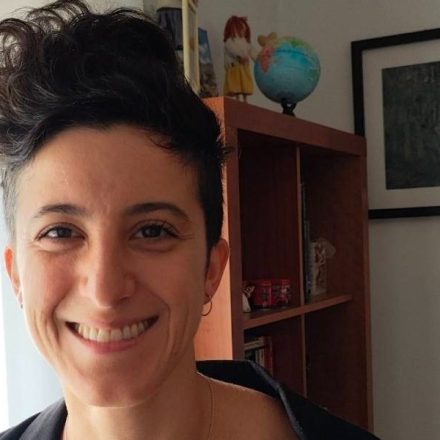
“I was handed a notice that states the sheriff will be installing a physical barricade across the driveway to our private property,” said Tara Houska, an Anishinaabe co-founder of the anti-pipeline Giniw Collective, which organized the camp. “He’s saying that we have no right of access to our private property by vehicle.”
The pipeline opponents, also known as water protectors, plan to take legal action.

“This is quite simply nothing less than an overt political blockade,” said Mara Verheyden-Hilliard, an attorney for the pipeline opponents and director of the Partnership for Civil Justice Fund’s Center for Protest Law and Litigation. “This is an outrageous and unlawful effort to blockade people who are engaged in protected First Amendment activity and to punish them for their opposition to the Enbridge pipeline, where Enbridge is serving as the paymaster for Hubbard County sheriff.”
Verheyden-Hilliard was referring to an Enbridge-funded escrow account set up by the Minnesota Public Utilities Commission to reimburse public safety agencies for activity related to Line 3. So far Enbridge has reimbursed Hubbard County $2,660 for riot helmet face shields and chest protectors as well as equipment related to removing pipeline opponents locked to construction infrastructure.
The Hubbard County Sheriff’s Office did not respond to a request for comment.
Water protectors have been using the trail unencumbered by restrictions for around three years, since the camp opened. The barricade was raised only after Line 3 construction ramped up and protest actions increased.

The notice from Hubbard County Sheriff Cory Aukes, which blocked access to one of the protest encampments set up to resist the Enbridge Line 3 tar sands pipeline, is seen on June 28, 2021.
Water protectors see the road blockade as another example of local sheriff’s offices working to protect the interests of Enbridge, the Canadian tar sands pipeline company.
The Namewag camp has been used as a jumping-off point for water protectors conducting direct-action protests, sometimes involving demonstrators locking themselves to pipeline construction equipment or obstructing access to construction sites.
The water protectors oppose the tar sands oil pipeline based on its potential climate and environmental impacts, including the potential harm of a pipeline spill. They say the placement of the pipeline violates treaties signed between Ojibwe people and the U.S. government, because the route cuts through lands to which Ojibwe people have guaranteed access for hunting and gathering.
The Namewag property is bound on one side by county land and on another by land that Enbridge purchased the year after the camp was set up. Drones and helicopters regularly fly over the camp, and water protectors say the sheriff’s office has for months carefully monitored the comings and goings of cars. At one point, sheriff’s deputies even turned away a truck full of gravel they had purchased to manage the driveway’s spring mud.
The first 150 feet of the driveway leading to the Namewag camp are owned by the county. The notice states that the sheriff’s office is blocking the county trail “due to no easement for the current landowner.” It adds, “Vehicles driving on this county owned trail are in violation of the Hubbard County Land Ordinance and enforcement action will be taken.”
Although rules around property access can be complicated, the law favors allowing landowners entry to landlocked property. Blocking a property owner’s driveway with only a few hours notice is highly unusual.
“The state of Minnesota has already demonstrated a clear lack of understanding when it comes to the rights of Indigenous peoples,” Houska said, “and it appears there’s a loose grasp on the basics of U.S. property law as well.”
IT’S EVEN WORSE THAN WE THOUGHT.
What we’re seeing right now from Donald Trump is a full-on authoritarian takeover of the U.S. government.
This is not hyperbole.
Court orders are being ignored. MAGA loyalists have been put in charge of the military and federal law enforcement agencies. The Department of Government Efficiency has stripped Congress of its power of the purse. News outlets that challenge Trump have been banished or put under investigation.
Yet far too many are still covering Trump’s assault on democracy like politics as usual, with flattering headlines describing Trump as “unconventional,” “testing the boundaries,” and “aggressively flexing power.”
The Intercept has long covered authoritarian governments, billionaire oligarchs, and backsliding democracies around the world. We understand the challenge we face in Trump and the vital importance of press freedom in defending democracy.
We’re independent of corporate interests. Will you help us?
IT’S BEEN A DEVASTATING year for journalism — the worst in modern U.S. history.
We have a president with utter contempt for truth aggressively using the government’s full powers to dismantle the free press. Corporate news outlets have cowered, becoming accessories in Trump’s project to create a post-truth America. Right-wing billionaires have pounced, buying up media organizations and rebuilding the information environment to their liking.
In this most perilous moment for democracy, The Intercept is fighting back. But to do so effectively, we need to grow.
That’s where you come in. Will you help us expand our reporting capacity in time to hit the ground running in 2026?
We’re independent of corporate interests. Will you help us?

I’M BEN MUESSIG, The Intercept’s editor-in-chief. It’s been a devastating year for journalism — the worst in modern U.S. history.
We have a president with utter contempt for truth aggressively using the government’s full powers to dismantle the free press. Corporate news outlets have cowered, becoming accessories in Trump’s project to create a post-truth America. Right-wing billionaires have pounced, buying up media organizations and rebuilding the information environment to their liking.
In this most perilous moment for democracy, The Intercept is fighting back. But to do so effectively, we need to grow.
That’s where you come in. Will you help us expand our reporting capacity in time to hit the ground running in 2026?
We’re independent of corporate interests. Will you help us?
Contact the author:

Related

Low-Flying DHS Helicopter Showers Anti-Pipeline Protests With Debris

Local Cops Said Pipeline Company Had Influence Over Government Appointment

Pipeline Company Issues Broad Subpoena to News Site That Covered Protests Against It

Minnesota Police Ready for Pipeline Resistance as Enbridge Seeks to Drill Under Rivers
Latest Stories

Voices
The Spirit of “Party Unity, My Ass” Is Back and Coming for the DSA (and El-Sayed)
Centrist Democrats’ calls to fall in line behind the party’s nominee only ever seem to cut one way — and fall apart when their candidate loses.

Bodycam: Cop Was Not in Danger When He Fired Shots That Killed 1-Year-Old Kohen Wiley
Mississippi investigators said the shooting was “justified,” but new body camera footage shows the cop firing into the passenger’s side as the car passed by him.

The Intercept Briefing
The Intercept Live in Conversation With Robert Reich
Inequality Media co-founder Robert Reich and The Intercept’s Akela Lacy break down the most pressing issues of the midterm elections.