

Collateral Damage is a new investigative podcast series examining the half-century-long war on drugs, its enduring ripple effects, and the devastating consequences of building a massive war machine aimed at the public itself. Hosted by Radley Balko, an investigative journalist who has been covering the drug war and the criminal justice system for more than 20 years, each episode takes an in-depth look at someone who was unjustly killed in the drug war.
The so-called “war on drugs” began as a metaphor to demonstrate the country’s fervent commitment to defeat drug addiction, but the “war” part quickly became all too literal, complete with helicopters, tanks, and suspension of basic civil liberties protections. All wars have collateral damage: the civilians, the noncombatants, the innocent people whose deaths are tragic but deemed necessary for the greater cause.
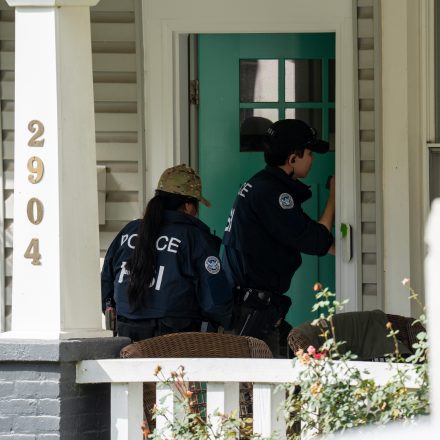
In each episode, we feature a vivid, wrenching, deeply reported story about someone who was unjustly killed in the U.S. drug war — a self-contained, in-depth investigation into a case in which drug prohibition and the policies and practices used to enforce it claimed an innocent life.
Though several states have now legalized marijuana or ended or reduced mandatory minimum sentences for drug crimes, and many cities have effectively decriminalized drug possession, in most of the country, the aggressive anti-drug policies of the 1980s and 1990s drag on. During the height of the Covid pandemic, violent crime and overdose deaths spiked, but despite crime falling again, many lawmakers and prosecutors are reconsidering the treatment-based approaches to drug addiction adopted in the 2000s and 2010s and return to more punitive approaches, particularly with harder drugs.
The modern drug war began during President Richard Nixon’s administration and, like Donald Trump’s fight against undocumented immigration, it was predicated on false claims designed to stir up fear and anger, particularly among white, middle- and low-income voters. The rhetoric of the Nixon administration resulted in more aggressive, less accountable, and ultimately more reckless and abusive police tactics. This line of thinking drove policies designed to “unleash” law enforcement. The Nixon administration tried to relax wiretapping laws, roll back Miranda rights, and erode Fourth Amendment protections against unconstitutional searches and seizures. And now we’re seeing the Trump administration pushing even harder to roll back constitutional protections under the guise of immigration enforcement, fighting crime, and “domestic terrorism.” So the stories you’re about to hear don’t merely remain relevant today, they are why we are here.
Though each episode focuses on one case and the policies that drove it, that case is representative of countless others — and though some of these cases are decades-old, the deaths involved were driven by policies still in place today. Each episode is presented as historical journalism, drawing on existing accounts of these cases, interviews with those who were directly involved, court records, and interviews with experts on drug policy and policing and the people who played a role in these cases, including police, prosecutors, families of the victims, activists, and public officials or politicians involved. Taken as a whole, the series documents eight of these now-forgotten atrocities of America’s drug war, while also presenting a powerful critique of the country’s ongoing effort to combat addiction with a militaristic, punitive approach, instead of a strategy informed by public health.
We as a society decided the lives of the people featured in the podcast were expendable — unfortunate but acceptable sacrifices for the unachievable goal of a drug-free America. They were collateral damage, and these are their stories.
Coming October 8, 2025. New episodes every Wednesday.
Subscribe wherever you listen to podcasts.
IT’S EVEN WORSE THAN WE THOUGHT.
What we’re seeing right now from Donald Trump is a full-on authoritarian takeover of the U.S. government.
This is not hyperbole.
Court orders are being ignored. MAGA loyalists have been put in charge of the military and federal law enforcement agencies. The Department of Government Efficiency has stripped Congress of its power of the purse. News outlets that challenge Trump have been banished or put under investigation.
Yet far too many are still covering Trump’s assault on democracy like politics as usual, with flattering headlines describing Trump as “unconventional,” “testing the boundaries,” and “aggressively flexing power.”
The Intercept has long covered authoritarian governments, billionaire oligarchs, and backsliding democracies around the world. We understand the challenge we face in Trump and the vital importance of press freedom in defending democracy.
We’re independent of corporate interests. Will you help us?
IT’S BEEN A DEVASTATING year for journalism — the worst in modern U.S. history.
We have a president with utter contempt for truth aggressively using the government’s full powers to dismantle the free press. Corporate news outlets have cowered, becoming accessories in Trump’s project to create a post-truth America. Right-wing billionaires have pounced, buying up media organizations and rebuilding the information environment to their liking.
In this most perilous moment for democracy, The Intercept is fighting back. But to do so effectively, we need to grow.
That’s where you come in. Will you help us expand our reporting capacity in time to hit the ground running in 2026?
We’re independent of corporate interests. Will you help us?

I’M BEN MUESSIG, The Intercept’s editor-in-chief. It’s been a devastating year for journalism — the worst in modern U.S. history.
We have a president with utter contempt for truth aggressively using the government’s full powers to dismantle the free press. Corporate news outlets have cowered, becoming accessories in Trump’s project to create a post-truth America. Right-wing billionaires have pounced, buying up media organizations and rebuilding the information environment to their liking.
In this most perilous moment for democracy, The Intercept is fighting back. But to do so effectively, we need to grow.
That’s where you come in. Will you help us expand our reporting capacity in time to hit the ground running in 2026?
We’re independent of corporate interests. Will you help us?
Contact the author:

Related


Latest Stories

Targeting Iran
Dems Have an Opportunity to Force an End to the Iran War. Will They Take It?
With Democrats campaigning on ending the war, advocates want them to put their money where their mouth is and risk a lame-duck shutdown.

DHS Was Designed as a Weapon
Rep. Delia Ramirez and writers Rozina Ali and Will Sommer discuss the ICE raid on Ilhan Omar and the years of “counterterror” surveillance that paved the way for the Trump administration’s abuses.

Long After the Maui Fires, Toxic Metals Linger in Residents’ Bodies
The toxic exposures didn’t begin with the flames. Researchers are examining how fires affected a community already harmed by plantation agriculture, development, and colonialism.