
Eoin Higgins is the author of “Owned: How Tech Billionaires on the Right Bought the Loudest Voice on the Left.”
One of the most enduring points of contention between the Democratic Party’s left and right wings is “vote blue no matter who,” a demand almost exclusively made of progressives to shelve principle over party when it comes to elections.
But as we head toward the midterms in a year where the base is angry and ready for a change, centrists are now hearing that familiar refrain aimed at them — much to their horror.
Rep. Jake Auchincloss, a Massachusetts Democrat, was confronted with this new reality earlier this week. He told CNN on Monday that he hoped Maine voters would reject Graham Platner, the state’s presumptive Democratic nominee for Senate, over his controversial tattoo, which Auchincloss called “personally disqualifying.” Critics quickly pointed out that the congressman was effectively offering a tacit endorsement of Sen. Susan Collins, the milquetoast moderate Republican incumbent who has for years infuriated Democrats.
By Tuesday afternoon, the congressman issued a mea culpa on X and disputed that his remarks were an endorsement.
“If it were me I’d vote for someone else in the Maine Democratic primary,” he said, without indicating who that “someone else” might be. “Regardless of what happens in Maine, Democrats need to take back the Senate and I’ll keep working hard to make it happen.”
Platner’s campaign exemplifies the kind of coalition-building that the left has engaged in over the past decade. He goes across the state, meeting voters where they are, and has built relationships with community groups and activists. It’s a marked difference from the campaign of Gov. Janet Mills, Sen. Chuck Schumer’s pick for the seat who dropped out of the race last month after failing to gain momentum, and the retail politics go a long way toward explaining Platner’s success.
Outside of Maine, Platner has been a lightning rod for centrists eager to seize on his Senate race as a battleground for litigating broader divisions in the party’s anti-Trump coalition. Shannon Watts, founder of Moms Demand Action, said on social media on Tuesday that anyone who endorsed the Uncommitted movement, which aimed to hold President Joe Biden accountable for his role in supporting the Israeli genocide of Gaza, couldn’t object to centrists doing the same over Platner — a comparison so out of proportion it defies rational explanation.

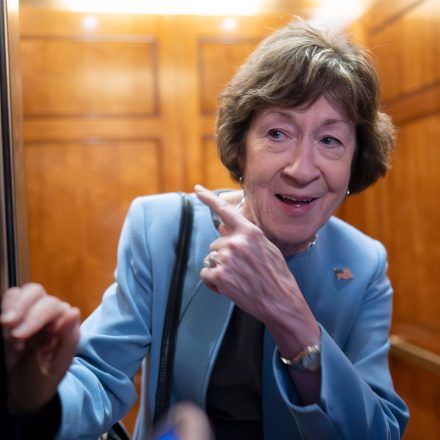

Score-settling seems more important than keeping the party together and taking the Senate. Melissa DeRosa, the Andrew Cuomo loyalist, told Fox News on Tuesday, “There are a lot of moderate Democrats like myself who will not cry tears should we lose Maine.” John Fetterman, who has broken with his party over his zealous support for Israel, bemoaned Platner’s presumptive nomination after Mills dropped out. Joe Manchin, the West Virginia centrist who served in the Senate for over two decades as a nominal Democrat, implicitly endorsed Collins in a glowing address in late April.
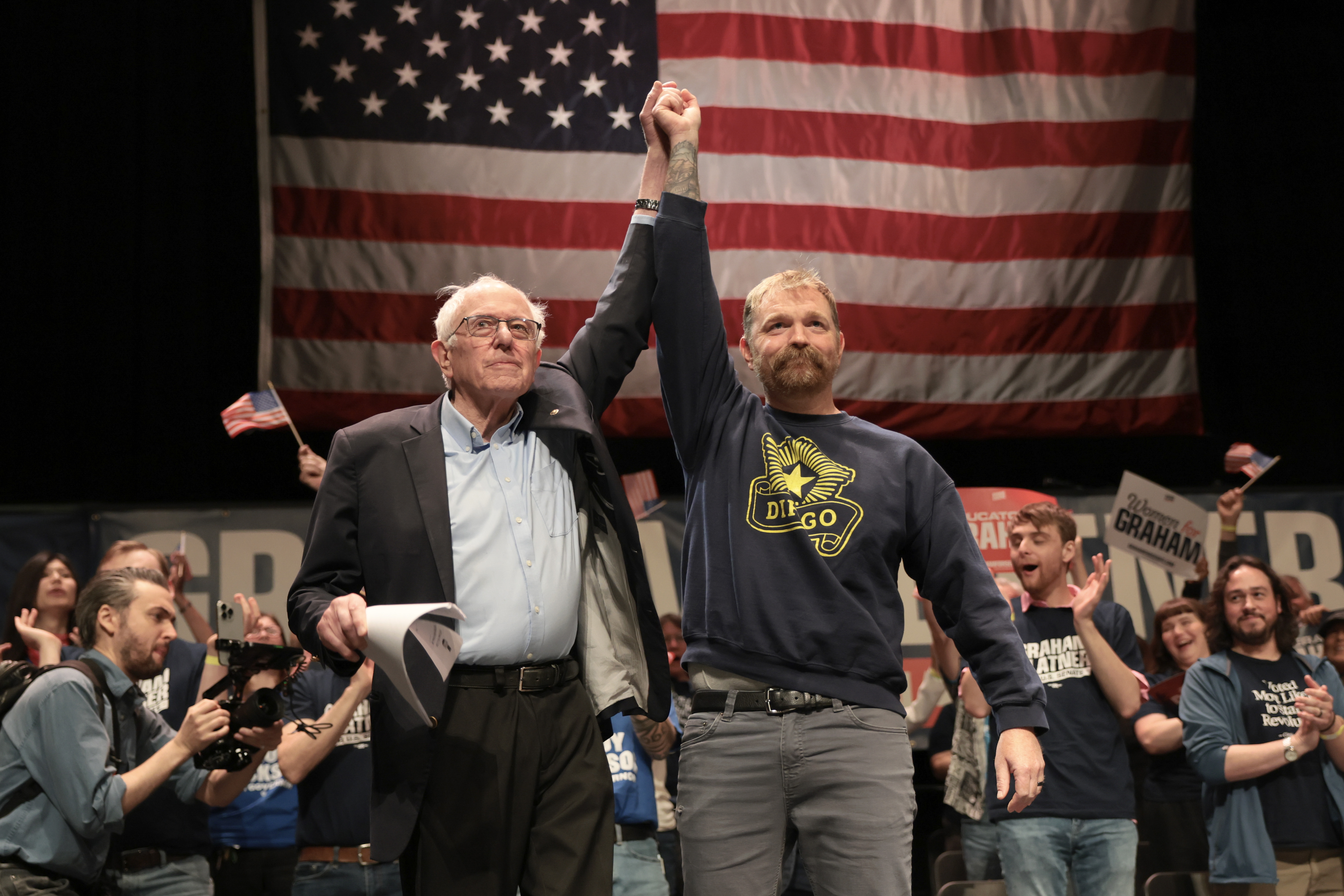
Politicians who are actually popular with Democratic voters, like Sen. Bernie Sanders, I-Vt., and Rep. Ro Khanna, D-Calif., are backing Platner. The former hosted two raucous get-out-the-vote events for Platner over the holiday weekend; the latter is coming to Maine on June 5 to show his support.
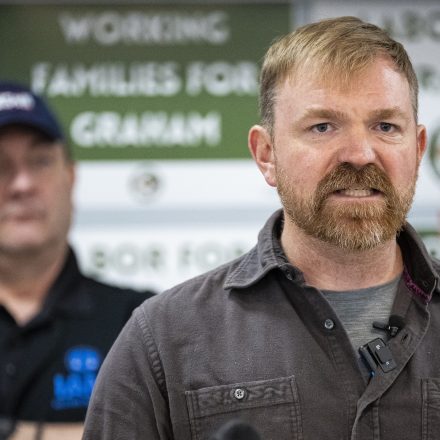
With a glide path to the nomination — state Democrats are expected to fall in line after the vote out of respect for Mills — Platner is consolidating his support. National Democrats like Schumer and Sen. Kirsten Gillibrand, both of whom are in party leadership in the chamber, have pledged their support (however begrudgingly).
Platner’s consistent presence across Maine and his populist, left message are resonating with voters. On Memorial Day, Sanders went as far as to compare the energy around Platner to New York Mayor Zohran Mamdani. “Maine now has the opportunity to show the world that we could do the same thing in one of the most rural states in this country,” Sanders said.
In an off-year election where Democrats are expected to deliver a shellacking to the GOP — a prospect that doesn’t seem to bother President Donald Trump much at all — the appeal of progressive politics a Platner win would represent has the centrist wing of the Democratic Party in an existential crisis.
After decades of scolding the party’s left flank and left-leaning independents over their hesitation to vote for corporate, hawkish Democrats, the shoe is finally on the other foot. Now, centrists are going to be expected to fall in line vote for the likes of Platner. It’s a daunting proposition for the party’s more conservative wing, who will have to either bite the bullet and pull the lever for their ideological opponents or risk another two years of unfettered Republican rule.
Perhaps that’s preferred. A GOP win means redoing the election in two years with potentially better results, and in the meantime, blaming the left for losing.
There’s precedent for supposed liberals choosing Republicans over progressive Democrats. After Barack Obama won the party’s nomination for president in 2008, a number of Hillary Clinton supporters went over to John McCain. Dubbing themselves “PUMAs” — for “Party Unity My Ass” — these diehard Clinton-backers were thrilled at the opportunity to cast their ballots for McCain and his running mate, Sarah Palin. “I’m voting Republican,” Amy Siskind (yes, that one) said at the time.
But in 2026, the likelihood of conservative Democrats throwing the midterms to the GOP by switching sides or sitting out is low (although a rash of redistricting in the South has somewhat narrowed the gap). The base is fired up, angry at the establishment, and primed to turn out in droves to vote out Trump’s enablers.
For centrists, this is the worst possible outcome: Their vote-scolding tactic exposed as a lie and a failure to prove they still have the clout to swing an election. For progressives, it would be a welcome break.
IT’S EVEN WORSE THAN WE THOUGHT.
What we’re seeing right now from Donald Trump is a full-on authoritarian takeover of the U.S. government.
This is not hyperbole.
Court orders are being ignored. MAGA loyalists have been put in charge of the military and federal law enforcement agencies. The Department of Government Efficiency has stripped Congress of its power of the purse. News outlets that challenge Trump have been banished or put under investigation.
Yet far too many are still covering Trump’s assault on democracy like politics as usual, with flattering headlines describing Trump as “unconventional,” “testing the boundaries,” and “aggressively flexing power.”
The Intercept has long covered authoritarian governments, billionaire oligarchs, and backsliding democracies around the world. We understand the challenge we face in Trump and the vital importance of press freedom in defending democracy.
We’re independent of corporate interests. Will you help us?
IT’S BEEN A DEVASTATING year for journalism — the worst in modern U.S. history.
We have a president with utter contempt for truth aggressively using the government’s full powers to dismantle the free press. Corporate news outlets have cowered, becoming accessories in Trump’s project to create a post-truth America. Right-wing billionaires have pounced, buying up media organizations and rebuilding the information environment to their liking.
In this most perilous moment for democracy, The Intercept is fighting back. But to do so effectively, we need to grow.
That’s where you come in. Will you help us expand our reporting capacity in time to hit the ground running in 2026?
We’re independent of corporate interests. Will you help us?

I’M BEN MUESSIG, The Intercept’s editor-in-chief. It’s been a devastating year for journalism — the worst in modern U.S. history.
We have a president with utter contempt for truth aggressively using the government’s full powers to dismantle the free press. Corporate news outlets have cowered, becoming accessories in Trump’s project to create a post-truth America. Right-wing billionaires have pounced, buying up media organizations and rebuilding the information environment to their liking.
In this most perilous moment for democracy, The Intercept is fighting back. But to do so effectively, we need to grow.
That’s where you come in. Will you help us expand our reporting capacity in time to hit the ground running in 2026?
We’re independent of corporate interests. Will you help us?
Contact the author:
Related



Latest Stories

The War on Immigrants
ICE Agent on Scene of NYC Shooting Was Posing as Construction Worker, Eyewitness Says
A member of Congress at the scene confirmed to The Intercept that there was a child in the victim’s car when ICE agents shot at it.

Pete Hegseth’s Military of the Future: Defined by AI and an Utter Lack of Oversight
In announcing Project Meridian and a new Autonomous Warfare Command, War Secretary Pete Hegseth is inviting conflicts of interest.

Voices
Armed Border Agents Arrest Protesters, Bulldoze 200-Year-Old Tree to Build Border Wall
Despite at least 10 arrests and the destruction of the tree at the center of the protest, the standoff continues.