
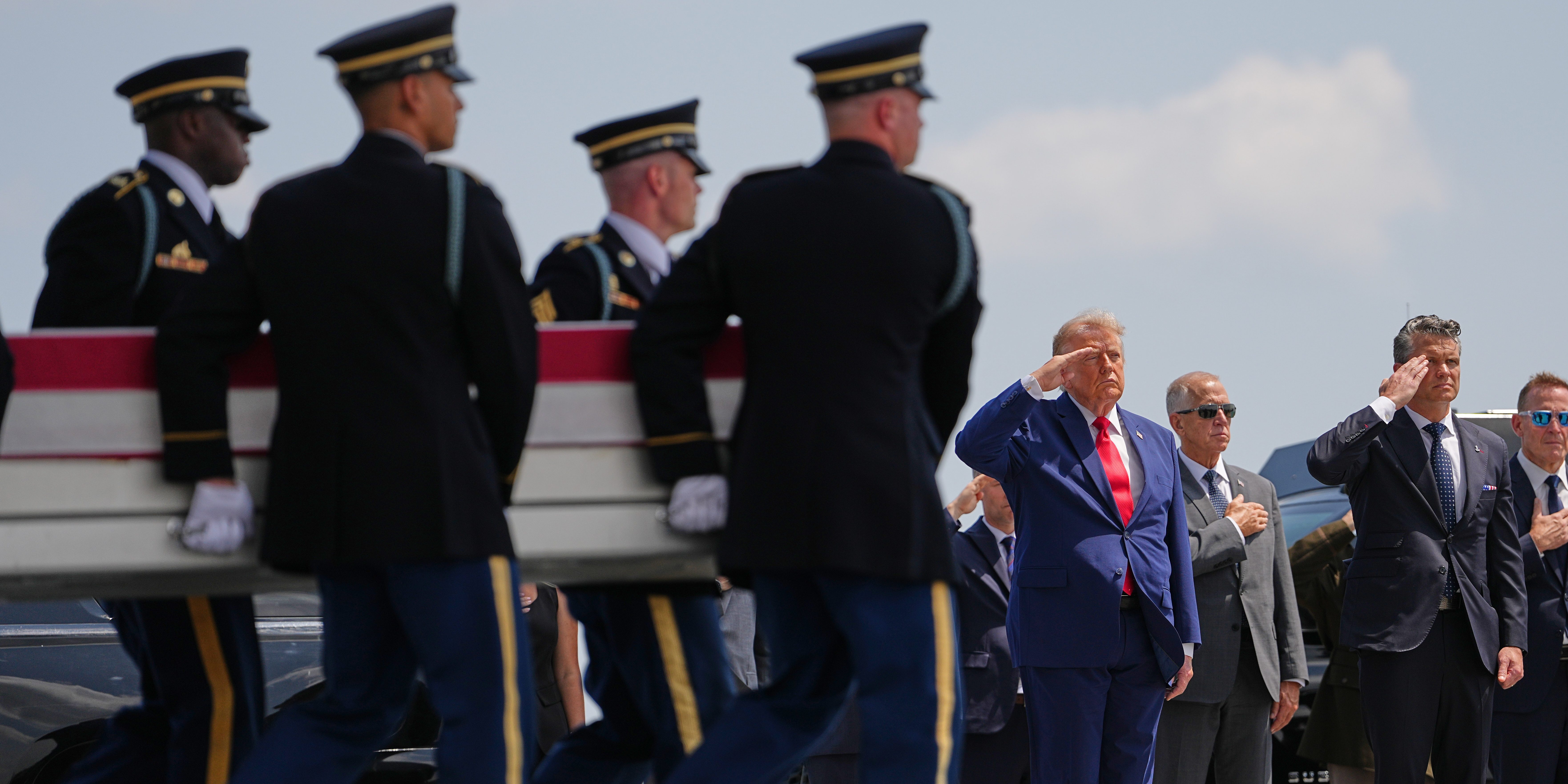
The U.S. military revealed that an additional 60 service members have been injured in the Iran war, lifting the official toll to 776 troops wounded or killed. Some 345 of these casualties have occurred since July 7, after a second ceasefire imploded. As the numbers of dead and wounded troops have recently mounted, the Pentagon has quietly been seeking casualty and mortuary services, according to government contracting documents analyzed by The Intercept.
The increase of 60 wounded last week was called “an accounting trick,” by one U.S. government official who accused the Pentagon of “slow-walking” the total for weeks. “They wanted the heat on them to slow down after the really devastating attacks,” that source told The Intercept, referencing airstrikes on U.S. bases last month that exposed the vulnerability of U.S. troops to Iranian attacks.
The office of self-styled War Secretary Pete Hegseth did not respond to multiple requests for comment, including when and where the injuries occurred.
Since the beginning of the Trump administration’s war with Iran, Hegseth’s department has posted the official count of casualties on the website of the Defense Casualty Analysis System, or DCAS, which tracks “deceased, wounded, ill or injured” service members for Congress and the White House. Casualties since July 7 are now counted separately on a webpage with a generic title: “Overseas Operations.” Combined with totals for Operation Epic Fury — the military’s official designation for the initial months of the Iran war — 18 service members have died and 758 have been wounded since the U.S. launched the war against Iran on February 28, according to DCAS. This official total of dead and wounded personnel, as documented over months of reporting by The Intercept, has been a gross undercount, stemming from what that same official previously called a “casualty cover-up.”


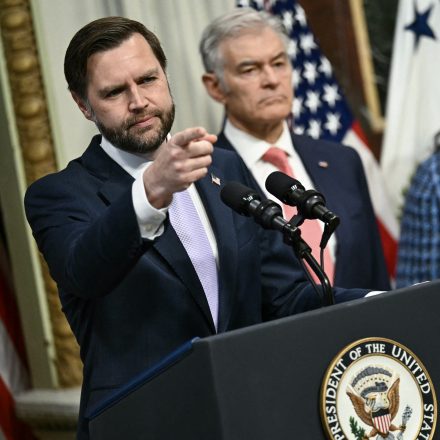
In the face of the increasing number of dead and wounded troops, the military has been seeking a range of services related to personnel who are killed or wounded, according to new contracting documents analyzed by The Intercept. While the military regularly awards such contracts, the commands involved have not replied to questions concerning the possible relationship to the current conflict.
On Friday, for example, the Air Force announced it awarded a new contract for a full range of mortuary services at Robins Air Force Base in Georgia. This includes transportation and refrigeration of remains, embalming, dressing, casketing or cremation, as well as funeral services. Last week, the Air Force also began looking into local firms that could fulfill a wide-ranging contract — including “mortuary services” — at Italy’s Aviano Air Base, a key hub for the war with Iran.
The public affairs offices at Robins Air Base and Aviano Air Base did not return requests for comment prior to publication.

Last week, the Army also announced it “desires to procure” casualty administrative support, including casualty case management services, at Fort Knox, Kentucky, for the Army’s Casualty and Mortuary Affairs Operations Division. Over 90 percent of the latest casualties are Army soldiers, and its storied Fort Knox base has been intimately involved in the conflict with Iran. The body of 26-year-old Sgt. Benjamin Pennington — who died of injuries resulting from an Iranian strike on a U.S. base in Saudi Arabia in March and was the first Kentuckian to die in the war — was sent home via Godman Army Airfield at Fort Knox. Six soldiers killed in an Iranian strike in Kuwait that same month were operating under the 1st Theater Sustainment Command which is headquartered at the base.
Fort Knox did not respond to a request for comment and further information about the contract and the losses from the war prior to publication.
The recent casualty spike resulted from Iranian attacks on around 10 U.S. outposts across the Middle East since July 9, according to a second U.S. official who previously spoke to The Intercept. Iran’s military managed to overwhelm U.S. air defense systems using a mix of attack drones and advanced ballistic missiles, despite months of claims by President Donald Trump and Hegseth that Iran’s military was annihilated.
Last month, the tally of wounded personnel fluctuated by the day in the wake of increased Iranian attacks. On July 21, the casualty count on DCAS for Operation Epic Fury stood at 500. Now, it has shrunk to 431.
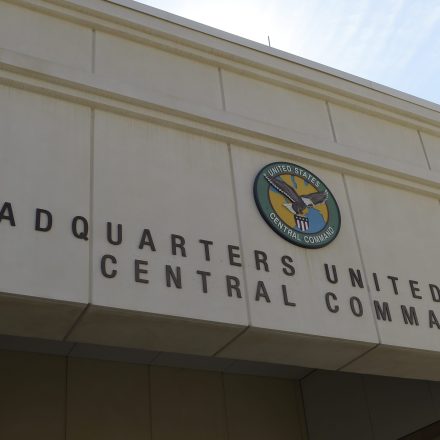
For months, The Intercept found anomalies with the counts offered on the DCAS website. On April 21, for example, the number of wounded-in-action troops declined by 15 without public acknowledgment by the War Department. Despite repeated questions for months, the Pentagon has not commented on the disparities in its casualty count.
Prior reporting by The Intercept also found DCAS is missing hundreds of wounded or dead personnel from the Iran war. The Pentagon’s list of the names of the dead is still missing Maj. Sorffly Davius, a signals and communication officer with the New York Army National Guard who was assigned to the headquarters of the 42nd Infantry Division and reportedly died while on duty in Camp Buehring, Kuwait, on March 6. Davius’s death was widely acknowledged even as it was excluded from the official count. Gen. Dan Caine, the chair of the Joint Chiefs of Staff, for example, recognized Davius while “honoring our fallen.”
While DCAS provides a running tally of “non-hostile” deaths — meaning those who died from accidents or by illness — it doesn’t include “non-hostile” injuries. The DCAS figures for Epic Fury show that 65 Navy personnel were wounded in action. Missing, however, are the more than 200 sailors treated for smoke inhalation or lacerations due to a March 12 fire that raged aboard the USS Gerald R. Ford. The aircraft carrier had been conducting round-the-clock flight operations to, Caine said, “project combat power” in the Middle East.
CNN was the first to report a significant increase in wounded troops last week.
The World Health Organization puts the Iranian casualty toll at an estimated 37,181, including 3,375 deaths. Iranian state and semi-official media reported similar figures — just under 3,500 killed by U.S.-Israeli air strikes. Last week, The Intercept reported on a family of eight, including five children, killed in one of those attacks.
IT’S EVEN WORSE THAN WE THOUGHT.
What we’re seeing right now from Donald Trump is a full-on authoritarian takeover of the U.S. government.
This is not hyperbole.
Court orders are being ignored. MAGA loyalists have been put in charge of the military and federal law enforcement agencies. The Department of Government Efficiency has stripped Congress of its power of the purse. News outlets that challenge Trump have been banished or put under investigation.
Yet far too many are still covering Trump’s assault on democracy like politics as usual, with flattering headlines describing Trump as “unconventional,” “testing the boundaries,” and “aggressively flexing power.”
The Intercept has long covered authoritarian governments, billionaire oligarchs, and backsliding democracies around the world. We understand the challenge we face in Trump and the vital importance of press freedom in defending democracy.
We’re independent of corporate interests. Will you help us?
IT’S BEEN A DEVASTATING year for journalism — the worst in modern U.S. history.
We have a president with utter contempt for truth aggressively using the government’s full powers to dismantle the free press. Corporate news outlets have cowered, becoming accessories in Trump’s project to create a post-truth America. Right-wing billionaires have pounced, buying up media organizations and rebuilding the information environment to their liking.
In this most perilous moment for democracy, The Intercept is fighting back. But to do so effectively, we need to grow.
That’s where you come in. Will you help us expand our reporting capacity in time to hit the ground running in 2026?
We’re independent of corporate interests. Will you help us?

I’M BEN MUESSIG, The Intercept’s editor-in-chief. It’s been a devastating year for journalism — the worst in modern U.S. history.
We have a president with utter contempt for truth aggressively using the government’s full powers to dismantle the free press. Corporate news outlets have cowered, becoming accessories in Trump’s project to create a post-truth America. Right-wing billionaires have pounced, buying up media organizations and rebuilding the information environment to their liking.
In this most perilous moment for democracy, The Intercept is fighting back. But to do so effectively, we need to grow.
That’s where you come in. Will you help us expand our reporting capacity in time to hit the ground running in 2026?
We’re independent of corporate interests. Will you help us?
Contact the author:

Related

Latest Stories

Voices
The Spirit of “Party Unity, My Ass” Is Back and Coming for the DSA (and El-Sayed)
Centrist Democrats’ calls to fall in line behind the party’s nominee only ever seem to cut one way — and fall apart when their candidate loses.

Bodycam: Cop Was Not in Danger When He Fired Shots That Killed 1-Year-Old Kohen Wiley
Mississippi investigators said the shooting was “justified,” but new body camera footage shows the cop firing into the passenger’s side as the car passed by him.

The Intercept Briefing
The Intercept Live in Conversation With Robert Reich
Inequality Media co-founder Robert Reich and The Intercept’s Akela Lacy break down the most pressing issues of the midterm elections.