
Three years into Israel’s genocide in Gaza, the U.S. government is still targeting pro-Palestine student activists.
Even before federal immigration agents descended on communities around the country, killing immigrants and protesters, unmarked agents were abducting students who had voiced criticisms of Israel.
Mahmoud Khalil was the first. After federal agents detained him at his alma mater, Columbia University, he spent more than 100 days in an Immigration and Customs Enforcement detention facility in Louisiana. It’s been over a year since he was released and returned to live with his family in New York City. The Trump administration is still trying to deport him.
“Part of why I’m doing this right now rather than waiting 10 years or 20 years is because what’s happening now in ICE detention is a stain on the U.S. conscience,” Khalil tells The Intercept Briefing. “I don’t want to look back in 20 years and reckon with what’s happening. I want to stop the killing now. I want to stop the disappearances now. I want to stop the cruelty now.”
This week on the podcast, Khalil speaks with host Akela Lacy about what he’s learned about how he became President Donald Trump’s top target, the role Columbia University played in that campaign, and his new book, “No Land to Stand On,” which chronicles Khalil’s experience in ICE detention, missing the birth of his first child, his ongoing saga to stay in the U.S. with his family, and more.
“It’s been so difficult just to have that conversation with my wife Noor about what would happen,” Khalil says. “What are we doing? Is it worth the fight? Should we just leave? But to me, this fight isn’t only about whether I get to stay in this country.”
“It’s about whether anyone — whether they are citizens or non-citizens — are able to speak out against government policies and against the support of Israel in this country. It goes down to a very basic thing: If they are able to deport someone for their views on Palestine, they would be able to deport anyone on their views, whether it is pro-Palestine or pro-Israel or anything.”
For more, listen to the full conversation of The Intercept Briefing on Apple Podcasts, Spotify, YouTube, or wherever you listen.
Transcript
Akela Lacy: Welcome to The Intercept Briefing, I’m Akela Lacy, senior politics reporter at The Intercept.
It’s been almost three years since the October 7 attacks in Israel that preceded the ongoing genocide in Gaza. In that time, Israel has destroyed an entire region, killed more than 70,000 people and injured scores more, launched attacks on surrounding countries, and drawn the U.S. into a full-blown war with Iran.
Over the last three years, at home in the U.S., something else fundamentally shattered. If anything is different now, it’s the honesty of it all. Free speech, civil rights, and equal protection under the law — of course, with all the appropriate exceptions.
What started as a bipartisan commitment to suppressing criticism of Israel led to flagrant abductions of pro-Palestine students by unmarked immigration agents.
Since the crackdown on students escalated in the early months of Trump’s second term, ICE’s war has spread even further.
Since Trump reentered the White House, ICE has detained more than half a million people and says it’s deported almost twice that. More people are dying in ICE custody or at the hands of federal agents, who have killed at least eight people since January 2025, including two protesters in Minneapolis.
Our guest today lives at this nexus: how the siege on Gaza fueled a reckoning at home and fused America’s anti-immigrant push with its battle over speech on Palestine.
Mahmoud Khalil was the first person taken by ICE over student activism for Palestine last year. Khalil, who was born in a Palestinian refugee camp in Syria, fled the country at 18. He later moved to the U.S. to attend graduate school at Columbia University, where he emerged as a leader during student protests against Israel’s war on Gaza. After being released from ICE detention last year, Khalil returned to living in New York, where he continues to fight against the threat of deportation. He joins me now.
Mahmoud Khalil, welcome to The Intercept Briefing.
Mahmoud Khalil: Thank you so much for having me.
AL: To start, I want to ask about your family. You were being held at a remote ICE detention center in Louisiana when your son, Deen, was born last year. How is Deen now?
MK: He’s a wonderful, wild 17-month-old. So he’s walking all over now, and it just feels so rewarding really to have him in our life right now, especially in a very difficult moment in our family.
I get so much inspiration from him and that pushes me to continue to work because this is not only about my family. It’s a story of so many families who this administration separated and inflicted violence upon them. It’s also a story of so many Palestinian families in Palestine whose fathers are in Israeli prisons [who] can’t meet their families, or even the ones in Gaza who are disappeared right now.
AL: I’m sure you and Noor talk about this, how you will tell Deen your story, and when. What are those conversations like?
MK: I try to push it as much as possible because usually you tell a story that already happened, but my story is still happening. Every day there’s something new.
And that’s what made writing the book difficult for me, because usually you write a memoir about a memory about something that has already happened to you. While, to me, I am now living it. So how would I write about it? That was like so difficult for me.
The same way about telling Deen about it: Would it be a happy story or a sad story? Would it be a story that, in fact, the legal system stood up for the unlawful detention of his father and the attempts to deport him — or it did not? Is it that the people in this country advocated for his father and the rights of so many other people in this country — or not? That’s still to be told, so I don’t want to really jump to conclusions at all.
Part of why I’m doing this right now, rather than waiting 10 years or 20 years, is because what’s happening now in ICE detention is a stain on the U.S. conscience. So is the Palestine exception: the fact that freedom of speech, rule of law, basic dignities are afforded to everyone except for Palestinians. I don’t want to look back in 20 years and reckon with what’s happening. I want to stop the killing now. I want to stop the disappearances now. I want to stop the cruelty now.
“I don’t want to look back in 20 years and reckon with what’s happening. I want to stop the killing now. I want to stop the disappearances now.”
AL: You were released from ICE detention last summer. What have the last 16 months in your life been like?
MK: It’s been a saga with courts but also just as a family, with a new family now, like trying to really live our life. Try to build our future in a country that at least promised me some sort of stability and safety after living in Syria and then in Lebanon. So it’s been difficult to find that stability and that permanence in our lives. It is a fight to me, like it’s been since then.
It’s been so difficult, of course, just to have that conversation with Noor, my wife Noor, about what would happen. What are we doing? Is it worth the fight? Should we just, like, leave? But to me, this fight isn’t only about whether I get to stay in this country. It’s also about whether those speaking out for Palestine have the right to do so without being punished by the administration or by the government, whether it’s the Trump administration or another. So that’s why I feel like it’s a bigger fight than just about me or about our family.
But at the end of the day, we are people. I want to go to Bryant Park and just watch the movies there, but I can’t do that easily. There’s several precautions I have to do to be able to actually do this very normal activity that any couple would do on a normal day. But it is the cost, unfortunately, that was imposed upon me by ICE and the Trump administration.
“To me, this fight isn’t only about whether I get to stay in this country. It’s also about whether those speaking out for Palestine have the right to do so without being punished.”
AL: To your point, this is something that’s happening at multiple levels. And you write in the book that you were given the option to “self-deport” — to where, we don’t know. But you say that you felt like if you did that, you wouldn’t just be succumbing to this false smear campaign, but you would be giving the federal government the blueprint for how to silence dissent. You also talk about this being a story about the horrors of the broader immigration detention system in the United States.

As of early July, more than 65,000 people are currently being held in immigration detention. You write in your book about your experience in Louisiana at LaSalle and the relationships you built with other people being held there, trading noodles. What was that like for you? You talk a lot about the psychological effects of some of the things: constant bright lights so you can’t sleep, constant freezing cold air. Can you describe the conditions of the facility that you were in?
MK: As I’ve mentioned, what’s happening behind ICE detention walls is a stain on the U.S. conscience. The fact that you have over 65,000 people at any moment detained in what’s called civil detention. That’s what they call ICE detention. And there’s nothing civil about detention. Even if it was a five-star condition, it’s still detention. You’re still separated from your family.
But I met in ICE detention so many incredible fathers and workers who came here seeking safety only to be snatched off the street, only to be told that they are criminals and they do not belong here.
“They want to make these conditions so bad you don’t fight for your case.”
I remember, and I talk in my book about, Najib, a man who was snatched off his immigration hearing — leaving behind his wife battling cancer with four little kids. Or Alexander, who came here begging for safety, begging for a place to stay, only to be told, “No, you should be safe where you’re from.” And when he was deported, he got killed.
They want to make these conditions so bad you don’t fight for your case, because you can fight your case, but that could take six months to two years, three years.
AL: Even if you win.
MK: Even if you win. That’s the fact. That’s how they weaponize the immigration system against you. Even if you win, you lose. They can appeal multiple times — not once or twice. Because it’s a kangaroo court. The system is so favorable to the administration, and the administration can change at any time.
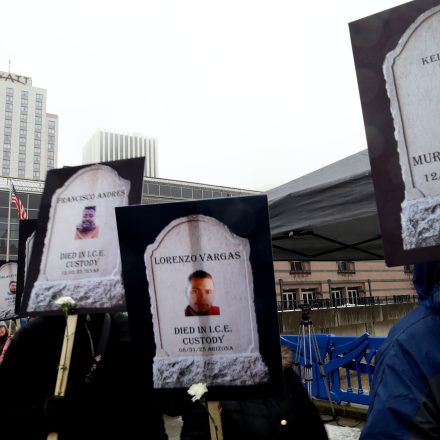
That’s why you rarely find now anyone who would win in the immigration system, because it’s fully controlled by this administration. To me, it doesn’t make sense that you call it courts, or an impartial system, or a neutral system. It’s a very partial system to the administration.
That’s why they keep the lights on all the time. That’s why the temperature is down; it’s always cold. The food is pretty bad. You only have a thin blanket. Because they don’t want you to feel comfortable or have the basics to fight your case.
“To me, it doesn’t make sense that you call it courts, or an impartial system, or a neutral system. It’s a very partial system to the administration.”
AL: You’re very much still in limbo. It’s been almost six months since the Board of Immigration Appeals issued a final ruling in one of your cases ordering your removal. Last week, that same body denied a request to reopen your case.
I know your team is looking at bringing your case to the Supreme Court. What’s the latest there? And when will you know if you have to leave the country?
MK: So 18 months since my arrest, the Trump administration has never brought any piece of evidence that I committed any crime. They haven’t even charged me with any crime because they know they control the immigration system.
“What they’re trying to do now in immigration is the total opposite: You are guilty until you are proven innocent — but you might be deported before then.”
So now we’re appealing our case to the Supreme Court — an Article III court — to look into the matter. Because what the Trump administration’s trying until now is to prevent me from even looking into the merits of the case that they are bringing against me. What they are claiming is that this case is purely an immigration case, and only immigration judges should be able to look at it. Then if you want to go to a federal court, it should go to the 5th Circuit or the courts in Texas and Louisiana, who are pretty much favorable to the administration as well.
So they are trying to prevent a federal court from looking into this matter. We are now taking it to the Supreme Court because no government should have the power to detain someone without any independent judgment into it.

Usually, the basics in criminal law are that you are innocent until proven guilty. What they’re trying to do now in immigration is the total opposite: You are guilty until you are proven innocent — but you might be deported before then. So it is a long fight. But once again, this fight is not only about my ability to stay in this country. It’s more than this.
It’s about whether anyone — whether they are citizens or non-citizens — are able to speak out against government policies and against the support of Israel in this country.
It goes down to a very basic thing: If they are able to deport someone for their views on Palestine, they would be able to deport anyone on their views, whether it is pro-Palestine or pro-Israel or anything.
“If they are able to deport someone for their views on Palestine, they would be able to deport anyone on their views, whether it is pro-Palestine or pro-Israel or anything.”
AL: You and your team have expressed concerns that any ruling at the Supreme Court could backfire and further curtail the rights of pro-Palestine students. I wonder if you can you talk more about that?
MK: For now, what we’re taking to the Supreme Court is only whether a federal court has jurisdiction to look into constitutional claims. For me, my constitutional claim is that the Trump administration wanted to deport me because of my activism on Palestine.
That’s what we’re bringing right now to the Supreme Court. This wouldn’t necessarily directly impact or have a larger impact on the movement as a whole. But already the government is doing everything in its power to chill the speech of whether students or citizens who are speaking out for Palestine. So what we’re trying is actually to prevent that.
But the other part is, we seek accountability also from the public themselves. You don’t get accountability only through courts. You get accountability through the people who are now voting in progressive candidates into Congress who may be able to change the law.
That’s how I get accountability. I get accountability when I see that my book is out and people are reading what this administration tried to silence — that they want to make an example out of me, but they failed. That’s how we seek accountability. It’s not only from the court itself, because at the end of the day, people who create the law actually push for the law.
Because everything we got right now, the rights that American citizens or anyone on this land have, it was a product of a fight. Whether it’s a fight during the civil rights movement or the anti-slavery movement before then. It did not happen because a judge woke up and decided to do what’s right. It’s because, actually, people pushed for that to happen, and that’s my part of the fight right now.
AL: Mahmoud, you were not a random target. We know now that ICE took names from the pro-Israel doxing group Canary Mission to create a list of targets. Far-right pro-Israel groups like Canary Mission and the USA chapter of the militant, ultra-Zionist group Betar — considered by even the Anti-Defamation League as an anti-Muslim hate group — targeted you.

Betar later claimed credit for ICE’s abduction of you and other students and said it shared “thousands” of — we know now it was about 5,000 — names of pro-Palestine students with the Trump administration for further action. In the lead-up to your abduction, Betar targeted you by name, as did actors at your alma mater, Columbia University: another group, Documenting Jew Hatred on Campus at Columbia, and a professor, Shai Davidai, who called specifically for the Trump administration to deport and arrest you in the days leading up to that abduction and tagged Secretary of State Marco Rubio.
You write in the book: “What I did not anticipate was the U.S. government would one day consider the recommendation of hostile Zionist groups to target me, and then act on it.”
You sued for communications between these groups and the Trump administration. What more have you found out about how much they coordinated to target and arrest you and other students?
MK: The targeting of me and other pro-Palestine protesters was written in a document called Project Esther that was produced by the Heritage Foundation. In there, what they said [was], for this plan to work, we need a friendly administration that would listen to us and work with us to implement it.

That’s what happened after, because Stephen Miller was part of the Heritage Foundation or consulting for them, and then he became part of this administration, and actually worked on implementing this plan from A to Z.
From the discovery that the case in Massachusetts — AAUP v. Rubio—
AL: This is the American Association of University Professors lawsuit against Secretary of State Marco Rubio.
MK: Secretary Rubio.
AL: Yes.
MK: A Reagan appointee found that the government officials conspired between themselves to deprive us from our freedom of speech.
“We’re hoping to really expose these networks that pushed anti-Palestinian bigotry to be institutionalized within the U.S. government itself.”
One of the ICE agents or one of the DHS agents testified that, “I’ve never seen something like this happen in our department, that such a request would come from really senior individuals in the administration.” So now what we are suing for is to see this communication between between these private actors, whether it is Canary Mission, the Heritage Foundation, Betar, and others as well, what we call Zionist hate groups, and these administrators, whether it’s Rubio, Stephen Miller, or DOJ, and the attorney general.
Because it was all in public. Betar went out and said, “We take credit for that. We actually communicated with the administration about that.” That’s what we know publicly. So now we’re asking for these communications. This case, we filed it in July, takes some time, but we’re hoping to really expose these networks that pushed anti-Palestinian bigotry to be institutionalized within the U.S. government itself.

I got used to smear campaigns and doxing before my arrest. To me, that was part of an intimidation campaign to terrorize me not to speak out about Palestine.
To me, back then, the thought process was, usually they target your employer, they target your university, your father’s employers. I’m like, “Why would I work for anyone who doesn’t agree with my views on Palestine or who sees them as extreme? I don’t want to work for them.”
You know, I never wore a mask [at Columbia] to hide my identity because the risk to me wasn’t that high. In Syria, I wore masks, because the risk back then was getting shot by [Bashar al] Assad forces or getting disappeared by mukhabarat, or intelligence officers.
I never imagined that what I fled from would happen to me in the U.S., the land of the free.
AL: After a quick break, more from Mahmoud Khalil, who has a new book, “No Land to Stand On.” We’ll be right back.
Welcome back. We’re speaking with Mahmoud Khalil, the first pro-Palestine student taken by ICE last year.
You’ve filed three other lawsuits against the federal government and Columbia, and you are waiting for a response from the most recent suit which alleges a historical pattern of discrimination and retaliation against Palestinian students and pro-Palestinian activists, as well as a failure to address “coordinated harassment” against pro-Palestine students at your alma mater, the School of International and Public Affairs at Columbia University.
You’ve said that Columbia didn’t only ignore your concerns or documented harassment, but that the university facilitated your targeting and arrest by the Trump administration.

Of the suit, you said: “Columbia laid the groundwork for my targeting by the Trump administration through its deliberate indifference and discrimination aimed at intimidating Palestinian students.”
For listeners who might not be familiar with how Columbia handled protests against the genocide in Gaza, or its history trying to crush and later celebrate other student protest movements, against the Vietnam War or to divest from apartheid South Africa, can you tell us a little bit more about the role the school played here?
MK: When I applied to come to Columbia, I applied to come to an institution that had a long history of student activism, of standing up, at least the students of that institution standing up for human rights, whether it was during the ’60s and the civil rights movement or in the anti-apartheid South Africa, but also most recently, against private prisons, against fossil fuels. So it goes beyond that.
That’s the institution I came to. But I was surprised — even before October 7 — the level of the anti-Palestinian racism on campus. For example, when we tried to bring Human Rights Watch to our school [in 2023], the school put so many hurdles in front of us to be able to host a 70-person event. I was shocked. Why would you prevent us from hosting such a reputable human rights organization to come and talk about apartheid in South Africa? The same happened when we tried to bring BDS — the Boycott, Divestment, and Sanctions movement — virtually on campus.
So on October 7, Columbia had a choice of being an example for other institutions around the country, of being a place where difficult conversations would be held, where they would stand up for human rights, where they would actually listen to their own students.

Instead, Columbia employed surveillance systems against their own students, brutalized them. They called in the police about four times or more than four times in less than two years. Provided that, the last time Columbia called the police on campus was during the ’60s — like 60, 70 years ago.
They couldn’t contain the movement; they established a Gestapo-like office called the Office of the Institutional Equity that investigated every single Palestinian advocacy on campus, going after them with investigations. They brought private investigators; I remember being called by a private investigator that Columbia hired just to intimidate us.
AL: I spoke to students who got those calls, too, and they’re like, “What is this?”
MK: Exactly. Instead of just listening to their students, to their own students. These students were, most of them, 17 to 20 years old, watching a genocide happening in real time.

So that was the climate at Columbia. At the same time, they harbored these actors who were doxing us. As a Palestinian, I pleaded so many times to get protection from the university up until the day of my arrest.
AL: Right. The day before.
MK: The day before my arrest, March 7, I emailed the president. I knew she wouldn’t answer. But I wanted to keep the record because I emailed her before then in January when the first wave of doxing happened, and they did not do anything.
A year later, when another student was kidnapped by ICE from Columbia, non-Palestinian, non-related-Palestinian student was detained by ICE — Columbia immediately issued a statement, immediately called lawyers, immediately called elected officials because that student did not have to do anything with Palestine.
I’m so glad that Columbia did that, but that’s what they should have done to me, to Mohsen [Mahdawi] and to Yunseo [Chung], to the other students who were targeted by ICE.

But that’s again the Palestine exception in these institutions, where you have ideologues on the board of trustees of Columbia whose protection of Israel for them is much more important than protecting freedom of speech, than actually listening to their students, than the normal decency of just being board of trustees who have responsibility toward these institutions, but their loyalty was somewhere else.
AL: You’ve also mentioned future plans to sue other individuals at Columbia. In your suit against Trump, DHS, ICE and Rubio, your legal team cited reporting by me and my colleague Natasha Lennard on a network of faculty, alumni and other people at Columbia who were active in trying to target pro-Palestine students for deportation and arrest. You write in the book about coordination between Columbia students and faculty and some of these groups that smeared and doxed students. You write: “Those who fed our names to the machine continued to attend the school.”
What else have you learned about those people and those efforts?
MK: I will continue to seek accountability until everyone who actively participated in me missing the birth of my child and me losing 104 days of my life, until they are all held accountable.

I will not stop until I achieve that. I’m doing this up until now, with first suing the federal government, then the federal government and private actors. And the private actors also included some of the Columbia actors who were feeding our names to Canary Mission.
Because we have to think about this — Canary Mission and Betar, or the Heritage Foundation — they did not have people on the ground. The people on the ground were Columbia’s own students and faculty, who were not hiding that they were doxing us.
AL: They were sending billboard trucks all over New York.
MK: Exactly. So we got records about communication between some of the students at Columbia and Leo Terrell, the chief of the antisemitism task force in the DOJ, pushing them to target us, but also providing talking points that we later saw on Terrell’s own social media.
“It was a very coordinated effort to demonize our movement.”
So that network goes beyond just random actors. It was a very coordinated effort to demonize our movement, to vilify the student movement that was rooted in human rights and equality and dignity. That’s why so many students joined this movement, not only Palestinians.
Palestinians at Columbia were barely 20, 30 students. But the movement that was built, it was built by Black students, by Asian students, by Jewish students. The coalition that was created as well, it had groups ranging from dancing groups, cultural groups, to the Young Democrats.
More than 100 groups joined together to call for Palestinian freedom, to call for the end of Columbia’s complicity in supporting Israel.
“Palestinians at Columbia were barely 20, 30 students. But the movement that was built, it was built by Black students, by Asian students, by Jewish students.”
AL: Mahmoud, you mentioned this already, the logic of exception regarding Palestine. You write in the book about the logic of exception regarding Palestine, the idea that only certain categories of Palestinians are deserving of rights. You talk about how you’ve internalized that in some ways as well.
This comes up in what I’ve noticed as attempts, even by well-meaning people, to paint you as “one of the good ones” among university students that have been portrayed otherwise, as an unruly mass of student protesters on a rampage in protesting this genocide. There was a similar effort around your Columbia colleague Mohsen Mahdawi, who was also targeted and abducted by ICE for his pro-Palestine activism.
During the Columbia encampments, you were active in the protests, and you also worked as a negotiator between protesters and university administrators, one of whom told the New Yorker that you stood out from other protesters for your levelheadedness, which I found very interesting.
What is the effect of trying to separate you from the rest of the pack as the “right” kind of protester”? How do you overcome that?
MK: That really enraged me that you have to be a perfect victim to be worthy of people’s sympathy, to be worthy of the rule of law. Because what we protested is a genocide. That’s what we protested, and that’s the right thing to do. It shouldn’t be criminalized. Unfortunately, we internalized that.
“That really enraged me that you have to be a perfect victim to be worthy of people’s sympathy, to be worthy of the rule of law. Because what we protested is a genocide.”
I talk a little bit about how I myself would highlight the numbers of women and children just to appeal to more people that like, “Look, young women and children are being killed by Israel.” But what about the men? Because that’s the level of the dehumanization of Palestinians in this country, that it only took the Trump administration to mention my name as “Mahmoud Khalil” and Palestinian for people to paint a certain image of me.
But in reality, I’m a Palestinian who believes in a free Palestine, where everyone from the river to the sea deserves safety, dignity, and freedom.
Just like the fact that I had to be that perfect victim. Because I’m not perfect. No one is perfect. Palestinians are, you know —
AL: Human.
MK: Humans, the same as any other, any other nation. We have our aspirations. We have our culture. We have our deficiencies. We’re not out of this planet. But yet the media insists on treating Palestinians on a different standard, when they ask me about condemning or not condemning all of that, I’m like, you’re not interested in my views about Hamas.
If you’re interested about my views about Hamas, you would ask me what are my views about Hamas, or a different question. But they use that question as a litmus test: If you say yes, then maybe you are a human worthy of talking to. If not, then you are that villain that this administration is talking about. That’s why we refuse the premise of the question as a whole. It’s not about the question itself. The whole premise of the question we refuse.
I think it’s for Americans to reckon with why we are here, why we are treating Palestinian stories differently from any other story. Whether it’s the Zionist lobby that for tens of years has fed this hate, whether it’s the media itself or Hollywood or just the institutions themselves that fed that hate and fed the image of the Palestinian as violent, rather than just a human being.
Or recently just how, it’s not only the Trump administration. It’s before them, the Biden administration, before them, the Obama administration. It goes back to every administration this country had dehumanizing Palestinians. Because Trump wouldn’t have had the power to do what he did with me were it not for what Colombia portrayed or said about the movement, or the Biden administration as well.
“It’s for Americans to reckon with why we are here, why we are treating Palestinian stories differently from any other story.”
AL: And as we’ve written about a lot at The Intercept the beginning of this crackdown on campuses started under Biden.
MK: Absolutely.
AL: I want to deviate quickly just because you mentioned this question, and I had written a question that I wasn’t sure we would have time to get to about being asked about Hamas because this comes up in The New Yorker article, and I was curious what you thought of how — I don’t know if you read the latest one from last month.
MK: The profile?
AL: Yeah. Because I was curious about how it was framed, because he says that you push back on the framing of the question, right? He asked you about your views on Hamas and that you protested the premise of the question. And then it said what your explanation was. But I thought it was interesting to print your defense of why you reject the premise, but still print your answer to the question.
MK: To me, Hamas is a political faction that has a military wing that got most of its popularity because of the failures of the Palestinian Liberation Organization, the PLO, in bringing peace after the Oslo Accords, where a lot of Palestinians were excited about the prospects of peace.
But when they saw that Israel is undermining any prospects of a Palestinian state, a lot of Palestinians turned to Hamas as that resistance movement that may bring something.
And as I explain in my book, Palestinians supported Hamas not because of ideological reasons as much as because they wanted a way forward. For me, I’m against all Palestinian political factions because not one of them — whether it’s Hamas, Fatah, or PFLP — rose up to the aspirations of the Palestinian people, unfortunately.
“I’m against all Palestinian political factions because not one of them — whether it’s Hamas, Fatah, or PFLP — rose up to the aspirations of the Palestinian people, unfortunately.”
That’s why I’m a strong believer in international law. I’m a strong believer in the fact that Palestinians have the right of self-determination, have the right to resist under international law, and have the right to really tell the world what they want. That’s what I want my answer about such a questions to be.
AL: That’s not what people want to hear.
MK: Yeah, exactly. They want just a yes or no, it’s a black and white.
I can’t tell people how to resist. That’s from being in the United States. For someone who’s going through bombardment, who’s going through checkpoints, whose house is being raided at night by the Israeli army, who the drones are above their heads all the time — I can’t, from here, tell them how to resist.
But for me, I’m a firm believer of international law, and that’s how I see the way forward. Again, I’m a Palestinian. I believe in a free Palestine, where everyone, from the river to the sea, have the right to live with dignity, with justice, with freedom, with equality. That’s what we’re asking for.
AL: This fight, when it comes down to it, is fundamentally over First Amendment rights for you and everyone in this country and the fight for freedom in Palestine.
A new report from Uncivil, a consortium of scholars and researchers, audited five years, going back to 2020, of publicly listed grants to 77 university centers, initiatives, and nonprofits doing “civility” work to promote pluralism and viewpoint diversity. The group found that almost all of the top funders, responsible for $82 million in grants, were groups and foundations deeply invested in conservative and/or “pro-Israel” networks.
Unsurprisingly, these funders donated more to groups that mirrored and promoted their viewpoints over progressive groups by a ratio of more than 6 to 1. Just to underscore this point, the top five grantees who have received funding for “civility discourse” work include: Turning Point USA, the Heritage Foundation, the American Legislative Exchange Council — which does model bills for state legislatures — the Anti-Defamation League, and Project Veritas. This is essentially a list of the most right-wing groups in the country at the moment. The top groups.
While many of those groups present this civility discourse as politically neutral, Uncivil found that 70 percent of the campuses they looked at had been accused of suppressing pro-Palestine speech. This is now roughly a $200-million-a-year industry.

In the book, you talk about how this movement at Columbia backfired: in trying to suspend or shut down pro-Palestine groups, it ended up creating a 100 or more new pro-Palestine groups.
But given how strong this “civility discourse” push still is, where do you see the student Palestine solidarity movement going from here?
MK: The fact that the president of the United States felt the need to go after a random student means that this movement changed the mainstream, means that we are winning. Otherwise, they would leave it to, I would say, covert racism and discrimination because it was always happening at Columbia, as I’ve mentioned these attacks against Palestine. But it wasn’t very obvious. Because they did not need to.
I don’t think there’s an amount of money that would stop the Palestine movement for freedom, because we can see that people now feel betrayed by their institutions, feel betrayed by their representatives, feel betrayed by the establishment that hid from them the endless support to Israel.
“The fact that the president of the United States felt the need to go after a random student means that this movement changed the mainstream.”
Because now if you’re a politician who’s supporting Palestine, that means you’re also good on other things. Because a lot of people, Palestine may not be their single issue or their first. But if you’re good on Palestine, that means you are good on other things.
That means that you are not bought by corporations and by AIPAC and by the oligarchs. That’s how it came right now. That’s why in Zohran’s race —
AL: Zohran Mamdani, New York City mayor.
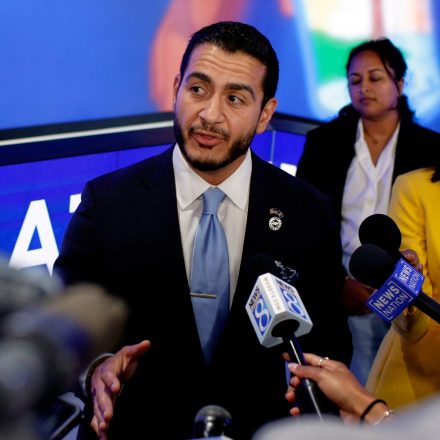
MK: Tens of millions were spent against him, and Abdul El-Sayed, the Senate candidate, the Democratic candidate, also over $60 million were spent against him, and still he won [the primary]. But that doesn’t mean to me that we should stop. That means that we should continue until that dome breaks. And it will break. Sooner or later, it will break.
We need change. We need to stop sending 2,000-pound bombs to Israel, or any arms to Israel, or anything to Israel, really. Israel should be isolated, should be the pariah state that it is. That’s why I keep pushing now. I keep working on advocating for Palestine. That this did not stop. The genocide’s still happening. Every day there is a Palestinian getting killed by Israel, whether in Gaza or in the West Bank.
But also we must acknowledge the violence that was inflicted upon students, upon this movement in this country. It’s not only universities that suspended and expelled these students, not only that the police also brutalized their students, but you have a big attack on this movement that’s happening across the country, whether from the federal government itself. But you can see across the country, whether it is in the South or even small counties also still trying to attack this movement.
My position as a Palestinian is, how can we really face this level of violence or this level of coordinated and well-funded attacks against the movement?
AL: Though the Trump administration has claimed repeatedly that your case is not about free speech or the First Amendment, they have not necessarily been arguing that your speech wasn’t constitutionally protected or that you are here illegally. Just to be clear, for anyone who’s confused, you are a green card holder, a lawful permanent resident.
We’ve been talking about this New Yorker piece, as Andrew Marantz wrote last month. The government is arguing that none of those things — the legality of your actions, or your presence here — outweigh Trump’s power to detain you on whatever grounds it sees fit. In this case, claiming that your presence is a threat to American foreign policy interests.
You’ve talked about this fundamental contradiction in the American story of democracy and liberty, that the only real rights we have are those the government sees fit to enforce. You talk about the suspension of principles, depending on the circumstance. And this is a long-standing criticism of the American government, particularly if you’re a minority, a woman, a trans person, or if you’re poor.

You’ve shared your unique perspective on this issue, having lived under a dictatorship in Syria under Bashar al-Assad. You have said at least in Syria, the government wasn’t telling you it was upholding your rights. [laughs] They were open about it. And since your abduction, we’re seeing the government be in many ways more open about its intentions here. But what happens after that?
MK: It’s fascism. It is authoritarianism. What we’re seeing within my case or other cases is authoritarian practices. The government is trying their luck. For the government now, the worst thing that could happen is a court telling them, “No, maybe you shouldn’t do this.”
“For the government now, the worst thing that could happen is a court telling them, ‘No, maybe you shouldn’t do this.’”
But for me, I lost 104 days of my life. For others, they lost their entire lives. I’m not an expert on authoritarianism or dictatorships, but I lived under dictatorship. As I said, in Syria, I hid my face because I knew the risks. It wasn’t Assad was going out and saying, “We have freedom of speech, and we have all of that.” It wasn’t like that. You knew the consequences.
Here, they would gaslight you into “No, you have rights. You have all of this.” But you have rights because it’s convenient for them. As long as you’re not damaging or impacting the structures of power, you have freedom of speech, you have rule of law, the Constitution applies to you. But the moment that your speech or your actions threaten that structure of power, you would see the opposite — which is authoritarianism at the end of the day.
Trump is not hiding it. When they arrested me, they said, “This is a blueprint to go after everyone who’s speaking out for Palestine.” It’s not like they hid their intentions at all.
Part of me, like years from now, America would look back on ICE detention, on Palestine, and say, why did we let this happen? And that’s part of my fight. That’s why I’m doing this right now, because we need to stop it now. We can’t afford to wait 20 years from now because people are being killed. People are being disappeared. 65,000 at any moment are in ICE detention separated from their families.
“You have rights because it’s convenient for them. As long as you’re not damaging or impacting the structures of power, you have freedom of speech.”
AL: Mahmoud, are there any final thoughts you would like to leave our listeners with?
MK: I wrote this book to raise the alarm that we can’t afford to stay silent. That in our backyards, there are ICE detention centers. In our backyards, there are weapon manufacturers who are shipping weapons to Israel to kill people. We must act now, and we can’t just afford to wait.
AL: Mahmoud Khalil, we’re gonna leave it there. Thank you so much for joining us on The Intercept Briefing.
MK: No, it’s my honor, Akela. Thank you so much.
AL: That does it for this episode.
We want to hear from you. Tell us what you’re following or want to see more coverage of. Email us at podcasts@theintercept.com, or leave us a voice mail at 530-POD-CAST. That’s 530-763-2278.
This episode was produced by Laura Flynn. Video editing by Sean Turner. Jordan Uhl is our social media producer. Ben Muessig is our editor-in-chief. Maia Hibbett is our managing editor. Nara Shin is our copy editor. William Stanton mixed our show. Legal review by David Bralow. And a special thank you to our recording engineer David Herman at Good Studio. Slip Stream provided our theme music.
This show and our reporting at The Intercept do not exist without you. Your donation, no matter the amount, makes a real difference. Keep our investigations free and fearless at theintercept.com/join.
And if you haven’t already, please subscribe to The Intercept Briefing wherever you listen to podcasts. Leave us a rating or a review, it helps other listeners to find our reporting.
Until next time, I’m Akela Lacy.
Contact the author:
Latest Stories

Voices
Mamdani’s High-Wire Balancing Act Between ICE and NYPD Can’t Last
The New York City mayor has said he doesn’t want to “normalize” ICE. But the NYPD, led by Jessica Tisch, has other plans.

Google DeepMind Engineer Resigns in Protest of Pentagon Contract
Sofia Liguori stepped down from DeepMind due to current military contracts — not speculative fears of an AI apocalypse.

The War on Immigrants
Trump’s Obsession With Somalia Isn’t Just Racist. It’s Been Lethal.
Beyond targeting Rep. Ilhan Omar, the Trump administration has killed, arrested, deported, and demonized Somalis at home and abroad.