

Flock Security likes to describe its national private network of cameras and license plate scanners as a public safety boon. “I can think of no greater mission than rescuing our children,” tweeted Flock CEO Garrett Langley, sharing a promotional company video. “Another child rape suspect located and arrested with help from Flock,” chief strategy officer Rahul Sidhu posted last month. Last week, venture capital firm and Flock investor Andreessen Horowitz put the company’s benefits in civilizational terms: “Flock eliminates crime. Decline is a choice.”
Though Flock’s investors and executives insist its surveillance dragnet thwarts the most serious of crimes, it turns out police are also using the company’s technology to go after some of the pettiest possible offenses: curfew violations, loitering, and simply being homeless.

When police seek footage from Flock’s more than 120,000 cameras nationwide, they select a category of crime corresponding with the alleged offense they are investigating, such as hit-and-run or burglary. Among the choices is the supposed crime of being suspicious in public, formally categorized by Flock as “Curfew/Loitering/Vagrancy Violations.”
Records obtained from the police department in Plano, Illinois, reveal that law enforcement agencies nationwide conducted more than 1,200 Flock searches while investigating alleged “Curfew/Loitering/Vagrancy Violations.”
As this data set reflects only searches of Flock cameras that extended to Plano’s network, this is assuredly just a tiny fraction of the total number of “Curfew/Loitering/Vagrancy Violations” investigations using Flock nationwide. Records hosted by the website Have I Been Flocked? — which aggregates such logs — show hundreds more of these loitering searches in other states.
The Plano searches were conducted by police departments throughout Illinois, from neighboring states, and from a Georgia town more than 600 miles away. Many queries were license plate searches pertaining specific vehicles; others show police surveilling people on foot for the crime of essentially standing suspiciously.
Plano’s deputy chief of police Gene Morton told The Intercept the town did not install Flock cameras until the end of February. The department shared data from January because it had previously signed an agreement with Flock to search the broader network before its own cameras were operational.
Flock did not respond to a request for comment.

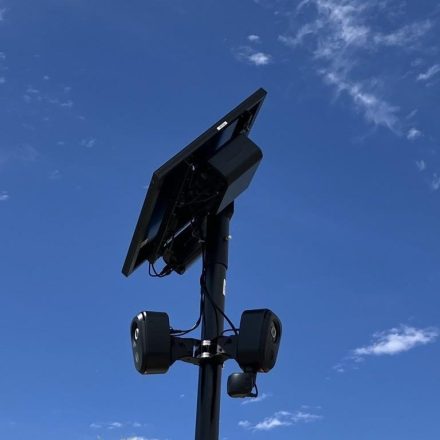

Police in Norcross, Georgia, for example, conducted a smartphone-based search on January 31 with “Curfew/Loitering/Vagrancy Violations” as the stated justification. It tapped into data recorded by 6,098 different Flock camera networks, each consisting of an untold number of separate cameras that surveilled anyone who moved past them.
The search logs obtained by The Intercept do not break out “Curfew/Loitering/Vagrancy Violations” separately, so it is unknown in each case what exactly police were searching for. In some cases police appended extra information; the Tennessee Bureau of Investigation, for example, searched over 17,000 Flock cameras while investigating “Curfew/Loitering/Vagrancy Violations – Suspicious person at planned protest site.”
When asked about these queries, Tennessee Bureau of Investigation spokesperson Josh DeVine told The Intercept that the searches in fact originated with the state’s Tennessee Fusion Center, which is operated by both the TBI and the Tennessee Department of Safety and Homeland Security. DeVine referred The Intercept’s questions to the Tennessee Department of Safety and Homeland Security, which did not immediately respond to a request for comment.
Flock cameras have also been used to zero in on the homeless: Dave Maass, director of investigations at the Electronic Frontier Foundation, shared Flock search data from the West Palm Beach Police Department with The Intercept that included a query pegged to an “outside agency dropping vagrant off” in the city.
In January, police in LaGrange, Georgia, searched more than 6,000 Flock networks on the basis that someone walked out of a house “with a significant amount of traffic.” Officers from the same agency earlier this year searched more than 15,000 Flock systems because of someone “lingering at a stop sign around midnight last night.”
In the data reviewed by The Intercept, most of these loitering searches didn’t include any corresponding case number, suggesting these queries were not part of broader criminal investigations. Some of the searches reviewed by The Intercept note a “suspicious” person spotted outdoors, without any additional justification for the dragnet.
Jay Stanley — a senior policy analyst at the American Civil Liberties Union’s speech, privacy, and technology project — told The Intercept these searches indicate surveillance mission creep. “This is in line with what we see with these technologies sold on the basis of movie plot scenario, dramatic ‘saving the day.’ And yet when you look under the hood, they’re often used to nickel and dime people for the most prosaic offenses,” he said. “They become part of many departments’ over-policing.”
Loitering and vagrancy laws have an ignoble history across the country as pretextual statutes, many originating in the Jim Crow era, for the targeting of Black Americans guilty of nothing other than existing in public. Some of these laws have been struck down because of the extent to which they criminalize the most mundane behaviors: standing, walking, or simply hanging out. In 1972, the Supreme Court deemed unconstitutional a Jacksonville, Florida, loitering ordinance targeting, among other things, “persons wandering or strolling around from place to place without any lawful purpose or object” and “habitual loafers.”
Stanley pointed out that any guardrails against abuse of Flock’s camera networks is entirely self-enforced by the company, which has an interest in police using it as much as possible, and self-oversight by the police themselves. “We know that police stations don’t seem to be doing this,” he added. “Most police departments are not really paying attention.”
Correction: September 10, 2026, 2:46 p.m. ET
This article was corrected to indicate that cameras in Plano, Illinois, were not searched in each of the 1,200 “Curfew/Loitering/Vagrancy Violations” queries recorded by that town’s police department. Plano provided data about Flock searches starting in January, but the town’s own Flock cameras were not installed until February.
IT’S EVEN WORSE THAN WE THOUGHT.
What we’re seeing right now from Donald Trump is a full-on authoritarian takeover of the U.S. government.
This is not hyperbole.
Court orders are being ignored. MAGA loyalists have been put in charge of the military and federal law enforcement agencies. The Department of Government Efficiency has stripped Congress of its power of the purse. News outlets that challenge Trump have been banished or put under investigation.
Yet far too many are still covering Trump’s assault on democracy like politics as usual, with flattering headlines describing Trump as “unconventional,” “testing the boundaries,” and “aggressively flexing power.”
The Intercept has long covered authoritarian governments, billionaire oligarchs, and backsliding democracies around the world. We understand the challenge we face in Trump and the vital importance of press freedom in defending democracy.
We’re independent of corporate interests. Will you help us?
IT’S BEEN A DEVASTATING year for journalism — the worst in modern U.S. history.
We have a president with utter contempt for truth aggressively using the government’s full powers to dismantle the free press. Corporate news outlets have cowered, becoming accessories in Trump’s project to create a post-truth America. Right-wing billionaires have pounced, buying up media organizations and rebuilding the information environment to their liking.
In this most perilous moment for democracy, The Intercept is fighting back. But to do so effectively, we need to grow.
That’s where you come in. Will you help us expand our reporting capacity in time to hit the ground running in 2026?
We’re independent of corporate interests. Will you help us?

I’M BEN MUESSIG, The Intercept’s editor-in-chief. It’s been a devastating year for journalism — the worst in modern U.S. history.
We have a president with utter contempt for truth aggressively using the government’s full powers to dismantle the free press. Corporate news outlets have cowered, becoming accessories in Trump’s project to create a post-truth America. Right-wing billionaires have pounced, buying up media organizations and rebuilding the information environment to their liking.
In this most perilous moment for democracy, The Intercept is fighting back. But to do so effectively, we need to grow.
That’s where you come in. Will you help us expand our reporting capacity in time to hit the ground running in 2026?
We’re independent of corporate interests. Will you help us?
Contact the author:

Related


Latest Stories

Voices
The Backlash to “NAZA” Shows How Little Israeli Citizenship Really Means
By threatening the filmmakers, Netanyahu lays bare how fragile the notion of what it means to be Israeli is in the age of its genocide in Gaza.

The Intercept Briefing
The Blueprint for Democrats to Win Back Voters
After suffering major losses last election cycle, Justice Democrats resurrected itself, helping put democratic socialism on the map. So what changed?

Flock Wants the Most Detailed Map of Its Surveillance Cameras Taken Offline
A security researcher’s map revealed more locations of Flock devices than any other. Flock is trying to take it down.