
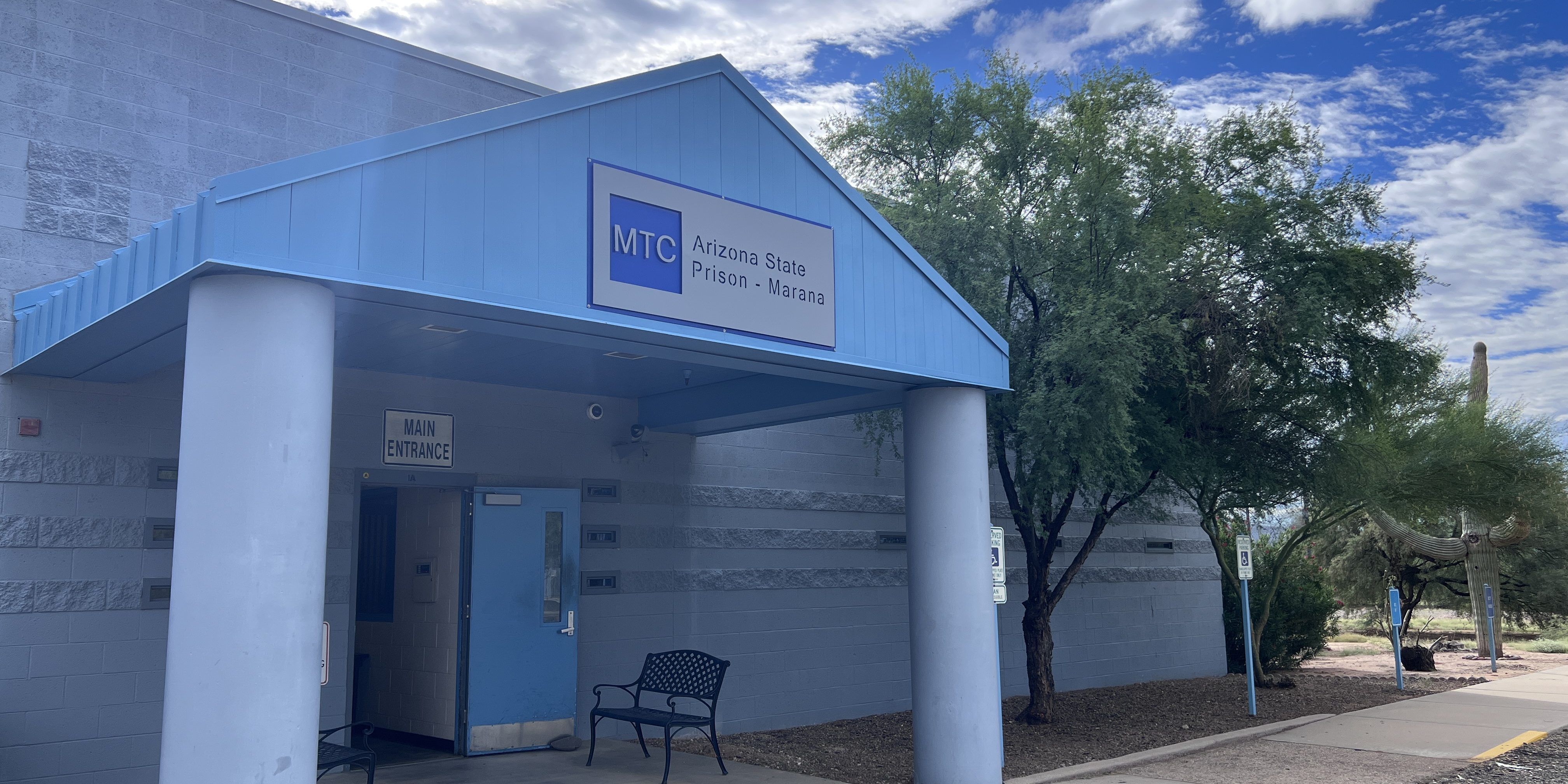

This story was published in partnership with LOOKOUT News.
Rumors were spreading for weeks in the spring of 2022. At Arizona State Prison–Marana, the talk centered on an employee of Management and Training Corporation, or MTC, the Utah-based for-profit prison company that ran the facility. A clerk at the commissary, Alicia Simmons, had been carrying on an illicit sexual relationship with an incarcerated person.
In April, the situation exploded onto the radars of top prison officials. A fight broke out between two prisoners that two former MTC employees who spoke to LOOKOUT and The Intercept later said was over Simmons. After the fracas, according to a state-level investigation, Simmons admitted to having sex, sometimes four times a week, with an incarcerated person. She was let go by MTC and served with a search warrant for her phone and car. The Arizona Department of Corrections Special Investigations Unit conducted an official probe.
According to an internal report on the sexual abuse allegations filed at the prison in the wake of the affair, a high-ranking prison guard at the detention facility prepared a “PREA packet,” an initial recitation of allegations and evidence made in compliance with the federal Prison Rape Elimination Act.
The PREA packet cleared the way for information about the allegations to become public: Its existence would be noted the following year in a legally mandated PREA audit. The audits must be published by all carceral facilities covered by the law at least once every three years and must list all incidents and allegations of sexual contact between staff and incarcerated people.
The whistleblower said that he had direct conversations about the sexual abuse allegations with the warden.
And yet, a year later, Marana’s PREA audit said nothing about the allegations against Simmons.
“There was no reported incidents of sexual abuse or sexual harassment reported within the last 24 months,” according to the final October 2023 PREA audit.
Now, a former employee of MTC who worked at the Marana prison is speaking out for the first time about what top officials at the facility knew ahead of the PREA audit’s publication. The whistleblower, Alex Randall, told LOOKOUT and The Intercept that he had direct conversations about the sexual abuse allegations with the warden, other officials, and Simmons herself. Randall said he was not the only MTC employee the warden discussed the matter with.
“I was sitting in with my manager, me, and the warden when the warden told us all about what happened,” Randall said of the day Simmons was issued a warrant and let go from her position.
Randall’s account — including of what prison leadership knew about the allegations — was corroborated by another former employee at Marana with direct knowledge of the warden’s conversations. The second former employee spoke to LOOKOUT and The Intercept on the condition of anonymity for fear of retaliation. An Arizona Department of Corrections Information Report prepared by a prison staffer on the day of the incident also said information about allegations of sexual contact between a staffer and an incarcerated person was provided to the warden.
The incarcerated person denied having sex with Simmons, according to a later Department of Corrections investigation, and Simmons was not referred to outside law enforcement for criminal prosecution.
Despite widespread knowledge of the allegations and the official paper trail, the warden at the time — Jeremy Casey, who is listed as the primary contact in the audit — verified in the published report there were no reported incidents of sexual abuse or harassment. (Simmons, MTC, Casey, and the Arizona Department of Corrections did not respond to multiple requests for comment.)

There were at least two other incidents of sexual abuse reported during the period covered by the 2023 PREA report, according to Arizona Department of Corrections investigative reports obtained through public records requests. One was from August 2022 about an employee allegedly kissing an incarcerated person and having an email correspondence with him that was “sexual in nature.” In another case, just weeks before the 2023 PREA audit was conducted, the corrections department’s Criminal Investigative Unit conducted interviews about an allegation that a prison guard had encouraged an incarcerated person to perform oral sex. Those allegations also should have appeared on the subsequent PREA audit but did not.
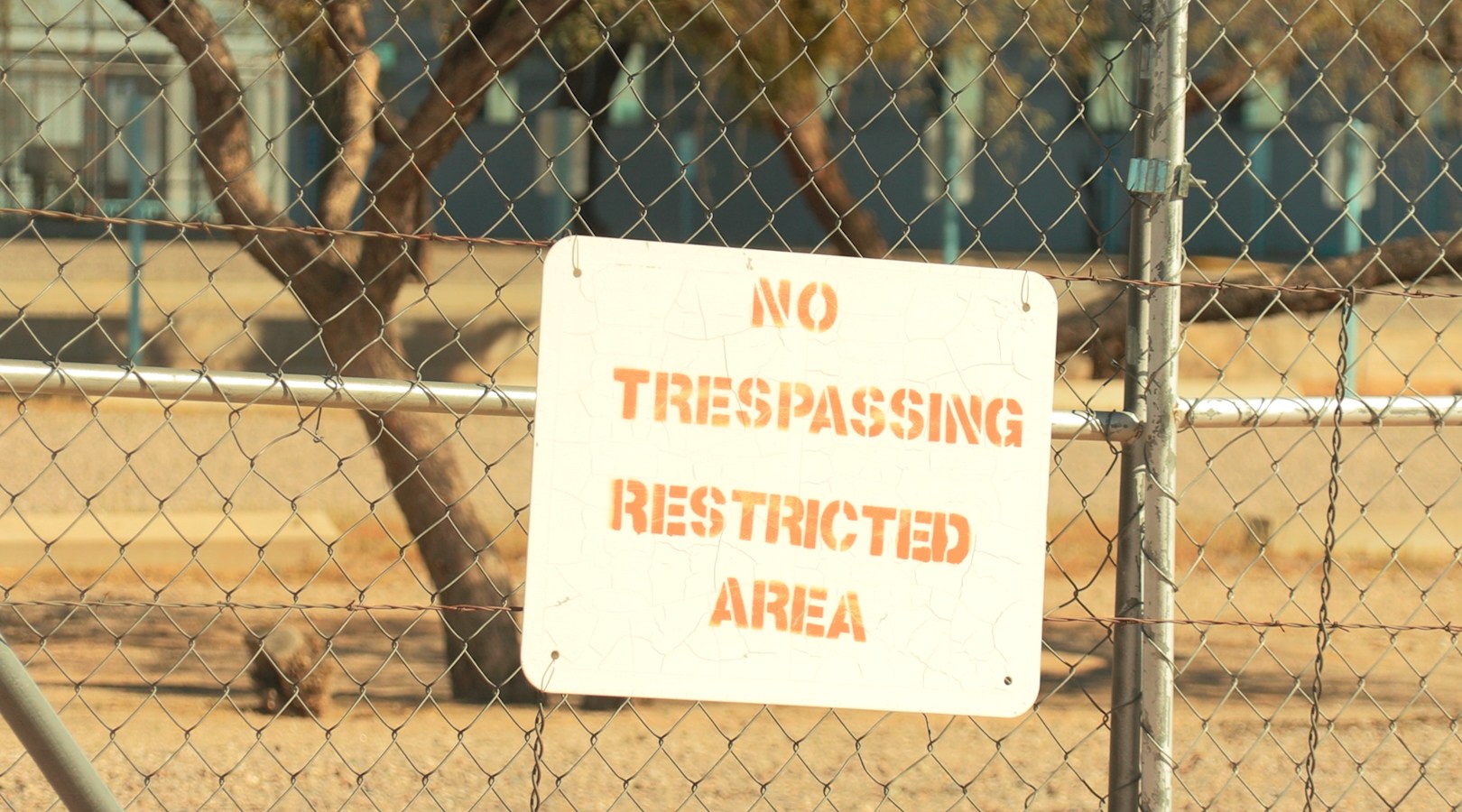
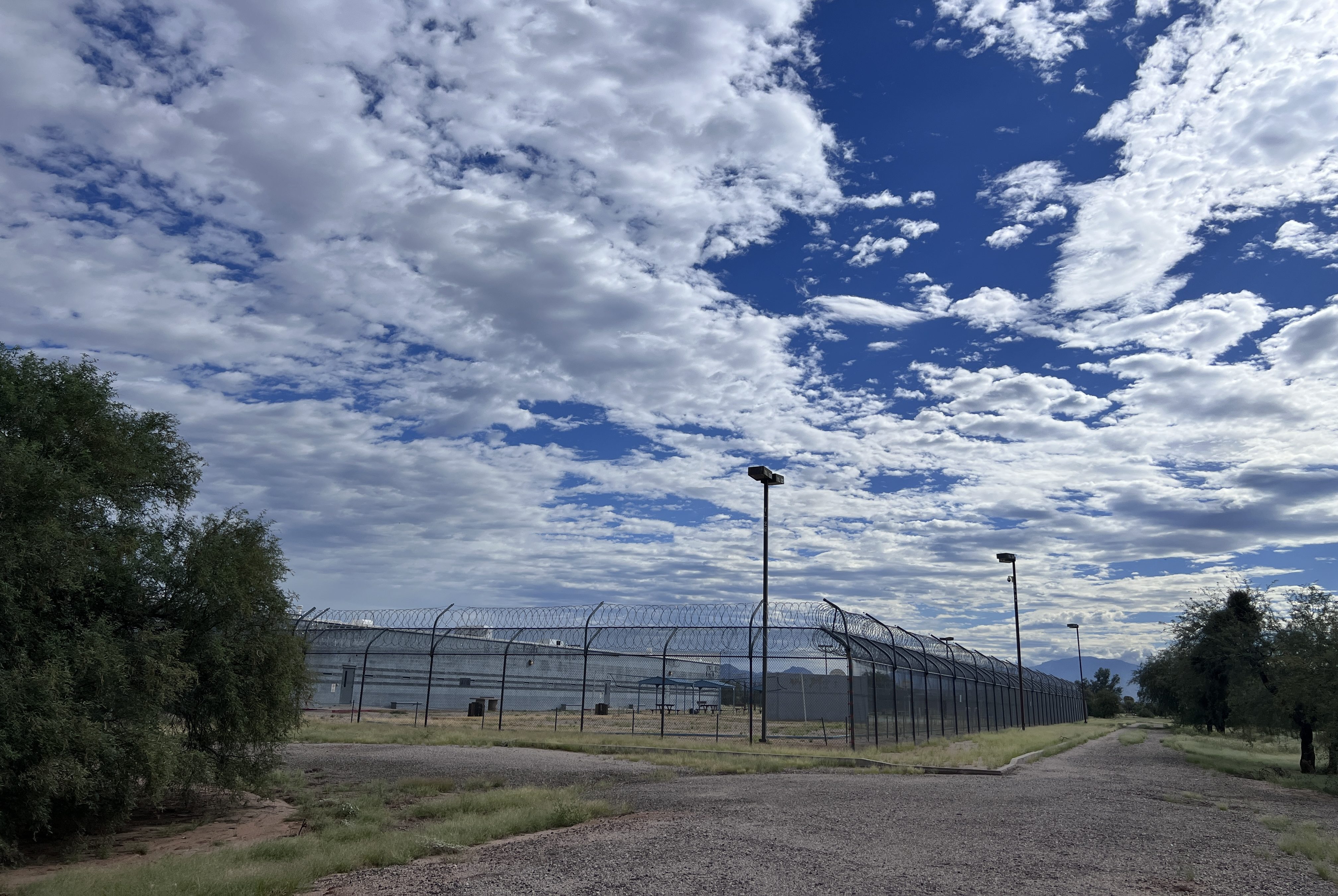
In 2023, Arizona State Prison–Marana was closed and languished in dormancy until it was sold to back to MTC in 2025 — just as the Department of Homeland Security was looking for more bed space to detain immigrants.
Reopening as ICE Camp
Randall’s insider account of the lapse in PREA reporting and other conditions are resurfacing Marana’s checkered history at a critical moment for the prison.
Last year, after selling the prison back to MTC, the Marana facility is slated to reopen as a U.S. Immigration and Customs Enforcement detention center. Federal officials, according to government documents, want to nearly triple the prison’s capacity to roughly 1,300 beds, according to a Department of Homeland Security floodplain notice. It is unknown when the prison is set to reopen.
“ICE is pursuing all available options to expand detention bedspace capacity, including partnerships with state and local governments to house detainees at existing facilities,” Fernando X. Burgos, a public affairs officer for ICE, told LOOKOUT and The Intercept.
The plan is facing significant oppositions from local residents and officials who say they are being cut out of any oversight for reopening the prison.
“The whole business model is taking an inherently expensive proposition and skimming a profit off the top.”
Critics of the plan say the failure of MTC to properly deal with the sexual abuse allegations and other problems, including those stemming from what insiders say were staffing and resource issues, raise serious questions about the company’s future running a massive immigration detention center at the same location. By their nature, private prisons, which cut costs for the sake of their bottom lines, are predisposed to the types of conditions that can lead to abuses like sexual misconduct and encourage shoddy reporting by officials, critics of the Marana facility argued.

“The whole business model is taking an inherently expensive proposition — the care and feeding of thousands of people, the running of a small city — and skimming a profit off the top,” said Caroline Isaacs, the executive director of Just Communities Arizona, a nonprofit working on criminal justice reform; she is also a member of Pima Resists ICE, known as PRICE, which opposes reopening the prison as an ICE camp.
Isaacs pointed to wider allegations about other MTC facilities, including in Arizona, and said local activists are “very familiar with the terrible track record of MTC.”
She added, “It’s baked into the business model of for-profit incarceration.”
“Holy Shit, I’m Fucked”
Randall, who took the job as an accounting clerk at the Marana prison in June 2021, said Simmons exhibited odd behavior as soon as he met her. He said he saw her emerge from the commissary area “sweating bullets,” even during cool months, despite having no obvious physically straining work to account for it.
Then, in April 2022, Randall said he was standing outside alone when Simmons came rushing toward him.
“She goes, ‘Holy shit, I’m fucked,’” Randall said.
Simmons disappeared into a manager’s office, according to Randall, and in short order, two other guards ran toward the commissary area. Randall said he later learned two incarcerated men had gotten into a fight there.
“A lot of the guards were saying, ‘Well, this isn’t the first time this has happened here.’”
According to Randall’s account, Casey, the warden, later told Randall and his manager what had happened: Simmons was suspected of having sexual contact with multiple people held at the prison. The fight allegedly stemmed from jealousy between two of the men who were said to have had sexual relationships with Simmons. (The man at the center of the April 2022 allegation later denied having sex with Simmons; in a follow-up interview with the inspector general’s office, he said he was gay. Simmons later denied the second affair, according to an Arizona Department of Corrections investigation.) Both men were placed in segregation and interviewed by prison officials; one was ultimately transferred to a different facility, Randall said.
Simmons was let go the same day, according to Randall and a Department of Corrections investigation. Randall said that nearly all employees of the prison knew about the allegations.
Randall said, “A lot of the guards were saying, ‘Well, this isn’t the first time this has happened here.’”
The Admission
According to Simmons’s own account, she repeatedly had sex with an incarcerated person.
Arizona law says that all sexual contact between incarcerated people and prison staffers or contractors is considered felony sexual abuse because people behind bars cannot legally give consent.
“That staff member should have been referred for prosecution,” Brenda Smith, a professor at American University’s law school and the director of the Project on Addressing Prison Rape, said of the Marana case, noting that such sexual contact may be considered a constitutional violation.
Though the law is clear that prison staff engaging in any sexual contact with incarcerated people is abuse, Simmons’s case is complicated — and raises vexing questions. Simmons admitted to having sex with a person in custody, but she also told state investigators that she was coerced.
The details of Simmons’s case were recounted in an April 2022 investigative report from an Arizona Department of Corrections Office of Inspector General, which was obtained by LOOKOUT and The Intercept through a public records request.
According to an interview with Simmons described in the report, she was asked if she had engaged in sexual activity with one of the incarcerated people and said yes. She had done so “multiple times,” she said. Simmons, however, told investigators she was frequently threatened, including physically, into having sex with the incarcerated person.

According to the inspector general’s report, “Ms Simmons said she was scared and felt she needed to keep having sex with inmate [redacted] or she would lose her job.”
She complained to investigators that there were no cameras in the commissary room where the events took place.
Despite the threats related by Simmons to investigators, there were “a handful of times she was okay with having sex with inmate [redacted] but not all the times,” the report said.
The inmate Simmons said she was having sex with, however, denied any sexual contact with her, according to the inspector general’s report. That led the investigator to conclude that “there is not enough evidence to prove” they did have a sexual relationship. The case was “submitted to administration for review and processing,” according to the investigative report. (The Arizona Department of Corrections did not respond to repeated requests for comment about the status of the investigation.)
No criminal charges were filed in Marana, Tucson, or the relevant counties, according to an extensive records search. The Arizona Attorney General’s Office confirmed that it received no criminal referrals on the matter.
Smith, the law professor, was not surprised that the incarcerated man denied the allegation of an illicit affair. There was little to gain, she said, by admitting anything. Spurring an investigation or prosecution could cause headaches at the facility or lead to potentially negative consequences for the man in custody.
“He gets moved. He might lose his job,” Smith said, referring to jobs held in prisons by incarcerated people. “All of those things are really important for him to ultimately leave the facility with conditions that are favorable for him.”
Denying such an incident, especially in a carceral setting, Smith said, is “so common for vulnerable people who are victimized.”
Prison With Problems
The Simmons case wasn’t the only documented incident of alleged sexual abuse at the Marana prison. Enrique Olivares-Pelayo, who was detained in the prison for around 11 months in 2011, told LOOKOUT and The Intercept that he had a sexual relationship with a staffer at the prison. After rumors began circulating about them, he said, the employee was fired. (PREA standards were only fully implemented and mandated by the Department of Justice in 2012.)
Manara’s history goes well beyond unreported sexual misconduct, extending to broader concerns about the MTC facility. Randall; the second former MTC employee; Olivares-Pelayo; an Arizona Department of Corrections memo; and the inspector general report all made allegations about conditions at Marana — for imprisoned people and staff alike.
Two persistent issues revolved around the quality of food for incarcerated people and the high heat inside the facility. Olivares-Pelayo and Randall both said incarcerated people had to find ways to beef up their calorie intake because they were served substandard meals. Incarcerated people would sometimes fatten up squirrels with corn chips, Olivares-Pelayo said, and then cook them to eat for extra calories. He said the squirrel meat tasted “like rabbit, kinda mid.” A 2010 memo from the Arizona Department of Corrections found that “Kitchen sanitation was substandard.”
The same memo said that all the living areas for incarcerated people were “extremely warm and humid.” It noted that the prison’s swamp cooling system seemed not to be working, an observation echoed by Olivares-Pelayo based on his stay there. He said the facility often felt like a “convection oven.”
The Marana prison, Randall said, was plagued by widespread drug use before it closed. Drug use came up in the inspector general office’s report as well as in a list of investigations conducted by Arizona Department of Corrections about Marana, also obtained by records request.
Olivares-Pelayo said proper reporting channels were rarely followed during his time there 15 years ago. The prison, he said, was effectively a free-for-all for incarcerated people. Guards did rounds but almost never cracked down on anybody for infractions. Prisoners routinely tattooed each other, for instance, which was officially banned, though consequences were rarely if ever meted out.
Incidents of violence or misconduct, Olivares-Pelayo said, were handled inside the prison to prevent conditions there from being made public.
“People would be punished internally,” he said. “They always covered up their dirty stuff.”

MTC has faced consequences before, in Arizona and elsewhere, for its prison conditions. When, in 2015, a riot broke out at an MTC-run prison in Kingman, Arizona, a Department of Corrections investigative team concluded poor conditions — citing, for example, a hunger strike because of issues with “food service operations” — had precipitated the incident.
“Based upon the observations and reviews of available materials, inmate interviews, staff contacts and interviews,” a report on the incident said, “the Assessment Team concluded that the inmate population at ASP-Kingman was dissatisfied with their conditions of confinement. Thus, they rebelled by way of rioting.”
Citing investigators’ finding that MTC operated with a “culture of disorganization, disengagement, and disregard,” then-Gov. Doug Ducey canceled the company’s contract for the Kingman facility.
Left Out of Audit
The allegations against Simmons and two other allegations of sexual misconduct against guards were omitted, the Marana PREA audit was certified on December 1, 2023, with a declaration that the prison was in full compliance with all 45 applicable PREA standards. The audit, conducted over a three-day site visit from October 16 to 18, reported that the finding of zero sexual abuse allegations was “verified by the Warden, Chief of Security, PREA Compliance Manager, Investigator, Classification, Health Services Administrator, Random staff, Random and targeted inmates.”
It also found no incarcerated people had been placed in segregation for sexual-abuse-related reasons in the prior 24 months.
Randall, along with the other former employee who corroborated his account, disputed both claims, citing in particular the solitary confinement of the two men who were alleged to have fought over Simmons.
“That was the first time we used our segregation unit, at least since I’ve worked there,” Randall said of the 2022 incident.
He said the prison kept records on disciplinary matters that should have included whatever investigative paperwork was generated from the Simmons case.
“I know for a fact they kept those investigation records,” Randall said.
Incidents of sexual abuse in prison are frequently omitted from PREA reports, said Smith, the law professor.
“A lot of it depends on how committed the agency is to a full audit,” she said.
According to Smith, PREA compliance has gotten worse after the Trump administration last year made significant funding cuts, canceling an estimated $16 million to the Department of Justice’s National PREA Resource Center.
“For a PREA audit to be missing an incident of abuse that multiple prison employees confirm took place,” said Wanda Bertram, a communications strategist for the Prison Policy Institute, “shows two things: One, that the prison is failing to take sexual abuse seriously and, two, that the PREA auditing system has some major flaws.”
ICE Expanding
After the state of Arizona’s 2025 sale of the prison, ICE announced in February 2026 that the Marana facility was slated to reopen as an immigration detention center. The contract had been won by the buyer, MTC. In the contract announcement, ICE included a boilerplate stipulation: “The contractor shall also abide by the March 7, 2014, Department of Homeland Security (DHS) regulation under the Prison Rape Elimination Act.” A February 25 federal procurement memo named MTC as “the sole owner and operator of the Marana detention facility that meets ICE requirements.”
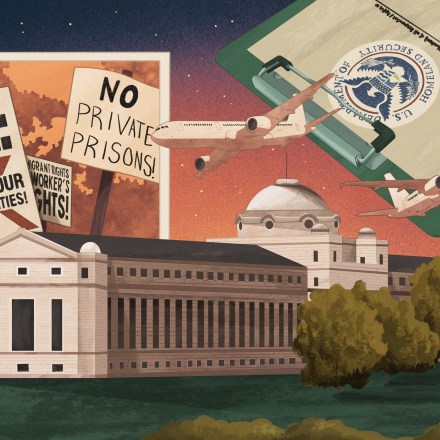
A more recent floodplain notice from the Department of Homeland Security, ICE’s parent agency, indicates federal officials aim to expand the facility well beyond its original 513-bed design to roughly 1,300 beds. The expansion, according to the government notice, will come through the addition of temporary housing, with renovations potentially allowing parts of the facility to open even while construction continues elsewhere on the site.
The plan has drawn opposition from Marana residents and local officials, including town Council Member Patrick Cavanaugh and the community group Pima Resists ICE. The locals said the state government, the feds, and MTC left them out of any meaningful discussions about how the expansion would be managed.
Arizona “chose their $15 million sale over protecting Marana and Pima County residents from an unaccountable, untrustworthy, and dangerous prison operator.”
Pima County Supervisor Jen Allen, who has been openly critical of the prospects of a new detention camp opening in the county, told LOOKOUT and The Intercept that the state’s sale was an example of “bad business and bad decision-making at all levels.”
“It’s still shocking to me that the state of Arizona knew full well of MTC’s history: of riots, prison escapes, and cover-ups,” Allen said. “And despite this, still chose their $15 million sale over protecting Marana and Pima County residents from an unaccountable, untrustworthy, and dangerous prison operator.”
Meanwhile, with controversies raging over the swelling numbers of those detained by ICE, the death rate in immigration detention camps has more than doubled since President Donald Trump began his second term, according to recent reporting from Reuters.
Isaacs, of Pima Resists ICE, said that, in tandem with ICE’s widening crackdown, MTC’s record of obfuscating problems should strike fear in the hearts of local leaders.
“ICE clearly has no idea what they’re doing, and they don’t care,” she said. “There could be lawsuits or strain on the infrastructure of the town.”
“Nobody knows what’s going on, and nobody will know — until it’s too late, until very bad things happen.”
IT’S EVEN WORSE THAN WE THOUGHT.
What we’re seeing right now from Donald Trump is a full-on authoritarian takeover of the U.S. government.
This is not hyperbole.
Court orders are being ignored. MAGA loyalists have been put in charge of the military and federal law enforcement agencies. The Department of Government Efficiency has stripped Congress of its power of the purse. News outlets that challenge Trump have been banished or put under investigation.
Yet far too many are still covering Trump’s assault on democracy like politics as usual, with flattering headlines describing Trump as “unconventional,” “testing the boundaries,” and “aggressively flexing power.”
The Intercept has long covered authoritarian governments, billionaire oligarchs, and backsliding democracies around the world. We understand the challenge we face in Trump and the vital importance of press freedom in defending democracy.
We’re independent of corporate interests. Will you help us?
IT’S BEEN A DEVASTATING year for journalism — the worst in modern U.S. history.
We have a president with utter contempt for truth aggressively using the government’s full powers to dismantle the free press. Corporate news outlets have cowered, becoming accessories in Trump’s project to create a post-truth America. Right-wing billionaires have pounced, buying up media organizations and rebuilding the information environment to their liking.
In this most perilous moment for democracy, The Intercept is fighting back. But to do so effectively, we need to grow.
That’s where you come in. Will you help us expand our reporting capacity in time to hit the ground running in 2026?
We’re independent of corporate interests. Will you help us?

I’M BEN MUESSIG, The Intercept’s editor-in-chief. It’s been a devastating year for journalism — the worst in modern U.S. history.
We have a president with utter contempt for truth aggressively using the government’s full powers to dismantle the free press. Corporate news outlets have cowered, becoming accessories in Trump’s project to create a post-truth America. Right-wing billionaires have pounced, buying up media organizations and rebuilding the information environment to their liking.
In this most perilous moment for democracy, The Intercept is fighting back. But to do so effectively, we need to grow.
That’s where you come in. Will you help us expand our reporting capacity in time to hit the ground running in 2026?
We’re independent of corporate interests. Will you help us?
Contact the author:
Related


Latest Stories

The Army Wants to Sic AI Agents on Its Enemies. What Could Go Wrong?
Documents obtained by The Intercept show the military is trying to deploy autonomous AI agents to hack its adversaries.

President Apocalypse
While Trump campaigns for a Nobel Peace Prize, his war on humanity’s only home continues unabated.

Targeting Iran
Dems Have an Opportunity to Force an End to the Iran War. Will They Take It?
With Democrats campaigning on ending the war, advocates want them to put their money where their mouth is and risk a lame-duck shutdown.