
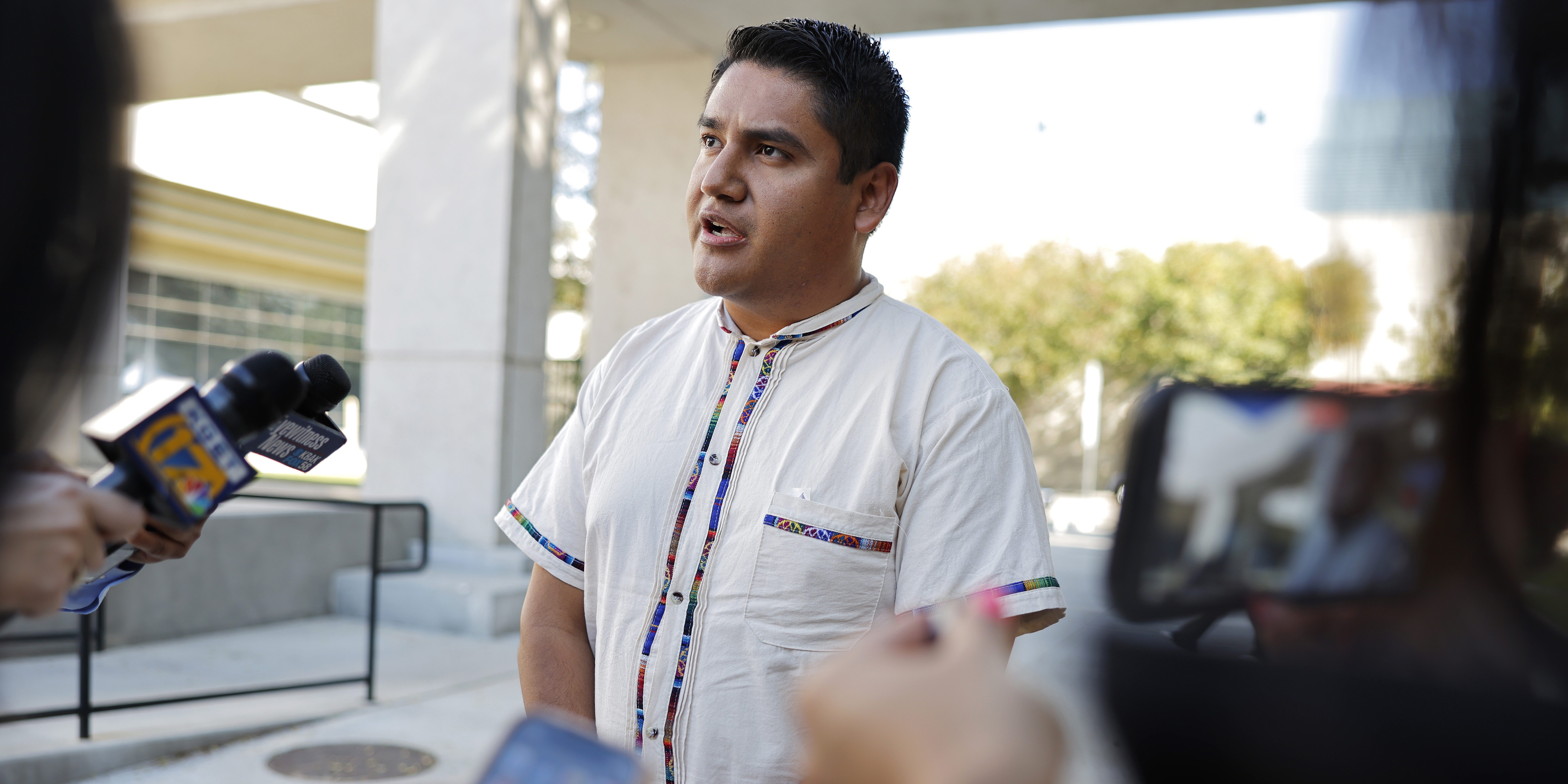
In California’s Central Valley, some surprising voters are lining up behind a progressive upstart: A law enforcement officer who calls for the abolition of ICE. A millennial who once voted for a Republican congressman.
They found themselves among supporters of Randy Villegas, a Democrat poised to oust longtime incumbent Republican Rep. David Valadao in a district dominated for decades by conservatives in California’s Central Valley.
With Democratic victories across the nation, California’s 22nd Congressional District is the kind of historically red stronghold where progressive policies may find new purchase.
Villegas’s path to the general election mirrors that of other progressive candidates charting a new identity within the party. Running on policies such as Medicare for All, addressing affordability, rejecting corporate donations, and halting the flow of weapons to Israel, the 31-year-old defeated a moderate Democratic state assembly member backed by the party’s establishment in the June primary.
Villegas’s opposition to ICE in a district that is 70 percent Latino or Hispanic marked the sharpest point of contrast with Valadao, who defended the Trump administration’s anti-immigrant campaign and famously uttered “It is what it is” on the debate stage last month when pressed on the issue. Valadao claimed “a lot” of the individuals captured by ICE in the Central Valley in recent weeks have criminal records, despite research showing the majority of those detained by ICE lack criminal convictions.
It was Valadao’s stance on immigration that most animated Central Valley voters who spoke with The Intercept.
“I’ve never seen him stand up to something I feel is egregious,” said Raul Castro, 53, a Fresno County probation officer who is upset with Valadao’s lack of willingness to oppose Trump on the ICE raids surging through the area in recent weeks. “I just don’t respect people like that.”
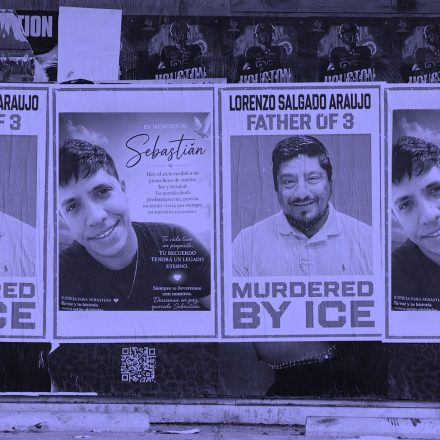
While standing on the front porch of his house in a middle-class suburb in northwest Fresno, Castro lamented ICE’s targeting of immigrants based on their appearance, language, or jobs. He spoke out against immigration agents pulling people from the street and into labyrinthine detention centers where civil rights advocates have reported a lack of access to basic necessities such as clean water and adequate healthcare. Though Castro once supported ICE, when asked whether he would support abolishing the agency altogether, he said yes.
“If you asked me that same question, ‘Hey would you abolish ICE?’ I’d say, ‘No, ‘cause they’re doing things to make sure our country is safe. I want to live in a safe Fresno, safe county, safe city,’” Castro told The Intercept. “But now, wait a minute, maybe that’s not what I thought it was going to be.”
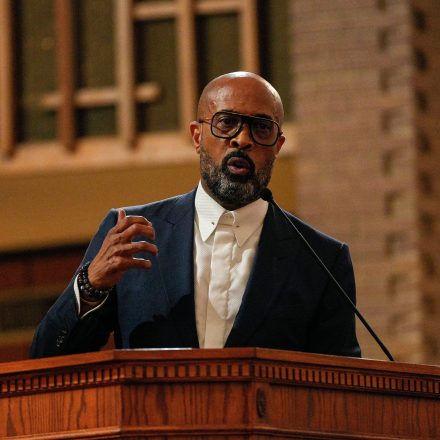
Villegas told The Intercept he wasn’t surprised to hear he had won the support of an anti-ICE law enforcement officer.
“I don’t find it surprising because I think ICE has made it much more difficult for local law enforcement to carry out their jobs and their work — and everybody is seeing the indiscriminate profiling going on,” Villegas said at a Fresno park rally to support last-minute canvassing efforts.
Villegas himself does not support abolishing ICE but instead has called for wide-ranging reforms of the agency. The policy position makes Villegas somewhat an anomaly among his progressive peers, who are riding a wave of leftist energy into Congress, some of whom include “Abolish ICE” among their campaign platforms.
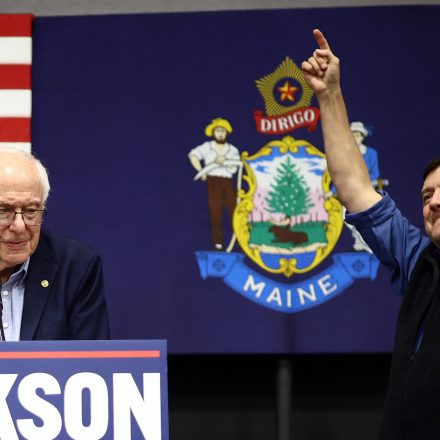
While holding key endorsements from high-profile democratic socialists Sen. Bernie Sanders, I-Vt. and Rep. Alexandria Ocasio-Cortez, D-N.Y., Villegas has also rejected the socialist label, preferring “populist,” despite attempts by the Republican national party to weaponize the term against him. Unlike many of his fellow progressives, Villegas is also one of the few who is running in a historically red district. And he’s confident voters are not caught up in the ideological nuances and hopes to instead cut through them.
“People are fed up with an agency who is unaccountable, people are fed up with a member of Congress who is unaccountable, who doesn’t even have public town halls,” Villegas said. “We deserve better than that in the Central Valley, and I think that’s why our messaging is resonating across the political spectrum.”
Such reach across the political spectrum is also evidenced in voters like Aram Easter, 33, who was born and raised in Fresno. He doesn’t vote in every election, but cast a ballot for Valadao a decade ago when his district previously covered Fresno, largely because he bought the vision of someone with local Central Valley roots (Valadao was born and raised in the nearby Hanford). He also agrees with some aspects of Trump’s agenda, such as building the border wall. But he drew the line on immigration enforcement.
“You got people tearing people’s families apart,” Easter said. “My family immigrated here — I have Black and Mexican family — I’m not with them overly-aggressively doing it.”
Since early October, ICE raids have become more prevalent in the region, with more than 200 people detained by authorities throughout the surge, according to the local newsroom Fresnoland. Similar upticks in ICE have taken place recently throughout the state, including Los Angeles and San Diego. Voter rights organizations in the Central Valley have taken notice and are viewing the raids as an effort by the Trump administration to suppress the vote, especially in a key race in the 22nd District.
“This timing of the uptick in ICE is not a coincidence,” said Marisa Moraza, political director at PowerCA Action, which is doing independent expenditure work to support Villegas’s campaign. “It’s not a coincidence that this started at the beginning of October when voters received their ballots in the mail.”
The raids have also suppressed get-out-the-vote efforts, Moraza said. Last month, the group had to pause in-person canvassing operations for several days amid the surge in ICE activity, electing to instead do phone banking.
The ICE activity is also keeping would-be voters from dropping off their ballots, as recent arrests of U.S. citizens struck fear among voters, said Cirilo Ordaz, a canvasser with PowerCA supporting Villegas.
“With going out to vote, I think a lot of them haven’t done it yet because of that fear,” said Ordaz, who was one of dozens of Villegas supporters who fanned out across the region on the Monday before Election Day to urge residents to vote.
Sylvia Ramirez, another Fresno native canvassing with PowerCA said she’s noticed far fewer people outside in recent weeks, including a lack of crowds at the popular annual event Big Fresno Fair. For voters, she and her group offer to drop off people’s ballots for them if the fear is keeping them inside.
“Offering the services of dropping off a ballot for somebody really helps out with the fear that people have of leaving their houses,” she said, adding that she has told her family to stay at home as much as possible in recent days to avoid interactions with ICE.
The Central Valley, known for its significant agriculture production, has been the seat of high-profile Republican lawmakers, such as former Rep. Devin Nunes and former House Speaker Kevin McCarthy.
But after a Democrat-led redistricting in the state last year in response to Texas’s partisan redistricting effort, the district now includes the northwest sections of Fresno, a city with more Democrats.
Early voting across the state has outpaced recent midterm elections, according to a recent survey. It’s unclear how much of that is anti-Trump animus or having a candidate voters are excited to support.
Castro, the probation officer, was among those who voted early. In recent weeks, he said he noticed residents looking at him with concern while on the job in uniform, showing up at areas where ICE had previously conducted raids. It’s a fear he acutely understood. As a child, he lived in labor camps with his mother and father, who were both undocumented immigrants working in Fresno as farm laborers. He recalled similar indiscriminate sweeps by Border Patrol in the 1970s.
“When I was small, back then it was Border Patrol, and they used to show up in a van,” Castro recalled. “All the agents used to get out and run after these guys. And they used to round them up and take them out,” he said.
Seeing video and hearing of recent ICE raids targeting farmworkers in the area conjured such painful memories.
“I never thought I’d see that again,” he said.
IT’S EVEN WORSE THAN WE THOUGHT.
What we’re seeing right now from Donald Trump is a full-on authoritarian takeover of the U.S. government.
This is not hyperbole.
Court orders are being ignored. MAGA loyalists have been put in charge of the military and federal law enforcement agencies. The Department of Government Efficiency has stripped Congress of its power of the purse. News outlets that challenge Trump have been banished or put under investigation.
Yet far too many are still covering Trump’s assault on democracy like politics as usual, with flattering headlines describing Trump as “unconventional,” “testing the boundaries,” and “aggressively flexing power.”
The Intercept has long covered authoritarian governments, billionaire oligarchs, and backsliding democracies around the world. We understand the challenge we face in Trump and the vital importance of press freedom in defending democracy.
We’re independent of corporate interests. Will you help us?
IT’S BEEN A DEVASTATING year for journalism — the worst in modern U.S. history.
We have a president with utter contempt for truth aggressively using the government’s full powers to dismantle the free press. Corporate news outlets have cowered, becoming accessories in Trump’s project to create a post-truth America. Right-wing billionaires have pounced, buying up media organizations and rebuilding the information environment to their liking.
In this most perilous moment for democracy, The Intercept is fighting back. But to do so effectively, we need to grow.
That’s where you come in. Will you help us expand our reporting capacity in time to hit the ground running in 2026?
We’re independent of corporate interests. Will you help us?

I’M BEN MUESSIG, The Intercept’s editor-in-chief. It’s been a devastating year for journalism — the worst in modern U.S. history.
We have a president with utter contempt for truth aggressively using the government’s full powers to dismantle the free press. Corporate news outlets have cowered, becoming accessories in Trump’s project to create a post-truth America. Right-wing billionaires have pounced, buying up media organizations and rebuilding the information environment to their liking.
In this most perilous moment for democracy, The Intercept is fighting back. But to do so effectively, we need to grow.
That’s where you come in. Will you help us expand our reporting capacity in time to hit the ground running in 2026?
We’re independent of corporate interests. Will you help us?
Contact the author:

Related

Latest Stories

Midterms 2026
Even Anti-Trans Panic Couldn’t Save Republicans in Deep-Red Texas
As James Talarico beat Ken Paxton in a historic Democratic flip, a Republican campaign run on transphobia fell short.

Midterms 2026
Michigan Senate Race Closes as a Referendum on Israel Policy
The fate of Abdul El-Sayed will either herald an ascendant left flank among Democrats or trigger the party’s revanchist centrist instinct.

Midterms 2026
Troy Jackson Ousts Susan Collins in Maine, Ending Republican's 30-Year Senate Career
The hard-to-beat Republican incumbent was defeated by a progressive new to the national scene as Democrats took the Senate.