The Most Expensive Democratic Senate Primary Has a Winner

Intercept reporters break down progressives’ wins and losses in Michigan and Missouri.

Over the course of Donald Trump’s second term, Democratic voters have expressed dissatisfaction with their party over what many view as an inability to stand up to the president and his broader movement. That dissatisfaction with the establishment has manifested in primaries in coastal cities across the country, where the progressive movement appears to be ascendant. On Tuesday, that test played out in Midwestern states, Michigan and Missouri.

Within roughly two hours of polls closing, The Associated Press called the closely watched rematch between Cori Bush and Rep. Wesley Bell for the incumbent. In 2024, AIPAC and other outside groups spent more than $18 million to oust Bush from her Missouri district, and her defeat, along with New York Rep. Jamaal Bowman’s, has served as a warning sign for Democrats not to be too progressive or too pro-Palestine.


Related

Abdul El-Sayed Beats the Democratic Establishment and AIPAC in Michigan


But by Wednesday morning, Abdul El-Sayed, who ran on Medicare for All and ending military aid to Israel for its continued genocide in Gaza, narrowly defeated Rep. Haley Stevens by less than 20,000 votes. According to AdImpact, the Michigan Democratic Senate primary saw $98 million in ad spending and reservations. At least $60 million was spent boosting Stevens or attacking El-Sayed, with more than $30 million from the American Israel Public Affairs Committee’s super PAC, United Democracy Project — its largest spend in a single race ever, nearly double the then-record-breaking amount spent on Bowman’s 2024 primary race.

This week on The Intercept Briefing, host Jessica Washington and colleagues Akela Lacy and Jonah Valdez discuss what results from Tuesday’s primaries signal for progressives and the broader left in the Democratic Party, especially in swing states and outside of coastal cities.

For more, listen to the full conversation of The Intercept Briefing on Apple Podcasts, Spotify, YouTube, or wherever you listen.

Transcript

Jessica Washington: Welcome to the Intercept Briefing. I’m Jessica Washington, politics reporter at The Intercept.

Akela Lacy: And I’m Akela Lacy, senior politics reporter.

Jonah Valdez: And I’m Jonah Valdez. I cover politics and U.S. foreign policy.

JW: We’re in your feed a bit early this week to talk about two major primaries we’ve been reporting on at The Intercept.

Over the nearly two years on this podcast, we’ve been covering voters’ dissatisfaction with Democrats over what many view as an inability to stand up to President Donald Trump and his broader movement. That dissatisfaction has manifested in primaries in cities across the country, from New York to Colorado and California, where the progressive movement appears to be ascendant.

That test came to the Midwest on Tuesday in Michigan and Missouri. In Missouri, former squad member Cori Bush lost her rematch against Representative Wesley Bell, who received the bulk of outside spending, primarily from the American Israel Public Affairs Committee. In 2024, AIPAC and other groups poured a collective $18 million into the race to defeat her.

In Michigan, Dr. Abdul El-Sayed narrowly defeated Representative Haley Stevens in a win for progressives after AIPAC-aligned super PACs and others poured close to $100 million into the race, according to Ad Impact. This week on the Intercept Briefing, you’ll hear what the results from Tuesday’s primaries signal for progressives and the broader left in the Democratic Party, especially in swing states and outside of coastal cities.

Jonah, Akela, I really want to get your reactions to El-Sayed winning the Democratic Michigan Senate primary.

JV: Well, it was a long night, and AP called it pretty early, at least here where I am on the West Coast. And I think my initial reaction is a win’s a win. I think results were a lot closer than what the polls had showed leading up to it.

I think it’s worth noting that Abdul El-Sayed was massively outspent in this race. Overall nearly $100 million in the Senate primary. It’s the most expensive Democratic primary ever, but the majority of which was spent in outside spending to either attack El-Sayed or boost the campaign of Stevens.

Yet, El-Sayed pulls off this, very close win with a vote-toll, I think it’s worth noting, that’s greater than the more moderate Elissa Slotkin got in her primary in 2024. More similar to closer margins we saw in the presidential primary between Bernie Sanders and Hillary Clinton in 2016.

JW: For our listeners at home, Elissa Slotkin is the senator who beat Mike Rogers in 2024. Mike Rogers is the presumptive Republican nominee who El-Sayed will be facing in the November election.

JV: And you’re already seeing online, all this talk from moderates as far as where El-Sayed may have failed as if to show progressive policies still don’t do well, or, all this talk of how can El-Sayed moderate more in the general. But I think if Dems are serious about getting a Senate majority, I think it’s more so on moderates to appeal to what the majority of voters in Michigan decided today, and that’s that it’s the politics of the El-Sayed campaign.

AL: My reaction, obviously NBC projected overnight that El-Sayed would win, and so his campaign claimed victory overnight, and everyone was waiting well into the morning for the final results.

But in that interim period, you basically saw the shift in conversation go from everyone having that election night anticipation to everyone, churning out takes about why the polling that showed El-Sayed up by double digits in the final weeks of the race had been so far off. Making conjectures about counties where Stevens outperformed him and extrapolating that to the November general election, making claims that El-Sayed is going to have to make up a lot of ground with, Black or working-class voters in counties that Stevens performed better in.

But I think that immediate pivot is really telling in a lot of ways because this was the most expensive Senate primary in history, and we saw the most spending ever from not just the American Israel Public Affairs Committee, but all of these other corporate PACs to boost Haley Stevens.

She came into this race in the first spot with backing from the Democratic Party and lost, and I think to ignore the massive failure on the part of the party in that vein and to instead put those failures on El-Sayed is a really backwards reading of what happened last night.

JW: Akela, to your point about the money, and Jonah, I want to bring you into this, did the money make a difference? It was the most expensive Democratic [Senate] primary in history, and did the spending here change the outcome? Obviously, El-Sayed won anyway, but, did this have an impact?

AL: I think it would be folly to argue that it didn’t have an impact. It’s still very early. We don’t have all of the information, but there’s anecdotal reports of voters saying that they thought that Obama endorsed Haley Stevens. I actually haven’t seen anyone talking about individual responses to the AIPAC attacks, but that narrative out there that Abdul El-Sayed is the biggest threat to the U.S.-Israel relationship or to American Jews or Jewish voters in Michigan, that’s been out there this entire race.

And so I think that certainly had an effect. But I’ve also seen some people saying, “Oh you can’t just make the argument that voters who voted for Haley Stevens or who were swayed by these ads are stupid.” I don’t think anyone’s saying they’re stupid. But it’s unrealistic to try to make an argument that this money had no effect in this race.

JV: Yeah, it absolutely made a difference. Speaking with people in Michigan throughout the summer and really starting, early July, just like a flood of attack ads against El-Sayed. They were pretty much omnipresent if you were watching TV. Mind you, this was around the World Cup, so people were seeing this on primetime television immediately after a game ended. 

Someone I spoke to said the second ad right after is an attack ad calling Abdul El-Sayed, I think hateful toward women, and other ones painted him as a terrorist sympathizer trying to tie him to Hasan Piker and comments he made. And so painting this whole vision that he is, too radical for Michigan. It is the outside spending propping that up, but on top of that, like trying to make this ideological argument. 

JW: And just for anyone who doesn’t know Hasan Piker is the popular Twitch streamer who’s been campaigning with progressives and who Republicans and Democrats have been weaponizing against progressives implying with, I would argue, pretty Islamophobic attacks that these candidates are anti-American and that they believe everything that Piker believes.

JV: I think it’s worth remembering that there was a point in this race when it was essentially a three-way tie between El-Sayed, Stevens, and Mallory McMorrow, who would eventually drop out. The conventional thinking at the time was that the more that voters see of Stevens the more it would consolidate around McMorrow and El-Sayed, that Stevens would back off and would drop off in the polls because of AIPAC being such a big issue in the race.

Around the same time as polls were reflecting that, that’s when AIPAC’s super PAC United Democracy Project dropped in tens and tens of millions of dollars. This is the correlated result that you get. 

Stevens also has this history with AIPAC as far as the why they spent for her. AIPAC and corporate groups saw Stevens as a candidate that aligns with their policy positions. Stevens of course in 2019 took that freshman trip sponsored by AIPAC to Israel. And worth mentioning in 2022 she received millions in support in her race against former Congressman Andy Levin, who was attacked over his support for a Palestinian state.

On the other side of that coin, of course, is AIPAC saw a candidate in El-Sayed who opposes their positions on Israel.

JW: Akela, I want to turn to you for a second. I know that the United Democracy Project, a super PAC backed by AIPAC as you both have mentioned, spent a ton of money in this race. I know that came up in your conversation with El-Sayed last week. Now that you’ve had some time to reflect on that conversation, were there any takeaways for you about how he was thinking about money and politics, and specifically the massive amount of money that was spent on his election?

AL: The core of El-Sayed’s argument this entire race was that he was the antithesis to big money in politics. Not just spending on a race, but talking about money in politics being the reason that we don’t have policies like Medicare for All, that we can’t change sort of the status quo on U.S. military support for Israel, that being a driving factor for why many voters ended up supporting somebody like Donald Trump.

Looking back on the way that El-Sayed messaged on these things he was right. The question was, like, how much do voters actually care about that thing? And I think the breakdown came between voters who support a candidate like Stevens and don’t necessarily care about the money coming in to support her. 

People talk a lot about the enthusiasm gap. That supporters of El-Sayed were much more enthusiastically supportive of him in a positive way than supporters of Stevens who might have been supporting her, because they were familiar with her, they felt like she was more of a predictable candidate or because they didn’t want to vote for somebody like El-Sayed. That enthusiasm gap is why you see that kind of money coming into the race. He made the point over and over again “If your candidate is so electable, why do you have to spend $60 million to put them in office?” Part of that is his campaign strategy, but I think it’s a pretty unimpeachable argument, right? If they didn’t need that kind of boost to put their candidate in office, and obviously it didn’t work, why would you make that kind of investment? 

Coming out of this, there’s all kinds of people trying to spin this to say, “Oh the money advantage has changed this cycle,” right? We’ve seen other candidates who had the money advantage lose, but I don’t think that discounts exactly how much money went into this race. I think there was almost $100 million spent in total on the Michigan Senate race. Which is crazy. Just on its face. If you’re on the opposite side of that spending the obvious question is, “OK if your candidate is so good, then why do you have to do all of this to help them win?” 

The takeaway that a lot of people have from this, whether they’re supportive of El-Sayed or whether they’re upset about Haley Stevens, is that, I don’t think the era of big money in politics is over, but obviously the ground is shifting.

JW: Jonah, I want to come back to the Islamophobia in the race that you reported on. Obviously, we saw these attacks both from Democrats and Republicans, and as we head into November, we can only imagine that these attacks are going to intensify and I would argue become more Islamophobic as Republicans pick up some of these attacks that Democrats had dropped in the primary.

What do you think is going to happen in the general election, and how are you anticipating Islamophobia to show up in this race? 

JV: We’re already seeing it this morning. The Senate Republicans’ campaign arm, they released their first ads this morning, and of course, they refer to Abdul El-Sayed by his full name, they are tying him again to Hassan Piker, using phrasing that El-Sayed is too radical. These are all out of the playbook from the primary that the Michigan GOP had rolled out that Mike Rogers had rolled out. 

And on top of that, I’m glad you noted that it’s not just the Republicans who have been weaponizing Islamophobia, it’s also the Democratic establishment and AIPAC through its, again, super PAC, [United Democracy Project], just pouring and pouring all these ads that are again painting Abdul El-Sayed, who is Muslim and Arab, as a sympathizer to terrorism. That on top of, these unfounded claims of his hatred toward women. Speaking to several leading experts in Islamophobia, they were identifying these as pretty troubling anti-Muslim and anti-Arab tropes that have been around in American politics for years now.

I think one person mentioned that it reminded them of the early attacks on Barack Obama’s campaign in 2008, and that leaked photo that Hillary Clinton’s campaign at the time put out showing him in traditional Somalian elder attire. And so, I think we could expect these kinds of attacks to only accelerate, especially at a time when, Islamophobia is pretty common in GOP rhetoric right now.

We saw it leading up to the campaign of Zohran Mamdani in New York for his mayoral seat. We see it very regularly from representatives in the House like Randy Fine, who folks like him in his part of the world essentially believe that no Muslims should serve in Congress at all.

They’re drawing these hard, very bigoted lines. They’re successful politically in a lot of spaces. Republicans are still betting that these old tactics can still work before a broader electorate. Today’s victory, though, in spite of all of the attack ads in the primary, shows that those older tactics may not be as effective as they were, say, a decade ago or 20 years ago.

What we’re seeing this morning with these new ads, is a preview of what’s to come. It’s only going to get worse as the GOP plays to its MAGA base. But El-Sayed has shown that he has the capacity to overcome this, and I think that boils down to just how far the electorate has evolved on this and just aren’t as susceptible to such blatant racism.

JW: One thing I’ve been wondering is whether or not as we head into November, the establishment Democrats are going to protect El-Sayed and actually stand up against these Islamophobic attacks.

We’ve seen Democrats dance around these attacks on Ilhan Omar, sometimes defending against them, but often adding fuel to the fire. So I think come November or before November even, it’ll be interesting to see if Democrats actually intervene and do something about these kinds of racist, Islamophobic attacks.

AL: It’s a good question, Jessie, and already this morning we’ve seen Senate Minority Leader Chuck Schumer and Senator Kirsten Gillibrand, who run the Democratic Senatorial Campaign Committee endorse El-Sayed. We saw the Senate Majority PAC come in and endorse him. Even Haley Stevens endorsed him. But lest we forget, four days ago, Haley Stevens was saying that El-Sayed blamed all of his problems on Jewish voters with the backing of many of these people in the party.

So yeah, I think the question of whether they will specifically address the Islamophobic attacks is a totally different question from whether they are going to consolidate around him, which they are, because they obviously need the seat.

[Break]

JW: Obviously this was a really interesting race, and we’ve all been watching it, but I want to talk about some other races that happened last night as well.

So Akela, I know you’ve been watching House District 7 in Michigan, where William Lawrence, founder of the Sunrise Movement, won the Democratic primary. Akela, can you tell us a little bit about him and the dynamics of that race?

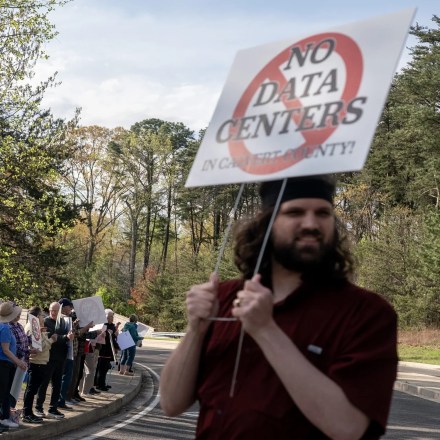
AL: Will Lawrence many people may remember him because of the late breaking oppo story about him saying that the left had been defanged by Black members of Congress. But prior to that, Will Lawrence had run a pretty textbook progressive campaign from the left, but he really was one of the first candidates this cycle who we saw center their campaign around the issue of data centers.

And I think in some of the analysis that we’ve seen coming out of his win, which was one of the early calls last night is that that is a winning argument particularly for progressive campaigns, but also in states where communities are fighting data centers.

We’ve seen this, I don’t want to say people are treating the data center issue as like a panacea, but we have seen that come up in a lot of campaigns and a lot of analysis, suggesting that’s potentially a through line where progressives can overcome some of the obstacles that they might have faced, around other “controversial policies,” and that data centers is like this reasonable policy that progressives are adopting that’s helping to boost their campaigns.

I think that’s a narrative that’s really coming out of Will Lawrence’s race. I will also mention that the Democratic Congressional Campaign Committee backed Lawrence shortly after he won, which is a pretty big deal.

JV: And just to add with Lawrence, he is in the 7th Michigan district, which is considered a purple district, and it’s currently held by a Republican incumbent. So I think moving ahead to the general, I think similar to El-Sayed’s race against Mike Rogers, is that, a lot of people will be looking at this as a test of how these anti-corporate, anti-data center, and unabashedly pro-Palestinian politics play in a general election in a district that is very much considered a swing district

JW: Yeah. No, I can definitely see that. 

I want to turn to another state, Missouri. Within roughly two hours of polls closing, the Associated Press called the closely watched, for me at least, probably a little bit less for the rest of the news ecosystem, but the closely watched rematch between Cori Bush and Representative Wesley Bell in Bell’s favor.

So in 2024, AIPAC and other groups had spent more than $18 million to oust her from her Missouri district. Akela, we’ve both spoken to members of Congress who, have seen her defeat as a warning sign to not be so progressive, to not be so pro-Palestine. We’ve been chatting in the newsroom in our politics meetings about whether or not this race says anything about progressives and the progressive movement right now, or does it just say something about Bush and her campaign?

AL: I don’t think that this race says anything about the viability of pro-Palestine candidates. To make that argument, you would have to close your eyes to all of the last three months, basically. I think this was a race about Cori Bush and Wesley Bell. And for all the criticisms of Wesley Bell, people like him in this district. 

Turnout in St. Louis the city of St. Louis, Cori Bush’s base was pretty high. It was 30 percent. That was around the levels that we saw when she won re-election in 2022, and that was not enough to counteract the support that Wesley Bell got from St. Louis County, where more older Black voters who support him tend to live.

What I heard from supporters of Bush was that some people thought she was going to lose, but they didn’t think it would be by this much. A lot of people thought she was going to win and they were obviously wrong. I don’t think you can make the argument that the AIPAC money in this race is the only reason that she lost.

There was a pretty effective campaign to saddle her with baggage from these stories about what happened to the tornado relief money that she raised and her husband being probed over a pandemic loan fraud, and all of these things we talked about and she chalked up to political attacks.

But I think people in the district were not necessarily swayed by those issues — but it left a bad taste in their mouth, and it’s the kind of thing where — I’m not sure that Wesley Bell would’ve won if a different candidate was was challenging him, just given the frustration both with incumbents and with AIPAC money.

Bush’s campaign also suffered because she didn’t have the marquee progressive support that we’ve seen boost candidates in other races, like rallies with Bernie Sanders and AOC. Bernie Sanders endorsed her, but nobody came to campaign with her. Justice Democrats endorsed her, but they didn’t spend money on the race.

The money that was spent in favor of Bush was just around $200,000, that means that progressive groups didn’t take this race seriously. And for one reason or another, it’s kind of a chicken or the egg thing. Had they taken it seriously, could she have won, or did they not take it seriously because they didn’t think she was going to win?

At the end of the day, this was more of a race about Cori Bush and Wesley Bell than it was a bigger test of all these other issues. And Wesley Bell is the kind of person who has, aside from taking AIPAC money, you can’t really say a lot else about him because he doesn’t really do a lot, and I think that works in his favor for better or for worse.

JW: Yeah, and Jonah, I wanted to get your thoughts as well. If you’ve spoken to Cori Bush, she is unlike any other politician. She very much speaks and feels like an organizer. Just watching her navigate the political system and struggle to navigate the political system has been really interesting. But Jonah, I wanted to see if you had any thoughts about this race as well? 

JV: I think it’s worth noting that she was very much ahead of the curve on a lot of the politics that we’re seeing succeed in this midterm primary elections. And, I think to Akela’s point, seeing the success, like the massive success across the U.S. on, the same platform that she’s running on and something that she’s ran on since she was first elected and was among the early politicians to call the genocide in Gaza a genocide.

As yours and Akela’s reporting had noted in 2024, was very early with the ceasefire resolution, as we know there’s still no ceasefire in Gaza. These are things that she was very much ahead in the curve on and is still very much a leader in that space. Her losing in this election doesn’t necessarily mean that those values don’t do well before the electorate.

JW: Akela, to your point, I’ve seen some analysis suggesting that a lot of progressive attention was spent on Michigan. Do you think that played a role in why there wasn’t as much spending or attention or any on-the-ground mobilization from progressive groups? Was all of their focus on Michigan?

AL: I wouldn’t say there was no on-the-ground mobilization. DSA, the St. Louis DSA endorsed her, and the St. Louis chapter was canvassing for her, and they had a pretty well-run canvassing operation to what I understand. But that’s not enough. I think they potentially miscalculated because of the boost that DSA gave to other candidates in New York and Colorado, I think they assumed that would be enough to put her over the edge.

But yeah, in conversations with progressive strategists who work on these races, the reason that they didn’t put as many resources into this race is absolutely because they put all of them into Michigan. The caveat here is that even while groups like Justice Democrats or the new pro-Palestine PAC, American Priorities, are spending more than they ever have on these races, in part because of how much money corporate PACs and the pro-Israel lobby have spent against their candidates in previous cycles, is that there’s still only a handful of these groups.

They simply do not have the capacity to triage every race in a cycle or even every race in a week. People were like, “I wish another group, bucked up and came in and put more money in this race for her.” But it wasn’t going to be JD [Justice Democrats] because they had Donavan McKinney.

It wasn’t going to be American Priorities, probably because they didn’t want to sully their positive track record so far by making a massive investment in a race where the candidate already had a lot of problems. All of these calculations went into the fact that the focus on Michigan probably affected this race, but again, I don’t think you can say one way or the other if all these groups came in and spent a bunch of money for her that it would’ve changed the outcome. We just don’t have enough information right now to say that.

JW: I want to talk about Democratic Socialist Francesca Hong, who is currently having clips about her takes on Thanksgiving and raising a biracial child, taken, I would argue, a little bit out of context.

But I do want to talk about that race because she’s a Democratic socialist who is currently leading in the polls for governor in Wisconsin against the more moderate candidate, David Crowley, and that race is coming up next week. Akela, can you just briefly talk about the dynamics at play here?

AL: Francesca Hong, a Democratic socialist state lawmaker in Wisconsin who has been leading the polls in the Wisconsin gubernatorial primary.

This is a situation where, I mean, why is CNN asking this woman about a tweet about canceling Thanksgiving? That’s my question. I don’t care what she thinks about Thanksgiving. That’s not a policy that the governor of Wisconsin has power over. The fact that this is what this race has come down to at this point, is a reflection of how much these outlets and mainstream forces are working to tear down and poke holes in what is clearly a substantive movement against the Democratic establishment. I’m not saying Francesca Hong is perfect, but I think these interviews and these clips of her, making these comments are less about her than they are about how much fear she strikes in the heart of the establishment apparatus. 

I’ve talked to a lot of people in Wisconsin, people who are supporting Hong’s campaign and see this race as a real opportunity again to put this question of can progressive politics win in the Midwest? This is what Perry Bacon Jr. wrote about the New Republic earlier this week. I thought this was a really great piece, and we’ve talked about this, Jessie. Pointing to people like Tammy Duckworth and Barack Obama and Sherrod Brown who were progressives, prior to their races in the Midwest and then won those races, whether or not they fashioned themselves as a progressive or not.

The polling that has shown her ahead a lot of people have questions about that now given how blown out of proportion the polling was for El-Sayed. But I think, pairing that question with the criticisms of “Oh, she’s talking about her proximity to whiteness and marrying a white guy and having a biracial child and talking about canceling Thanksgiving.” There’s a reason they’re not talking about her actual policy platform. It’s frustrating because like what happens when you have real “working class” candidates or candidates who are running on policies to help the working class elevated to this level of national attention you don’t get the polished, you know, Abdul El-Sayed soundbite answers that we were seeing in the Michigan race. People take that and run with it in a way that is pretty hollow in a lot of cases, and that’s what we’re seeing with Francesca Hong.

JW: Yeah. No, I’d have to agree. What I think about, and I am a former debate kid, so this is no shade to debate people, but there is an extent to which our politics just feels like how good are you at giving a speech and essentially being a good debate kid, and has nothing to do with your policies.

I also don’t understand why we’re focusing on her attitudes about her child and how she’s planning on raising them or how she thinks about Thanksgiving and whether or not it should exist. It’s not like she said anything completely out of left field. 

But as we begin to pivot from primaries to midterm elections, what do you make of progressive’s chances in places outside of the coast in November? I know that we already talked about Perry Bacon’s piece, which, by the way, people should read. It’s called “Can Progressive Candidates Win in Swing States? They already have.” But what are you thinking about progressives’ chances? Jonah, I want to actually take this question to you and see what you’re thinking.

JV: Yeah, as Michigan has shown us and as possibly looking ahead to Wisconsin next week, the margins are still very close and these races are very embattled and bitter.

But I think the success that we’re seeing with Abdul El-Sayed, with Will Lawrence, who we talked about, and as well as Donavan McKinney, who we haven’t talked about yet. These are folks who are running on very progressive, unabashedly pro-Palestine campaigns. And I think it’s worth mentioning Donavan McKinney was also endorsed by the Detroit Metro DSA chapter as well, and, mobilizing for him.

DSA also mobilized very heavily for El-Sayed, even though he himself is not a member of DSA and has called himself a capitalist and someone who wants to regulate capitalism and not necessarily stands for socialist policies. But I think that’s proving the theory right that it’s not just confined to the coasts, and this is less of an ideological battle when it comes to voters. 

A lot of experts and analysts will say that people don’t vote based on ideological lines. They vote on their pocketbooks. Of course, the adage of it’s the economy. And, these progressive platforms are playing directly to that on top of people’s dissatisfaction with the establishment.

I think to Akela’s point, right-wing media, [and] corporate liberal media like CNN can play up all of these culture war questions constantly of Thanksgiving, holidays. For the case of El-Sayed, it was a question of why he felt the need to have sympathy for some of his Muslim constituents in Dearborn or would-be constituents in Dearborn. It’s questions like this that have nothing to do with actual legitimate policy questions. In that case, it’s like there was zero questioning, we’re talking about Iran and the killing of Iran’s leader. There were zero questions about should we be in this war with Iran? Should we have killed how many civilians we’ve killed in that war? Or backing Israel’s war in Lebanon and continued war in Gaza. These are the kind of policy questions that a lot of Americans are fed up with. Polling also shows total dissatisfaction with military spending and as opposed to spending it on healthcare and education.

Progressives, regardless of the coasts or in the Midwest are continuing to hammer that in of your taxpayer dollars can be spent and should be spent in way more effective ways that meet your needs and not the needs of, the greater American empire if you will.

JW: Yeah, and just for everyone listening you referred to State Rep Donavan McKinney, who defeated U.S. Rep. Shri Thanedar, the incumbent candidate in Michigan’s 13 district on Tuesday night. 

And that’s honestly all of the time that we have here. But thank you all so much for joining me on The Intercept Briefing, staying up late, waking up early, putting in the real work.

AL: Thank you, Jessie.

JV: Thank you.

JW: We want to hear from you. Tell us what you’re following or want to see more coverage of. Email us at podcast@theintercept.com or leave us a voicemail at 530-POD-CAST that’s 530-763-2278

That does it for this episode. This episode was produced by Laura Flynn. Ben Muessig is our editor-in-chief. Maia Hibbett is our managing editor. Fei Liu is our product and design manager. Nara Shin is our copy editor. Legal review by David Bralow.

Slipstream provided our theme music. 

This show and our reporting at The Intercept do not exist without you. Your donation, no matter the amount, makes a real difference. Keep our investigations free and fearless at theintercept.com/join. And if you haven’t already, please subscribe to The Intercept Briefing wherever you listen to podcasts.

Do leave us a rating or a review. It helps other listeners to find us. 

Until next time, I’m Jessica Washington.

IT’S EVEN WORSE THAN WE THOUGHT.

What we’re seeing right now from Donald Trump is a full-on authoritarian takeover of the U.S. government. 

This is not hyperbole.

Court orders are being ignored. MAGA loyalists have been put in charge of the military and federal law enforcement agencies. The Department of Government Efficiency has stripped Congress of its power of the purse. News outlets that challenge Trump have been banished or put under investigation.

Yet far too many are still covering Trump’s assault on democracy like politics as usual, with flattering headlines describing Trump as “unconventional,” “testing the boundaries,” and “aggressively flexing power.” 

The Intercept has long covered authoritarian governments, billionaire oligarchs, and backsliding democracies around the world. We understand the challenge we face in Trump and the vital importance of press freedom in defending democracy.

We’re independent of corporate interests. Will you help us?

Donate

IT’S BEEN A DEVASTATING year for journalism — the worst in modern U.S. history.

We have a president with utter contempt for truth aggressively using the government’s full powers to dismantle the free press. Corporate news outlets have cowered, becoming accessories in Trump’s project to create a post-truth America. Right-wing billionaires have pounced, buying up media organizations and rebuilding the information environment to their liking.

In this most perilous moment for democracy, The Intercept is fighting back. But to do so effectively, we need to grow.

That’s where you come in. Will you help us expand our reporting capacity in time to hit the ground running in 2026?

We’re independent of corporate interests. Will you help us?

Donate

I’M BEN MUESSIG, The Intercept’s editor-in-chief. It’s been a devastating year for journalism — the worst in modern U.S. history.

We have a president with utter contempt for truth aggressively using the government’s full powers to dismantle the free press. Corporate news outlets have cowered, becoming accessories in Trump’s project to create a post-truth America. Right-wing billionaires have pounced, buying up media organizations and rebuilding the information environment to their liking.

In this most perilous moment for democracy, The Intercept is fighting back. But to do so effectively, we need to grow.

That’s where you come in. Will you help us expand our reporting capacity in time to hit the ground running in 2026?

We’re independent of corporate interests. Will you help us?

Donate

Latest Stories

Join The Conversation