


The majority of immigration arrests made by federal agents during President Donald Trump’s enforcement surge in Minnesota last winter were of people with no criminal background, according to The Intercept’s analysis of newly revealed government data.
The data belies a common talking point made by the White House during the massive immigration operation: that U.S. Immigration and Customs Enforcement agents were arresting thousands of “dangerous criminal illegal aliens.”
From December 2025 to mid-March 2026, ICE made 4,030 arrests in the state. Of them, a staggering 2,532 arrests, or 63 percent, were of people with no criminal convictions or pending criminal charges, according to the data, which was previously unreported.
“The data confirms what the American people have overwhelmingly known, which is that Operation Metro Surge in Minneapolis was a complete failure.”
On February 4, White House Press Secretary Karoline Leavitt said in a statement, “President Trump’s commonsense immigration enforcement policies are delivering the public safety results the American people demanded, with more than 4,000 dangerous criminal illegal aliens already arrested in Minnesota since Operation Metro began.”
ICE’s own data contradicts the White House’s claim that all 4,000 people arrested were “dangerous criminal” undocumented immigrants at a time when about two-thirds of them had no records. (The White House referred a request for comment to ICE, which did not immediately respond.)
“The data confirms what the American people have overwhelmingly known, which is that Operation Metro Surge in Minneapolis was a complete failure,” said Elora Mukherjee, director of the Immigrants’ Rights Clinic at Columbia Law School and a faculty fellow at the Deportation Data Project. “Instead of targeting the ‘worst of the worst,’ it was ordinary law-abiding people who were caught up in the immigration dragnet, resulting in the needless and cruel separation of families and inflicting untold suffering on American children.”
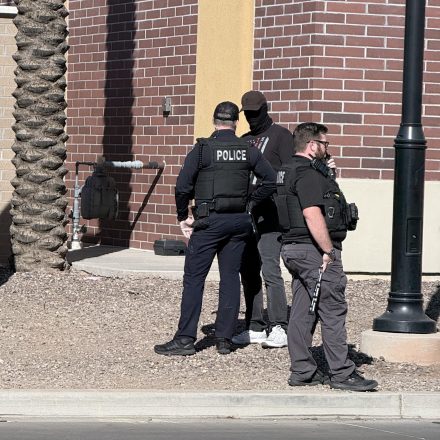
The findings are based on The Intercept’s analysis of federal government data provided by ICE in response to a Freedom of Information Act request by the Deportation Data Project. The new tranche of data, published on Monday, includes information on all ICE arrests made nationwide till March 10.
Skyrocketing Arrests
The proportion of ICE arrests in Minnesota of immigrants without a criminal record increased sharply during the winter operation, dubbed “Metro Surge” by the Trump administration.
Between Trump’s inauguration in January 2025 and the end of November 2025, 44 percent of all ICE arrests in the state were of people without criminal records. From December until February 12, the date that border czar Tom Homan said the operation was coming to an end, 64 percent of all ICE arrests in the state were of people without criminal records.
The period of the surge also represented a giant jump in the number of arrests themselves. Nearly 4,000 of the 5,998 ICE arrests in Minnesota since Trump took office occurred between December and February 12.
In January alone, there were 2,530 ICE arrests recorded in Minnesota, underscoring the impact of the operation. In comparison, there were 177 ICE arrests in the state in November, the last month before the surge began.
A vast majority — 97 percent — of ICE arrests in Minnesota between December 2025 and February 12 were “street arrests”; all of those were listed in the data as non-custodial arrests referring to detentions where the person is not taken from another agency’s custody.
In contrast, only 52 percent of all ICE arrests elsewhere in the country in the same period were non-custodial arrests.
After Renee Good Killing
The enforcement surge in Minnesota began in early December, then ramped up in January following the killing of Renee Nicole Good by ICE agent Jonathan Ross. The Trump administration responded to the killing by doubling down and sending hundreds more federal agents to the state to intensify the immigration enforcement crackdown.
Now, The Intercept’s analysis of ICE arrests data shows that after Good was killed, the rate of ICE arrests in Minnesota more than doubled.

There were 1,225 ICE arrests, or around 32 arrests per day, recorded in Minnesota from December 2025 until January 7, 2026, the day Good was killed.
Since then up until February 12, when Homan said the operation in the state was coming to an end, the rate of ICE arrests shot up to 74 arrests per day, with a total of 2.672 arrests being recorded.
The rate of ICE arrests stayed high despite the killing of Alex Pretti by federal immigration agents in Minneapolis on January 24.
Few Somalis Arrested
Around the time that the surge was announced, Trump administration officials repeatedly spoke of targeting Somalis in the Twin Cities of Minneapolis and St. Paul. The metropolitan area boasts the largest Somali community in the country, and most of its members are U.S. citizens or permanent residents.
The ramped-up enforcement in the state dovetailed with a campaign by far-right figures with ties to anti-Muslim and anti-immigrant views against Somalis in the state.
YouTube videos made by a far-right influencer were reportedly responsible for the White House’s focus on the Twin Cities. The videos alleged widespread fraud by the Somali community, but many of the claims have since been debunked or shown to have been blown out of proportion.
According to The Intercept’s analysis of ICE data, however, only 112 ICE arrests recorded in Minnesota from December until mid-March were of people listed as having Somali citizenship.
Update: March 31, 2026
This story has been updated to include a response from the White House and a comment from Elora Mukherjee, a faculty fellow with the Deportation Data Project.
IT’S EVEN WORSE THAN WE THOUGHT.
What we’re seeing right now from Donald Trump is a full-on authoritarian takeover of the U.S. government.
This is not hyperbole.
Court orders are being ignored. MAGA loyalists have been put in charge of the military and federal law enforcement agencies. The Department of Government Efficiency has stripped Congress of its power of the purse. News outlets that challenge Trump have been banished or put under investigation.
Yet far too many are still covering Trump’s assault on democracy like politics as usual, with flattering headlines describing Trump as “unconventional,” “testing the boundaries,” and “aggressively flexing power.”
The Intercept has long covered authoritarian governments, billionaire oligarchs, and backsliding democracies around the world. We understand the challenge we face in Trump and the vital importance of press freedom in defending democracy.
We’re independent of corporate interests. Will you help us?
IT’S BEEN A DEVASTATING year for journalism — the worst in modern U.S. history.
We have a president with utter contempt for truth aggressively using the government’s full powers to dismantle the free press. Corporate news outlets have cowered, becoming accessories in Trump’s project to create a post-truth America. Right-wing billionaires have pounced, buying up media organizations and rebuilding the information environment to their liking.
In this most perilous moment for democracy, The Intercept is fighting back. But to do so effectively, we need to grow.
That’s where you come in. Will you help us expand our reporting capacity in time to hit the ground running in 2026?
We’re independent of corporate interests. Will you help us?

I’M BEN MUESSIG, The Intercept’s editor-in-chief. It’s been a devastating year for journalism — the worst in modern U.S. history.
We have a president with utter contempt for truth aggressively using the government’s full powers to dismantle the free press. Corporate news outlets have cowered, becoming accessories in Trump’s project to create a post-truth America. Right-wing billionaires have pounced, buying up media organizations and rebuilding the information environment to their liking.
In this most perilous moment for democracy, The Intercept is fighting back. But to do so effectively, we need to grow.
That’s where you come in. Will you help us expand our reporting capacity in time to hit the ground running in 2026?
We’re independent of corporate interests. Will you help us?
Contact the author:
Related


Latest Stories

Israel’s War on Gaza
Democrats Are Split Over What It Means to Block Israel Weapons Deals
There’s a divide between those seeking to end all U.S. weapons deals with Israel and those who want to allow some exceptions.

Midterms 2026
Crypto Critic Maxine Waters’s New Primary Foe Got Over Two-Thirds of Money From Crypto
Maxine Waters, the scourge of crypto, could become Financial Services Committee chair if Democrats win the House in midterm elections.

Targeting Iran
Israel’s “Black Wednesday” Massacre Leaves Lebanese Families Giving DNA to ID Loved Ones’ Remains
In Lebanon, an unprecedented campaign of DNA tests is being used to identify mangled bodies left trapped under rubble by Israel’s blitz.