
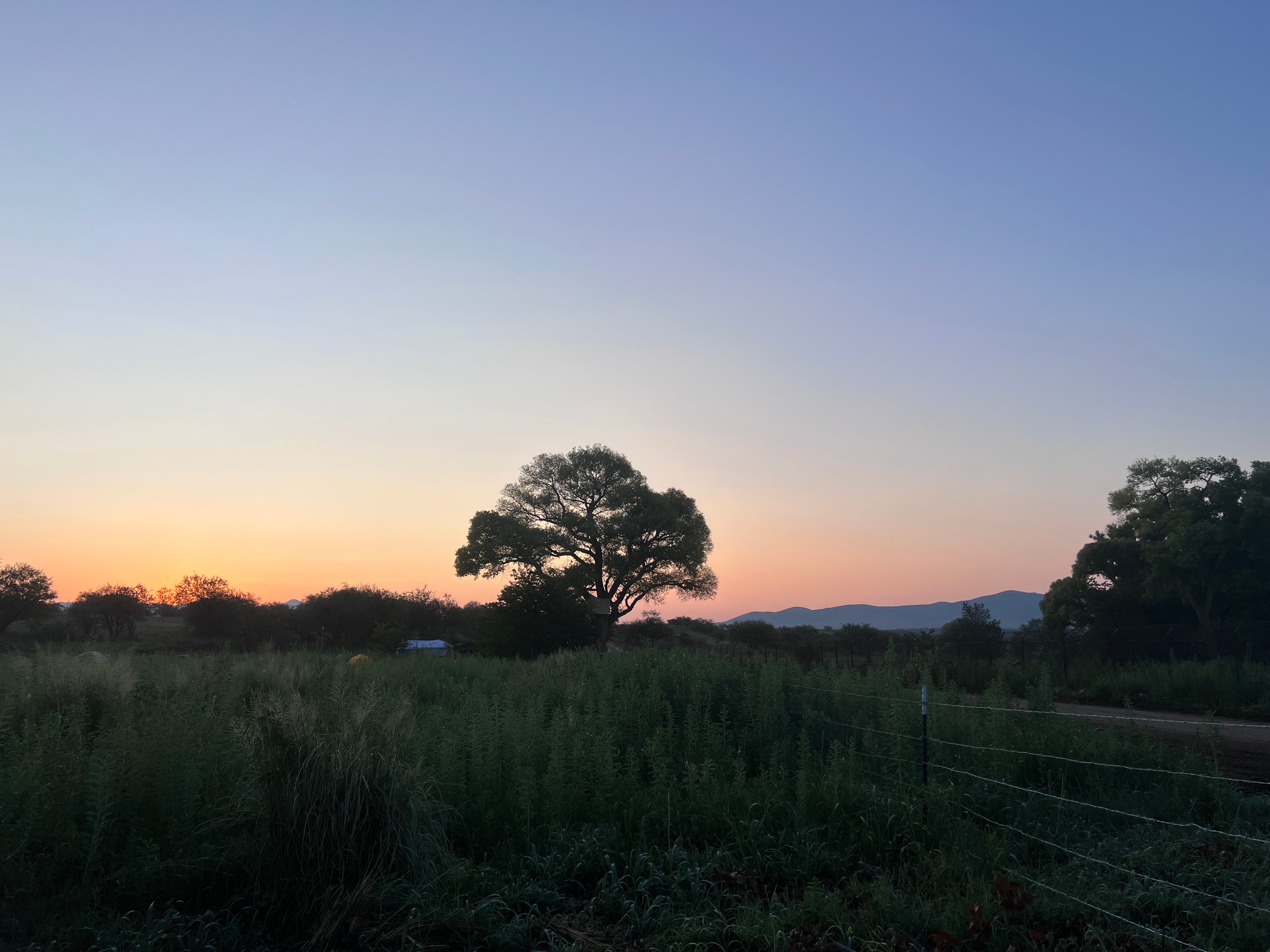
Of the more than $170 billion that President Donald Trump secured for his border regime in the “One Big Beautiful Bill,” nearly $50 billion is allocated to border wall construction. Even with these enormous resources, however, the administration continues to face challenges constructing its monument to violent exclusion along the southern border through tribal, private, and state lands.
For nearly a month, the key force standing in the way of Trump’s border wall project in southeast Arizona has been a person sitting in a 200-year-old tree.
More precisely, at every moment since late July, one person — although not always the same person — has been on a platform in the branches of a giant cottonwood tree in Lochiel, Arizona, with an expanding encampment of primarily local activists 50 feet below.
The protesters’ aim is to stop the ongoing construction of two parallel, 30-foot-high border walls ripping through the remote San Rafael Valley.
Miles of the double wall structure have already been built in the area. This part of the valley is sparsely populated and hardly ever used as a border-crossing site by humans, but is renowned as a unique wildlife migration corridor. According to the Sierra Club’s borderlands coordinator, Erick Meza, the region is “a biodiversity hotspot and the most important jaguar corridor that we have left in the U.S.”
Residents from Lochiel and the surrounding area, including from Sonora, Mexico, had been coming together regularly for over a year for binational gatherings to organize against wall construction. They shared music, art, food, and ceremonies across the border, which is demarcated there by only a rancher’s wire fence.
“People got together that night and decided to go down and set up a tree sit in that final tree on the U.S. side.”
The planned double wall structure, with a 60-foot no man’s land in between, would not only devastate the land and its ecosystems — it would also sever the binational life worlds of the area.
The “happenings,” as organizers called the gatherings, escalated into a continuous protest and tree sit when construction workers with government contractors Fisher Sand & Gravel crushed three giant cottonwood trees, known locally as “grandmother” trees, in one day on July 27.
Local activists moved in swiftly to save the last cottonwood standing on the U.S. side of the border, and the tree sit began.
“Momentum had been growing locally in the region to try to make more of an intervention,” said an Arizona-based participant in the tree sit, who asked for anonymity out of concern for government repression. “People got together that night and decided to go down and set up a tree sit in that final tree on the U.S. side, which was planned to be cleared.”
Ever since, a tree sitter has been in the cottonwood at all times, numerous participants told The Intercept.

“U.S. Customs and Border Protection identified four cottonwood trees on federal land in Lochiel, Arizona, that needed removal for planned border wall construction,” said a spokesperson from CBP. “Preconstruction surveys found no active migratory bird nests, and environmental monitors were present at the start of clearing activities to ensure work was limited to the identified trees. Three trees have been removed, and the remaining tree is scheduled for removal.”
Meza, of the Sierra Club, told The Intercept that the government’s environmental survey was out of date and that the day before the cottonwoods were felled, he had taken video of an active nest in one of the trees.
“The next day, they had sent the contractors to take down the trees,” he said. “Their environmental monitor was not present.” Meza added that “when people saw what happened, the community in general got outraged.”
For participants in the Lochiel encampment, protecting the remaining “grandmother” is an anchoring point for the protest, but stopping the border wall and all it represents is the organizing principle.
“Some people are tree sitting and supporting the tree sit. Some people are more focused on getting into the roads, and intervening in construction work that’s happening,” the tree-sit participant said. “Now there’s a whole zone of a few miles where they’re having trouble building. And as camp grows, the ability to affect construction also grows.”
The remaining cottonwood itself is on federal land, but the encampment, just feet away, is technically on private land. It’s a unique setup, organizers told The Intercept, in which local ranchers and authorities oppose the border wall construction, and construction workers cannot risk forging forward in the path of the tree as a person remains perched in its branches. The small standoff is becoming a growing site of border resistance, and the construction of Trump’s wall in the area has been disrupted for a month.
“Living Things on the Land”
At a time when jack-booted agents with U.S. Immigration and Customs Enforcement are terrorizing communities nationwide and over 73,000 people are held in ICE detention, the defense of a remote stretch of borderlands may seem a minor struggle.
The binational protest around the cottonwood, however, exemplifies what it looks like to take strategic action to disrupt the infrastructure of the border regime.
“Something happens along these borderlands,” said another participant in the tree sit and encampment, Uni Yuchi Trejo, a first-generation Mexican American. “You still feel the way the land moves here, how the living things on the land migrate and move with it.”
Trejo highlighted other sites of resistance along the Arizona border, like fights waged by the Tohono O’odham Nation to block the wall on its sovereign and sacred lands — fights that are heating up just this week.
Compared to other struggles against border enforcement, the Lochiel encampment has seen remarkably little law enforcement repression, despite creating disruptions to a major border infrastructure project.
One protester was arrested in late July by local sheriffs for blocking construction workers on a roadway but was released the same day without charge; the sheriff himself is on the record as opposing the border wall construction. And with the encampment on private property, it remains relatively protected from federal law enforcement sweeps.

According to activists on the ground, a second tree sit on the Mexico side of the border was initiated last week but ended after a few days, following reported interventions from Mexican law enforcement and U.S. Customs and Border Protection agents.
The relative peace the Arizona-based activists have enjoyed stands in stark contrast to the brutal persecution others opposing border regime enforcement have faced in places like Prairieland Detention Center in Alvarado, Texas; Spokane, Washington; and Minneapolis. The Arizona demonstration also sits in the legacy of site-based struggles not tied directly to the border, like Stop Copy City in Atlanta, or the Dakota Access Pipeline protests at Standing Rock — movements that have also faced ruthless repression.
This might speak to the place of the border wall in the Trump administration’s current priorities. Even for an anti-immigrant fascist like Stephen Miller, swift border wall construction in the San Rafael Valley is not an urgent matter, owing to the minuscule number of border-crossing attempts there. Those that do attempt to cross are already facing long odds against a system designed to push them into death’s grips.
Though the environmental destruction of border wall construction is well established, a spokesperson from Customs and Border Protection absurdly pointed to people who might attempt to cross as the real environmental threat.
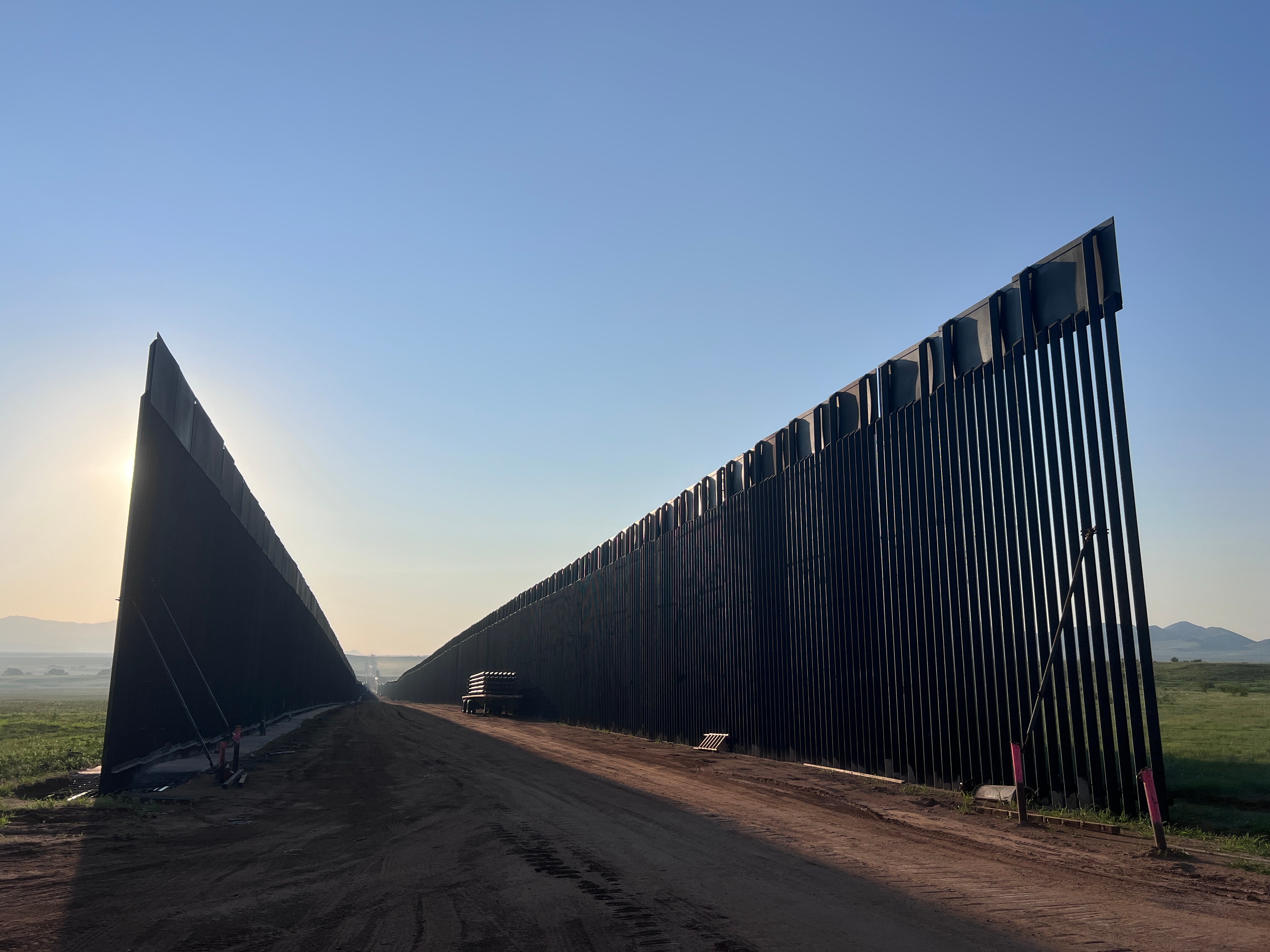
“While concerns exist about impacts to sensitive areas, it is important to note that illegal immigration itself poses significant environmental challenges,” the spokesperson said. “High volumes of unauthorized crossings often result in substantial amounts of trash, pollution, and damage to natural resources, including sensitive habitats and agriculture.”
Suffice it to say, the people crossing borders do not tear down ancient trees, plow over tribal burial grounds, or cut off wildlife corridors. Not to mention that no “high volumes” of crossings occur in the San Rafael Valley.
As Arizona-based reporter and author of “How to Close a Camp,” John Washington, told Democracy Now!, “People, I think, are right to point out that this very much smells of a boondoggle — that no one is crossing here, and yet they are spending maybe a half a billion dollars on just this about 27-mile segment of wall to devastate the local ecosystem.”
“The Border Is Everywhere”
“We’re taking the proactive stance of: ‘No, we don’t want the wall and we’re going to make sure you’re not doing it through Lochiel,’” said Kate Scott, a local resident and co-founder of the Madrean Archipelago Wildlife Center, who was among the original organizers against border construction in the region. “And we will hopefully have inspired people all across the world, wherever their horrible border walls are, and to question them in a way that’s most defiant.”
Activists on the ground are aware that reaching remote Lochiel is no easy task, so organizers are encouraging action wherever people can undertake it.
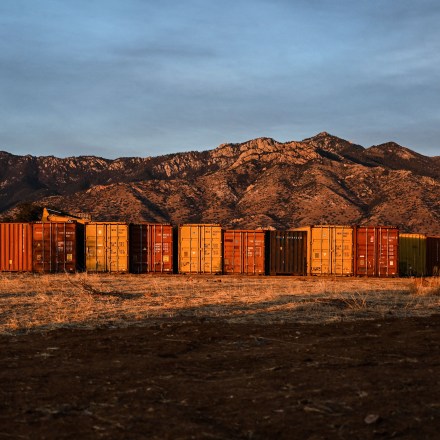
One target of activists’ campaigns is Fisher Sand & Gravel, the contractor working on the wall, which has received around $1.5 billion in government contracts in Arizona alone. (Fisher Sand & Gravel and its parent company, Fisher Industries, did not respond to requests for comment.)
Subcontractors working on the project are falling under scrutiny, too.
“The border is everywhere,” said Trejo, the Mexican-American land defender, “which means that there are subcontractors and there are power players maybe in your backyard, maybe in your city, maybe an hour drive from where you’re living.”
“Right now we’re at a really crucial point, where those of us that have been holding space and ground are seizing more of it each day. And so imagine if the 30, 40 holding that space becomes a 1,000 or becomes 5,000. What kind of opening will that then create?”
Correction: August 27, 2026, 2:30 p.m. ET
This story has been updated to correct an errant spelling of Kate Scott’s name.
IT’S EVEN WORSE THAN WE THOUGHT.
What we’re seeing right now from Donald Trump is a full-on authoritarian takeover of the U.S. government.
This is not hyperbole.
Court orders are being ignored. MAGA loyalists have been put in charge of the military and federal law enforcement agencies. The Department of Government Efficiency has stripped Congress of its power of the purse. News outlets that challenge Trump have been banished or put under investigation.
Yet far too many are still covering Trump’s assault on democracy like politics as usual, with flattering headlines describing Trump as “unconventional,” “testing the boundaries,” and “aggressively flexing power.”
The Intercept has long covered authoritarian governments, billionaire oligarchs, and backsliding democracies around the world. We understand the challenge we face in Trump and the vital importance of press freedom in defending democracy.
We’re independent of corporate interests. Will you help us?
IT’S BEEN A DEVASTATING year for journalism — the worst in modern U.S. history.
We have a president with utter contempt for truth aggressively using the government’s full powers to dismantle the free press. Corporate news outlets have cowered, becoming accessories in Trump’s project to create a post-truth America. Right-wing billionaires have pounced, buying up media organizations and rebuilding the information environment to their liking.
In this most perilous moment for democracy, The Intercept is fighting back. But to do so effectively, we need to grow.
That’s where you come in. Will you help us expand our reporting capacity in time to hit the ground running in 2026?
We’re independent of corporate interests. Will you help us?

I’M BEN MUESSIG, The Intercept’s editor-in-chief. It’s been a devastating year for journalism — the worst in modern U.S. history.
We have a president with utter contempt for truth aggressively using the government’s full powers to dismantle the free press. Corporate news outlets have cowered, becoming accessories in Trump’s project to create a post-truth America. Right-wing billionaires have pounced, buying up media organizations and rebuilding the information environment to their liking.
In this most perilous moment for democracy, The Intercept is fighting back. But to do so effectively, we need to grow.
That’s where you come in. Will you help us expand our reporting capacity in time to hit the ground running in 2026?
We’re independent of corporate interests. Will you help us?
Contact the author:
Related
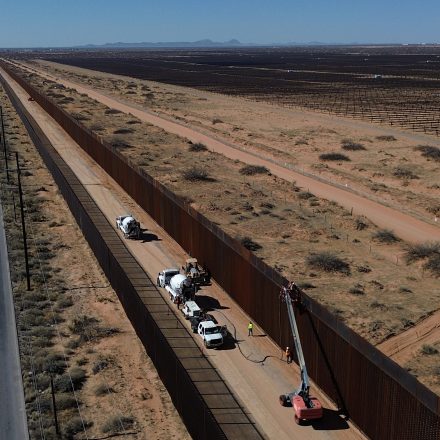
Trump Bulldozed a 1,000-Year-Old Archaeological Site to Make Room for a Second Border Wall

How Neighbors in the Borderlands Fought Back Against Arizona Gov. Doug Ducey’s Illegal Wall — and Won

The Trauma of Trump’s Border Wall

The U.S. Border Patrol and an Israeli Military Contractor Are Putting a Native American Reservation Under “Persistent Surveillance”
Latest Stories

Bankrolling American Empire in the Philippines
The Pentagon and private capital have teamed up to militarize the island nation.

Pentagon Records Missed Almost Half of Troops’ Domestic Abuse Killings
“Records are important,” said the mother of a woman killed by her Navy colleague. We found nearly twice as many domestic-abuse killings by servicemembers as the DoD listed.

Hegseth Built a New Pentagon Office for Religion. Military Religious Leaders Wish He Hadn’t.
“What do I tell a soldier who believes an action is immoral, but also believes that God commanded it?” one Army chaplain told The Intercept.