

Do the Old Ways Still Work?
Have you been recently scolded by an older peacenik about the good old days of street protests? I have!
Has an older beloved activist — a mentor, even — bemoaned “kids these days” and criticized their lack of political engagement? Have you heard the dreaded preamble: “In my day, we…” — fill in the blank — marched, struck, organized?
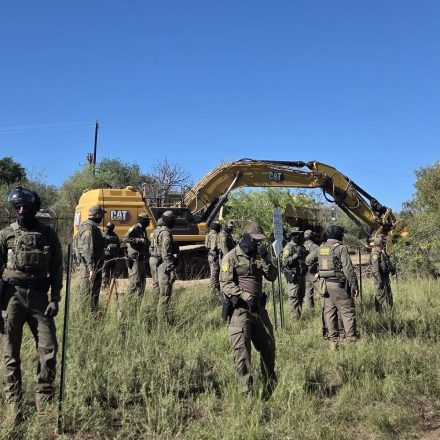
I have been on the receiving end of some of these rebukes recently, even though I am not much of a kid anymore. These aging activists aren’t seeing the outrage. They aren’t seeing the opposition. They aren’t seeing the resistance. But it might just mean they aren’t looking in the right place. Because there is plenty of resistance if you know where to look.
But more on that later.
The war against Iran is hugely unpopular. And it is not just a faraway, abstract wrong. It is having a demonstrable impact on the daily lives of Americans. Gas and heating fuel are and will continue to be more expensive. The Iran War Energy Cost Tracker, a project of Brown University’s Climate Solutions Lab, estimates a nearly $1,000 war tax paid by each U.S. household. That is on top of the actual and massive price tag of military operations so far: nearly $40 billion and rising at a rate of $2 to 3 billion a month, with the projected final price tag in the trillions.
At the end of February, Trump’s war opened in typical Trumpian fashion with a massive bombardment that not only targeted Iranian leaders but also the smallest and most innocent Iranians: Operation Epic Fury had an elementary school in its sights, and the result was obliteration. Raytheon-manufactured Tomahawk missiles slammed into the school in Minab, Iran, killing 156 civilians, most of them children. A U.N. panel now asserts that the U.S. attack was a war crime.

As the war ground on, the resistance continued. In March, Green Party candidate for Senate in North Carolina, former Marine, and member of Veterans for Peace, Brian McGinnis, disrupted a Senate hearing, shouting: “Americans do not want to fight this war for Israel.” (He suffered a broken arm at the hands of Capitol Police.) That same month, a top counterterrorism official, Joe Kent, resigned from the Trump administration, citing his opposition to the Iran war. More than 65 veterans and military family members were arrested inside a congressional building in April, protesting the illegal use of military force against Iran. The list goes on and on and on.
But we have not seen a reprise of the massive protests that marked the lead-up to the Iraq War 23 years ago. Maybe it’s understandable. And maybe it’s OK.
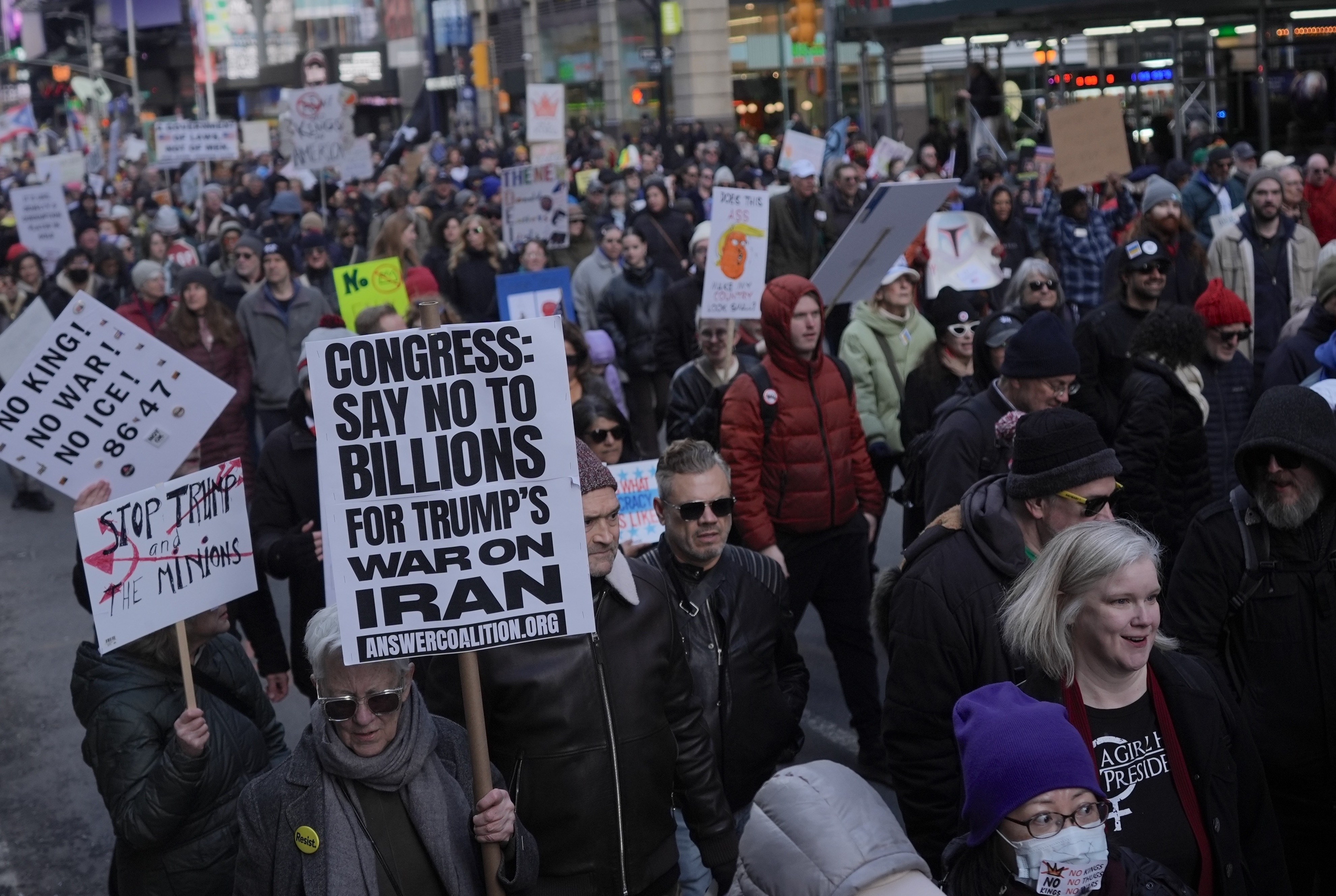
March Where? To Stop What?
I love a good protest march. I love the signs, the energy, the chanting, the music, coordinated outfits, mass-printed placards, and creative, handmade signs, a veritable rainbow of puns and alliteration and outrage glittered to cardboard and foamcore. I love the collection of newsletters and radical tracts and stickers and flyers for the next get-together that fill my backpack by the end. I love the chance encounters with friends. (“OMG, I didn’t know you’d be here.”) For a time, long ago, I served on the United for Peace and Justice steering committee and played a very small role in organizing such big and beautiful anti-war marches.

But I have a friend in her 70s who recently announced: I will not march in an empty city on a weekend ever again. And I agree. Her point was that big protest marches are often planned to be convenient for working people, so they are scheduled on weekends. But the leaders we want to confront with our people power don’t work on the weekends. In Connecticut, where I live, that means we end up marching in circles around a deserted downtown Hartford, our chants lost in the caverns of empty office buildings.
That happens in Washington, D.C., too. The weekend that 200,000 people reportedly marched at a “No Kings” rally in the capital last fall, Trump was holding a $1 million-per-plate fundraiser at his Mar-a-Lago resort in Florida. That is not disrupting business as usual. It is not creating some alternative. So it ends up feeling performative and like a numbers game. We show up to be counted. And now, the counting is itself a battleground. In D.C., the U.S. Park Police used to count crowds at protests. But they stopped in the 1990s, after the Million Man March challenged their count as a low-ball figure.
What is the political utility of marching one day and then returning to business as usual the next?
Personally, I would march on a Monday, down the middle of the highway, stop traffic, and sit in to demand that the world stop business as usual until there is justice for the children of the Minab school, or an end to Israeli settler violence in the West Bank, or an end to the Israeli genocide in Gaza.
But I agree with my friend. I am not going to a performative protest that’s easy to ignore. What is the political utility of marching one day and then returning to business as usual the next?
Our History Is Inspiration, Not Fodder for Scolds
I am white-haired and I can no longer say it is premature. When people assume I am a grandma, I am learning to accept it gracefully. At 52, I could be a grandmother. But I am too young to have lived through the so-called heyday of protest marches that required months or years of organizing work and political finesse. These marches — like the 1963 March on Washington for Jobs and Freedom, or the huge November 1969 Moratorium to End the War in Vietnam, or the April 1971 protest made famous by Vietnam veterans throwing their medals — demonstrated the movements’ organization, economic, and cultural power.
The March on Washington was the culmination of decades of vision, years of work, and hundreds of thousands of dollars. It brought upward of 250,000 mostly Black Americans to the nation’s capital to demand a civil rights act, desegregation, jobs, the right to vote, and more. The march is credited with helping pass both the Civil Rights and the Voting Rights acts.
During my lifetime, there have been major mass mobilizations of varying utility. The June 12, 1982, March and Rally for Nuclear Disarmament in New York City was the largest single protest in U.S. history (so far), with more than 1 million people calling for an end to the nuclear weapons threat. There were so many people lined up in the streets that tens of thousands of marchers never even arrived at the rally in Central Park!
Organized to coincide with the United Nations meetings on nuclear disarmament, the event was the culmination of 18 months of work. Coordinator Leslie Cagan, who eventually helped found UFPJ, recalled that the march was “a tremendous success.” Historians like Vincent Intondi credit it as a cultural turning point that created the conditions for the Treaty on the Prohibition of Nuclear Weapons nearly four decades later. Intersectional, joyful, and woman-led, the rally also encouraged participants to bring the spirit of the march home with them, seeding countless anti-nuclear community efforts around the nation.

In February 2003, the world said no to the impending U.S. war on Iraq with rallies and marches in almost 800 cities around the globe, demonstrating both the power of the people and the limitations of this form of resistance. All over the world, as many as 30 million people participated in an unprecedented coordinated series of actions, with marches from Athens, Greece, to Zagreb, Croatia. The pages of the New York Times called the global movement against the Bush war the “Other Superpower,” but the muscle flexed in the streets did not translate into the political, economic, or cultural might needed to stave off a war built on a web of lies.
Historian Jeremy Varon writes vividly about the impact of the marches and rallies in his recent study of the movement against the war on terror, “Our Grief is Not a Cry for War,” concluding that while they didn’t keep the Iraq war from happening, they bolstered and built a peace movement that is still active in creative resistance today. Our past is inspiring. We need to learn this history and apply the lessons that make strategic sense for this context.
We shouldn’t look at the past and beat ourselves up by saying, “Wow, they got a million people to turn out for nuclear disarmament in 1982, and I can’t even get 10 people to come to a street corner protest.” The saying goes, “We learn our history so we don’t repeat it,” and I think that goes for movement history, too. We don’t want to repeat history to keep it precious and amber-encased. We want to learn from it and apply what is useful to our own very different moment right here in 2026, where we are flooded with social media’s steady stream of bad news, fake news, infotainment, and rage-bait.

Today, people are exhausted, stretched thin, worried about their own bottom lines. Or maybe I should just speak for myself. I am exhausted. Stretched thin. Supremely worried. It is easy to despair. Everything in modern life seems geared toward our individual hopelessness and isolation. We are better consumers when we feel alone and powerless.
Like many, I was inspired by political scientist Erica Chenoweth’s 2010s research on nonviolent civil resistance and regime change, which established the 3.5 percent rule. It states that no government can withstand a challenge where 3.5 percent of its population is mobilized for a “peak event” like a mass protest. It seemed simple and achievable. That is, until I did the math. Three and a half percent of the U.S. population is approximately 12 million people. Only 10 million people bought tickets to Taylor Swift’s entire Eras Tour — 149 sold-out shows in 51 cities and 21 countries. If we got all those Swifties out in the streets here in the U.S., we’d still come up short for a regime-changing General Strike.
Mobilizing, Not Marching
Everything feels existential. Everything feels like an emergency. Trump floods the zone with rage-bait every single day. Do I have to stay mad to be a good leftist? That does not seem healthy to me. So, what can we do instead?

Activists today are marching less and instead mobilizing for community power over the long haul. This means relationship building, visible and decentralized resistance, and crisis response that transforms into solidarity after the acute crisis subsides. For example, you may have seen visibility brigades, the grassroots activist groups that display large signs and wave to drivers from highway overpasses and pedestrian bridges. Then there are the rapid-response networks that turn out trained community witnesses and protection squads whenever ICE is active in a neighborhood or town, or the calls to show up and support people being held at detention facilities like Delaney Hall in Newark, New Jersey.
Dissent is once again being labeled as terrorism. Critique is labeled as terrorism. Questions are labeled as terrorism.
The past teaches us that the tactics must keep changing. Most of what worked in 1963 in Washington wasn’t applicable to organizers in 1982 and was outdated by 2003. And that is OK; we don’t still use mimeographs or fax machines, either. There might not be millions of people in the street to oppose the war on Iran but that doesn’t mean people are not resisting. It just looks different. It is also landing differently, and more heavily, on the people arrested for resistance. Those who protest and are arrested are looking at serious charges, hostile court environments, and a Justice Department high on its own supply of anti-terrorist, anti-antifa fearmongering.
People are struggling and afraid, and I can’t blame them for that. Dissent is once again being labeled as terrorism. Critique is labeled as terrorism. Questions are labeled as terrorism. Anything that is not lockstep, grinning compliance is terrorism.
Still, people are stepping up. Not the way their parents or grandparents did. Not in a way that gets front-page news. Not in a way that penetrates the white noise of the corporate media. Here is a Harper’s Index entry from June 2026: “Estimated number of protests that took place in the United States in the first year of Trump’s first term: 10,873. In the first year of his second term: 39,154.” That is you and me and everyone we love. We need to keep doing it, smart, hopeful, inviting, and full of righteous rage.

I’ll admit that I am still struggling with how to make my opposition to the U.S.–Israeli war on Iran evident and public. I had a “No War on Iran” sign in my weedy front yard. It lasted a few weeks before it disappeared. I have talked to friends about a regular peace vigil downtown or at the nearby plant of weapons-making giant General Dynamics. But I have a time conundrum. The best time to be most visible is 2 or 3 p.m., right when my kids are coming home from school and most people are still at work. The most convenient time for more people to gather is 6 p.m., but by then our downtown is a ghost town and the mosquitos are fierce. So should we be strategic or inclusive? The debate continues.
In the meantime, I just put up a new sign in my yard yesterday. I painted the message: The U.S. War on Iran Kills Civilians, Wastes Money, Destroys the Environment. Let’s Stop It!
We’ll see how long it lasts.
IT’S EVEN WORSE THAN WE THOUGHT.
What we’re seeing right now from Donald Trump is a full-on authoritarian takeover of the U.S. government.
This is not hyperbole.
Court orders are being ignored. MAGA loyalists have been put in charge of the military and federal law enforcement agencies. The Department of Government Efficiency has stripped Congress of its power of the purse. News outlets that challenge Trump have been banished or put under investigation.
Yet far too many are still covering Trump’s assault on democracy like politics as usual, with flattering headlines describing Trump as “unconventional,” “testing the boundaries,” and “aggressively flexing power.”
The Intercept has long covered authoritarian governments, billionaire oligarchs, and backsliding democracies around the world. We understand the challenge we face in Trump and the vital importance of press freedom in defending democracy.
We’re independent of corporate interests. Will you help us?
IT’S BEEN A DEVASTATING year for journalism — the worst in modern U.S. history.
We have a president with utter contempt for truth aggressively using the government’s full powers to dismantle the free press. Corporate news outlets have cowered, becoming accessories in Trump’s project to create a post-truth America. Right-wing billionaires have pounced, buying up media organizations and rebuilding the information environment to their liking.
In this most perilous moment for democracy, The Intercept is fighting back. But to do so effectively, we need to grow.
That’s where you come in. Will you help us expand our reporting capacity in time to hit the ground running in 2026?
We’re independent of corporate interests. Will you help us?

I’M BEN MUESSIG, The Intercept’s editor-in-chief. It’s been a devastating year for journalism — the worst in modern U.S. history.
We have a president with utter contempt for truth aggressively using the government’s full powers to dismantle the free press. Corporate news outlets have cowered, becoming accessories in Trump’s project to create a post-truth America. Right-wing billionaires have pounced, buying up media organizations and rebuilding the information environment to their liking.
In this most perilous moment for democracy, The Intercept is fighting back. But to do so effectively, we need to grow.
That’s where you come in. Will you help us expand our reporting capacity in time to hit the ground running in 2026?
We’re independent of corporate interests. Will you help us?
Contact the author:
Related


Latest Stories

The Intercept Briefing
Prediction Markets Have a Lock on the Midterms
As Kalshi and Polymarket dodge state regulations, prediction markets are upping the ante on next month’s elections.

The War on Immigrants
ICE Agent on Scene of NYC Shooting Was Posing as Construction Worker, Eyewitness Says
A member of Congress at the scene confirmed to The Intercept that there was a child in the victim’s car when ICE agents shot at it.

Pete Hegseth’s Military of the Future: Defined by AI and an Utter Lack of Oversight
In announcing Project Meridian and a new Autonomous Warfare Command, War Secretary Pete Hegseth is inviting conflicts of interest.